

Overview
Hot weather can be tough on dogs, but the heat itself isn’t the only thing putting your dog at risk. That’s why we’ve pulled together 11 things to steer clear of in summer — from leaving your dog in a hot car to pushing them too hard on walks, or even just letting them near toxic plants. These can be simple slips with serious consequences.
1. Don't leave your dog in hot, enclosed spaces
Even a few minutes in a parked car, conservatory, or uninsulated room can be dangerous for dogs on a hot day. Inside temperatures can soar above 49 °C in minutes — far hotter than it feels outside. On top of that, dogs can’t cool down as well as we do. Panting is their main way of cooling off, and it’s no match for that kind of heat build-up. Keeping windows ajar or the door open won’t keep them safe. If in doubt, keep them with you or make sure they’re in a cool, shaded, well-ventilated space.
2. Don't walk in the midday heat
The hottest part of the day isn’t just uncomfortable — it’s when the risk of heat stroke is highest, and when pavements and artificial grass can reach temperatures dangerous to paw pads. At around 30 °C, asphalt can heat to more than 57 °C in just minutes. Try the ‘seven-second hand test’: if you can’t keep your hand on the pavement for that long, it’s going to burn your dog’s paws. It’s best to walk early in the morning or later in the evening, stick to grassy or shaded routes (but watch out for grass seeds), and take water with you so they can stay cool and hydrated.
3. Don't ignore signs of overheating
Heat stroke can come on fast — and it can be life-threatening. Watch for early signs like heavy panting, drooling, restlessness, bright red gums, and a fast heartbeat. More serious symptoms include vomiting, diarrhoea, wobbliness, confusion, or collapse — all of which need urgent vet attention. If you think your dog is overheating, begin rapid cooling straight away. Use any water cooler than your dog’s body temperature — even cold or icy water. Hosing your dog down can be a great way to help them cool off — but let the water run for a few moments first. Water left sitting in the hose can heat up quickly in the sun and may even be hot enough to burn your dog’s skin. Once your dog is cooling down, call your vet right away.
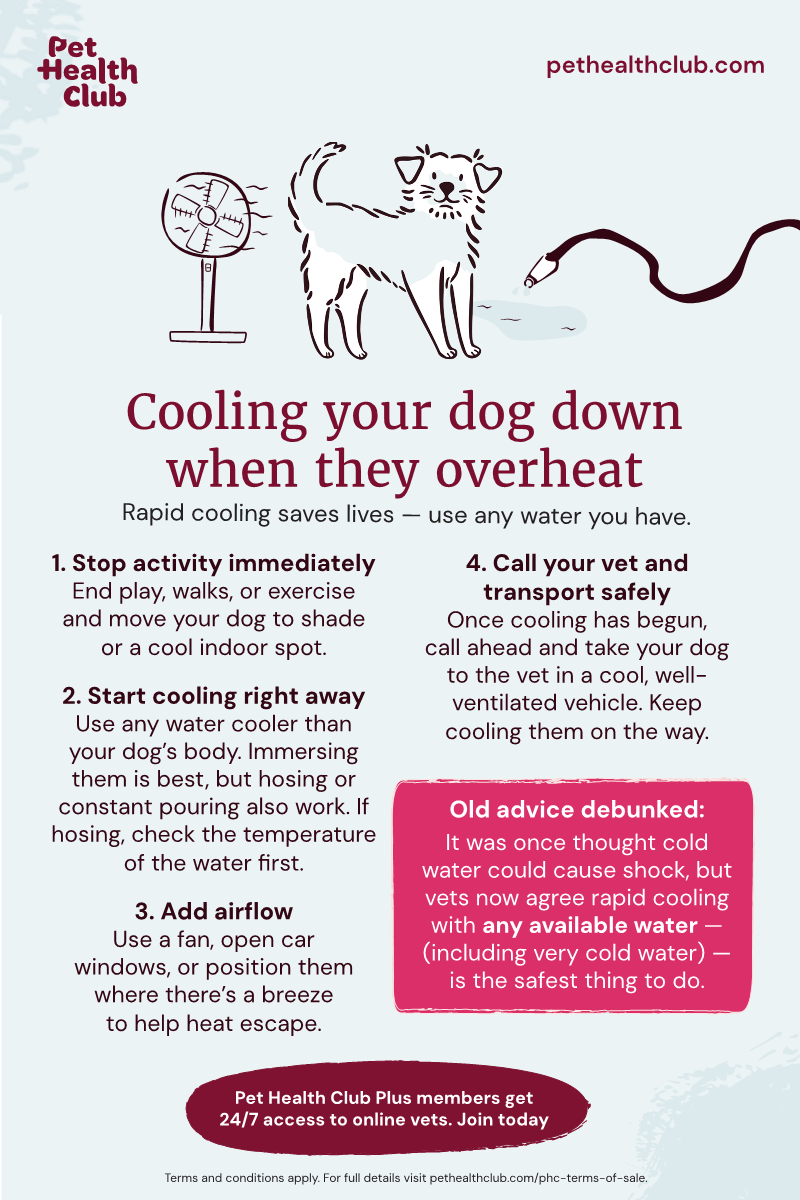
Read more: Heat stroke in dogs
4. Don't skip shade and water
Dogs can lose water fast in warm weather — sometimes in under an hour, especially if they’re on the move. As a guide, most dogs need around 50 to 100ml of water per kilogram of body weight each day, and even more when it’s hot. A portable water bowl is a great idea for trips out too. Because dogs cool themselves mainly through panting and through their paw pads, shade is just as important as water for helping them stay comfortable. Make sure they are never too far from a shaded resting spot, whether you’re out on a walk or in the garden.
5. Don't miss your dog’s parasite protection
Fleas, ticks, and other parasites are more active in the UK once the weather warms up. They can cause irritation and even spread illnesses like Lyme disease. Prevention is far better than treatment, and vet-prescribed products are usually the most effective option. Follow the schedule your vet recommends, and check your dog over after walks — especially if you’ve been in grassy, wooded, or rural areas. If you're a Pet Health Club member, all your dog's parasite treatments are covered — and they'll get products and a schedule tailored to their lifestyle and needs.
6. Don't skip vet visits during summer
Warm weather doesn’t make routine vet visits any less important. Keep your dog’s vaccinations, parasite prevention treatments, and healthy pet checks on schedule — these visits (which are all included in Pet Health Club membership) can make a real difference to their wellbeing. Missing an appointment can mean health issues go unnoticed, or the protection offered by your dog’s last vaccinations or parasite treatments will time out. Both can lead to bigger problems later.
7. Don't assume all water is safe
Not all dogs can swim, and even confident swimmers can get into trouble. Water can hide strong currents, sudden drop-offs, or hazards under the surface. In the UK, blue-green algae can bloom in lakes and ponds during warm weather — it’s toxic, and even a small amount can be fatal if swallowed (but there’s an app you can check for local blue-green algae sightings before letting your dog swim). After any dip, rinse their coat to remove salt, chlorine, or anything else that could irritate their skin. Supervise them closely and, if your dog loves swimming in deeper water, think about a doggy life jacket for extra safety.
8. Don't feed BBQ leftovers or toxic food
Many barbecue favourites can be dangerous for dogs. Corn cobs can cause serious blockages in the gut, fatty meats may trigger painful pancreatitis, and onions or garlic are toxic. Chocolate is highly poisonous, and grapes or raisins — sometimes hidden in salads or desserts — can cause kidney failure. Cooked bones can splinter and injure the mouth or digestive tract. During BBQs, give your dog their own safe treats and keep all human food well out of reach. Wooden skewers and kebab sticks should also be kept well away from your dog — these can cause serious internal injuries if swallowed.
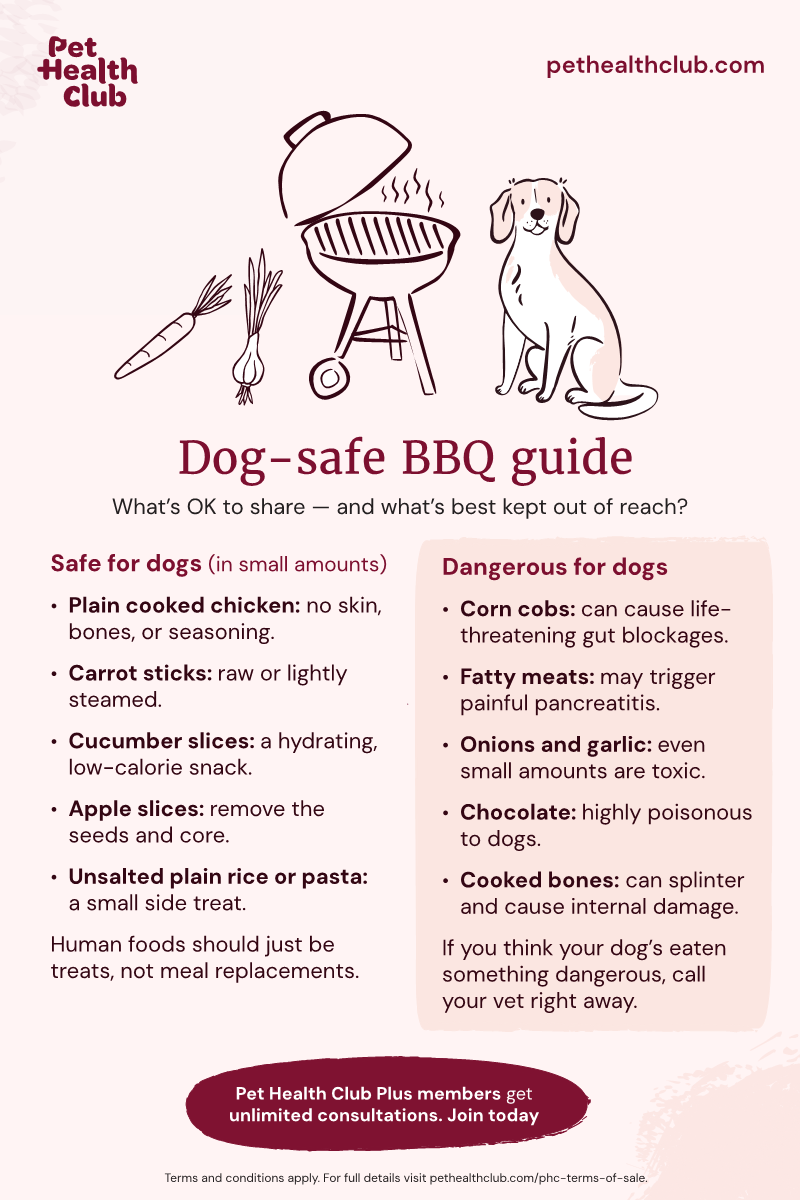
Read more: What fruits can dogs eat?
9. Don't neglect grooming
Regular grooming isn’t just about keeping your dog looking neat — it helps remove loose fur and debris, prevents mats that can trap heat, and gives you the chance to spot fleas, ticks, or skin problems early. Bathe your dog only when needed — otherwise you might strip away the natural oils that keep their skin and coat healthy.
10. Don't overdo exercise
When it’s warm, keep exercise sessions shorter and gentler, take regular breaks in the shade, and carry water to offer during walks. Skip high-intensity games (like fetch) in the heat. Keep an eye out for signs of overexertion such as heavy panting, slowing down, or reluctance to continue. Don’t push your dog if you notice any of these, and give them a rest right away. Dogs can overheat more quickly than we do — especially flat-faced breeds like Pugs, Shih Tzus, and French or British Bulldogs, whose shorter airways make it harder for them to cool down.
Read more: How to keep your dog cool
11. Don't allow access to toxic garden plants and chemicals
Several common plants found in UK gardens and outdoor spaces during summer can be highly poisonous to dogs. These include buttercups, daffodils, tulips, cyclamen, oleander, azaleas, sago palm, and foxglove. Some bloom earlier in the year but may still be present in summer as leaves, bulbs, or seed pods. Ingestion can cause vomiting, diarrhoea, drooling, weakness, seizures, heart problems, liver failure, or even death. Keep these plants — as well as garden chemicals like weed killers or slug pellets — well away from your dog.
Need more info?
To find out more about keeping your dog cool, comfortable, and safe during the summer months, have a chat with your local vet.
Find a Vet near you today.
Join the club today
Get regular health checks, vaccinations, and more, all included in your plan.

Medically reviewed by Holly McKinley, BVetMed GPCert(SAM) PGCertSAECC MRCVS
Published on 12/08/2025 • Reviewed on 17/05/2026