
Overview
Need to remove a tick from your dog? You’re not alone. It’s one of the most common questions vets get asked, especially in spring and summer. Ticks can carry serious diseases like Babesiosis and Lyme disease, and they can pass them on within 24 to 48 hours of attaching. That’s why safe, swift removal is so important.
The good news is, with the right tools and a steady hand, you can do it yourself. This guide will show you how to find and remove a tick from your dog step by step, and what to do afterwards to keep them healthy. Read our vet-approved guide to ticks on dogs for more information on how to spot them, what diseases they cause, and some common myths.
Why it's important to act fast when you spot a tick
Ticks aren’t just a nuisance, they’re second only to mosquitoes when it comes to spreading disease to pets and people. And as warmer winters and increased travel expand their territory, they’re showing up in more places than ever.
Adult ticks have oval-shaped bodies, and are usually dark grey or reddish brown in colour. They’re small, often no bigger than a grain of rice, and can look like a blister or wart once attached. That makes them easy to overlook, especially as they prefer warm, hidden places like the ears, muzzle, eyelids and under the chin. It’s these nooks and crannies where they’re most often found.
In dogs, tick bites can lead to infections like Lyme disease, anaplasmosis or, in rare cases, tick paralysis. Spotting and removing ticks early reduces the chance of disease and keeps your dog safer. That’s why it’s important to check dogs for ticks (and fleas) regularly and remove any you find as soon as possible.
Read more: Lyme disease in dogs
What you’ll need to remove a tick from a dog
Tick-twister or similar tool – Helps remove fully fed ticks without squeezing (available from your vet or pethealthclub.com/shop)
Fine-tipped tweezers – Handy for small or not-yet-embedded ticks
Disposable gloves – Reduces your contact with infectious fluids
Antiseptic (alcohol or chlorhexidine) – To clean the bite afterwards
Sealable pot or bag – In case your vet needs to identify the tick later
Step-by-step guide to removing a tick from a dog
Before you begin, make sure your dog is calm. You might need to trim the fur around the tick and use a bright light so you can see clearly.
Find the tick: focus on the ears, eyelids, armpits, groin, between the toes and under the tail. These are the “seven sneaky spots” where ticks love to hide.
Put on gloves and part the coat: wearing gloves protects you and gives you better control. Gently part the hair around the tick so you can reach the base.
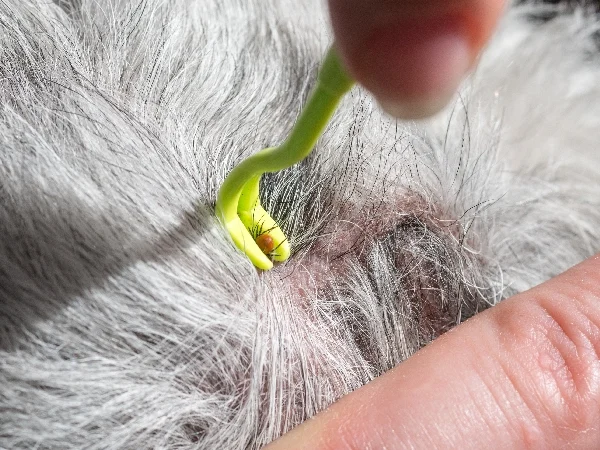
Place your tool: with a tick-twister, slide the prongs flat against the skin, under the tick, with one prong either side of the tick’s body. With tweezers, grip the tick gently as close to the skin as you can — try not to squeeze its body.
Remove the tick: with a twister: rotate steadily in one direction until the tick lets go. With tweezers, lift straight up in one smooth movement. Don’t twist or tug. There may be some resistance, so keep steady tension on the tick until it comes away.
Check the site: make sure you’ve removed the whole tick. If the head stays in, most fragments will come out naturally—but speak to your vet if the area gets red or swollen.
Dispose safely: drop the tick in alcohol, seal it in a pot or flush it. Never squash a live tick.
Clean and comfort: wipe the bite with antiseptic and give your dog a treat to make next time easier. Monitor the area for swelling, redness or discharge for the next few days and discourage your dog from licking or scratching at it.
What not to do
Don’t burn, freeze, or smother the tick with cream or oils
Don’t squeeze its belly or pull sharply as this can cause the head to become detached or increase the risk of infection
Don’t wait to see a vet unless the tick is in a difficult-to-reach area or you're unsure. Every extra hour can raise the risk of disease

Read more: How do dogs get fleas?
Signs to watch for after tick removal
Keep the bite area clean for two to three days. Call your vet if you notice:
Limping or shifting leg pain
Fever, tiredness or poor appetite
Swollen lymph nodes (small glands found at the top of the neck under the jaw, the front of the top of the front legs and the back of the hind legs)
Weakness or wobbliness (possible tick paralysis)
If your dog becomes unwell, your vet might run blood tests three to five weeks after the bite.
FAQs on how to remove a tick from a dog
What if the tick’s head stays in?
Clean the site and monitor it. Most bits fall out naturally, but call your vet if it gets sore.
Can ticks be tested for disease?
Testing ticks isn’t reliable. It’s better to watch your dog for any symptoms.
How long before ticks spread Lyme disease?
Usually, between 24 and 48 hours, so same-day removal is a great preventive measure.
Do natural repellents work?
Evidence is limited. Vet-prescribed products are more effective.
Want to know more about tick treatments and prevention?
Ticks are a common problem for dogs, especially those who love outdoor adventures. But with a steady hand and the right tools, you can remove them safely and protect your dog from harm.
If you’re unsure, your local vet is always ready to help. Use our Find a Vet tool to get in touch. And for year-round peace of mind, join Pet Health Club. With unlimited vet consultations and tailored parasite treatments that cover ticks, your dog gets the protection they need, whenever they need it.
Medically reviewed by Lizzie Youens, BSc(Hons) BVSc MRCVS
Published on 10/06/2025 • Reviewed on 10/06/2025