

Overview
Flat-faced dogs often face breathing difficulties, overheating, and other health issues linked to the shape of their heads. These dogs are known as brachycephalic breeds, which include Pugs, Bulldogs, Shih Tzus, and Boston terriers. Their short skulls and flattened faces are the result of selective breeding focused on appearance, but these same traits can lead to a range of health problems.
Many brachycephalic dogs develop BOAS (brachycephalic obstructive airway syndrome), which can make it hard for them to breathe, exercise, or cope with heat. They are also more likely to experience eye injuries, skin infections, dental disease, reproductive problems, and spinal and joint problems. Caring for these breeds often means extra vet checks, daily cleaning routines, and sometimes even surgery to help them stay as comfortable as possible.
What are brachycephalic dogs?
Brachycephalic dogs are breeds with short, flattened noses and faces. Popular examples include:
These flat-faced dogs aren’t a breed group, like spaniels or retrievers. Instead, they come from different backgrounds and are only grouped together because of one shared feature — the shape of their head. The word ‘brachycephalic’ comes from Greek and means ‘short head.’
You’ll also hear similar terms for other types of dogs, like ‘dolichocephalic’ for long-headed breeds such as Greyhounds and Great Danes, or ‘mesocephalic’ for dogs with head shapes somewhere in between — like German Shepherds or Golden Retrievers.
In the wild, wolves have a mesocephalic head shape. The more extreme features seen in dolichocephalic and brachycephalic dogs are the result of selective breeding by humans. In long-headed breeds, the idea was to make the dogs better hunters. But for flat-faced dogs, the focus has largely been on appearance — and, sadly, this has come at a cost to their health.
What is BOAS in dogs?
Many flat-faced dogs experience breathing difficulties caused by a condition called brachycephalic obstructive airway syndrome, or BOAS. This condition affects a dog’s ability to breathe comfortably and can have a serious impact on their quality of life. Common signs of BOAS in dogs include:
Noisy breathing, even when resting
Snoring or snorting
Struggling to recover after exercise or a decreased ability to exercise (often seen as ‘being lazy’)
Difficulty coping with heat and an increased risk of heat stroke (over half of dogs treated for heat stroke in 2023 were flat-faced breeds)
Bluish gums (known as cyanosis), caused by low oxygen levels
Worsening of digestive problems, like acid reflux or vomiting
BOAS is mainly caused by physical features linked to selective breeding, such as narrow nostrils (called stenotic nares) and elongated soft palates, both of which restrict airflow. Research shows that dogs with particularly narrow nostrils are around three times more likely to develop BOAS.
How is BOAS diagnosed?
BOAS in dogs can be diagnosed using several methods:
A routine physical examination, including a close look at the nostrils to check for narrowing and listening to their breathing with a stethoscope
Functional grading systems, such as the Respiratory Functional Grading Scheme
More advanced tests, like CT scans or endoscopy
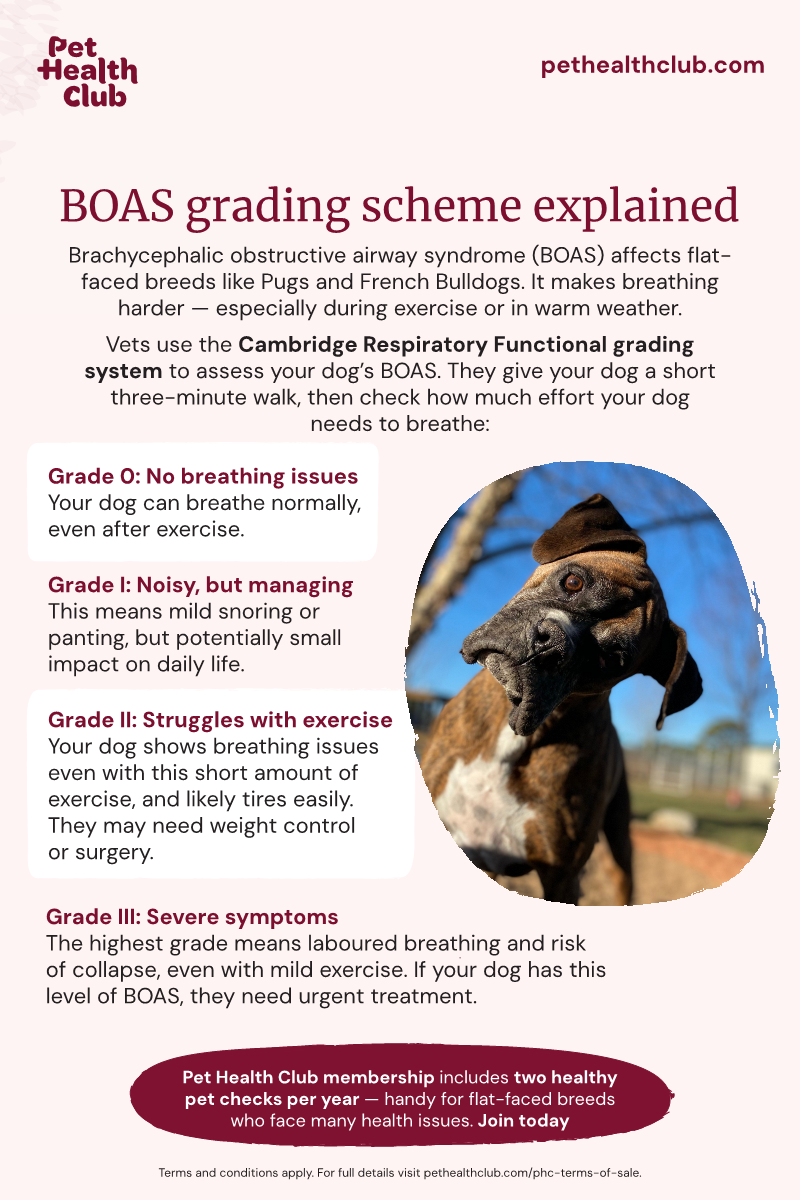
The Respiratory Functional Grading Scheme
This scheme, developed by The Kennel Club and Cambridge University, helps vets assess the degree of BOAS in a brachycephalic dog. The dog is observed during three minutes of gentle exercise under clinical supervision, with vets paying close attention to two things — how noisy the breathing is and how much effort it’s taking to breathe. Based on this, the dog is given a grade:
Grade 0: No signs of breathing difficulty
Grade I: Mild breathing issues that don’t yet have much effect on exercise
Grade II: Moderate breathing issues that may need management, such as weight control or surgery
Grade III: Severe breathing difficulties, requiring thorough veterinary care and treatment
Many flat-faced dogs will fall into one of the higher grades, which can affect their daily comfort and long-term health.
Read more: How often should you walk your dog?
What other health issues do flat-faced dogs have?
Eye problems
The eyes of flat-faced dogs often bulge, making them more vulnerable to injuries and infections. Some of the more common issues include:
Eyes that protrude beyond the eye socket, leaving them exposed to dirt, scratches and infections
Cherry eye (where the tear gland slips out of place and becomes visible)
Dry eyes and corneal ulcers, which can be painful and lead to more serious complications if left untreated
Skin infections
The excess skin folds found on many brachycephalic dogs can also cause problems. These folds trap moisture, food debris, and dirt, creating the ideal environment for bacteria and yeast to grow. On top of that, the folds themselves can rub together, causing irritation and discomfort. This rubbing can sometimes lead to intertrigo (skin fold dermatitis), rashes, or yeast infections. Flat-faced dogs often need daily cleaning of these folds to make infection and discomfort less likely.
Dental issues
Brachycephalic dogs have smaller jaws than other breeds, but the same number of teeth. This means they often have misaligned jaws and overcrowded mouths, leading to a greater risk of dental problems like gum disease, tooth decay, and infections. Dental disease is common in these breeds and can cause long-term discomfort if not carefully managed.
Orthopaedic problems
Flat-faced dogs are also prone to a range of joint and skeletal problems, like hip dysplasia, bowed legs, and joint issues. Spinal problems are also common. One of the most concerning is a condition called hemivertebrae. This happens because their spines have been deliberately bred to be deformed in order to produce the ‘corkscrew tails’ often seen as cute. Hemivertebrae can cause pain, mobility problems, weakness in the back legs, and even bladder or bowel issues.
These aren’t the only issues. Brachycephalic breeds are also at greater risk of patella luxation, a kneecap dislocation that can cause pain, lameness, and sometimes even paralysis. They also have a higher likelihood of joint pain and early-onset arthritis than other dogs — this is because their legs are very short relative to their body size, placing extra strain on their joints.
How are common issues in flat-faced dogs treated?
For dogs with mild breathing difficulties, careful weight management and limiting strenuous activity can sometimes help reduce symptoms. But for many flat-faced dogs, surgery is needed to improve their ability to breathe comfortably. Common surgical procedures include:
Nostril widening (stenotic nares resection): to open the nostrils and improve airflow
Soft palate shortening (staphylectomy): to reduce tissue that blocks the airway
Laryngeal saccule removal (laryngeal sacculectomy): to clear excess soft tissue which is obstructing the airway
These surgeries can make a big difference to a dog’s comfort and quality of life. The procedures themselves are generally considered low risk, but the risks increase for dogs with more severe (Grade III) breathing problems. Brachycephalic dogs are considered higher risk candidates for general anaesthesia and surgery.
Can health problems in flat-faced dogs be prevented?
While some health problems in flat-faced dogs are linked to their physical features, there are steps owners can take to help reduce the risks:
Responsible breeding: dogs showing signs of BOAS shouldn’t be used for breeding
Weight management: keeping your dog at a healthy weight can ease pressure on their breathing and joints
Regular health checks: twice-yearly vet visits can help pick up early signs of BOAS or other problems
Ongoing monitoring and care are essential for keeping these dogs as comfortable as possible.
What's the impact of obesity on flat-faced dogs?
Obesity is a common problem in flat-faced breeds. Because of their breathing difficulties, many struggle with exercise and burn fewer calories as a result. Some flat-faced dogs may only be able to manage short bursts of activity — often no more than ten minutes at a time — but over the course of the day, they still need around 30 to 60 minutes of movement to help maintain a healthy weight.
Carrying excess weight significantly increases the risk of health problems. BOAS, joint strain, and skin fold infections all tend to be worse for overweight dogs.
In the UK, research shows that obesity is the most common health issue seen in pugs, and it affects many other brachycephalic breeds too. The best way to help manage your dog’s weight — and protect their overall health — is through regular monitoring of their body condition, along with support and advice from your vet.
Public awareness and education
In recent years, efforts have been made to help make the health risks linked to flat-faced dogs clear to current owners and anyone considering getting one. These include:
Pre-purchase advice: campaigns like the Brachycephalic Working Group’s Stop and Think Before Buying a Flat-Faced Dog encourage vets to have honest conversations with potential owners.
Media guidelines: the BVA’s #BreedtoBreathe campaign asks businesses to avoid using brachycephalic dogs in advertising, as this can normalise the problems that these breeds face, and popularises at-risk breeds.
Challenging misconceptions: many owners see snorting or snoring as normal, but these can be obvious signs of breathing difficulties. Public campaigns aim to address these misunderstandings.
Social media campaigns: vets and animal welfare groups use platforms like Instagram and TikTok to share information about the hidden health challenges of these breeds.
Despite these efforts, studies show many owners remain attached to these breeds. Research found that 93% of owners would choose a brachycephalic dog again, even after learning about their health risks. Around 1 in 7 say no new information would change their mind.
Why are brachycephalic breeds so popular?
The number of flat-faced dogs has continued to rise in recent years. This is likely due to a combination of their appearance and personality:
Distinctive looks: their big eyes and short muzzles give them an appearance that many people find appealing. Some researchers suggest that their features may even trigger human nurturing instincts
Perceived low-maintenance: it’s often thought that flat-faced dogs need less exercise, but this isn’t true. In reality, they often get tired quickly due to breathing difficulties, which can be mistaken for being easy-going
Loving personalities: many owners describe flat-faced breeds as affectionate, playful and good with children
As these breeds have become more common, their unusual traits — including those linked to health issues — have become normalised. The more familiar they are, the less likely people are to question whether this is the right choice for dogs.
Should you get a flat-faced dog?
Flat-faced dogs can be loving companions, but it’s important to carefully consider the responsibilities involved before bringing one home. These dogs often require more attention to their health and wellbeing than other breeds, so it’s important to fully understand what you’re taking on before deciding to bring one home.
If you’re thinking of buying a puppy, choosing a breed with a similar personality but fewer health concerns may be a more responsible option.
Need more advice on flat-faced dogs?
For more expert advice on brachycephalic breeds or any of the health issues they often face, get in touch with your local vet.
Find your nearest vet using our find a vet page.
Join the club today
Get regular health checks, vaccinations, and more, all included in your plan.

Medically reviewed by Lizzie Youens, BSc(Hons) BVSc MRCVS
Published on 28/07/2025 • Reviewed on 28/07/2025