
Overview
Hot weather can make even a quick trip to the vet feel daunting. But if your pet’s unwell, it’s important not to delay as some problems can quickly become serious.
Summer brings its own risks too, like flystrike and heat stroke. Heat stroke can develop rapidly and is especially dangerous for older pets, flat-faced (brachycephalic) breeds, or those with heart or breathing issues. These are serious conditions that need prompt care, whatever the weather.
But with a few simple steps, you can keep your pet cool and comfortable on the way.
Why some trips in hot weather can’t wait
It’s understandable to want to avoid going out in the heat, but waiting for cooler weather isn’t always the safest option. Vomiting, difficulty breathing, or changes in behaviour should never be ignored. Even routine appointments, like vaccinations or wound checks, help protect your pet’s long-term health.
Some conditions, like heat stroke, can become serious in less than 30 minutes. The signs of heat stroke in dogs include heavy panting, breathlessness, purple or pale gums or tongue, sickness, seizures, or collapse. Meanwhile, heat stroke in cats often causes signs like open mouth breathing or becoming unsteady, and rabbits may show red ears, panting, or even lose consciousness.
If you notice any of these signs, don’t delay, get your pet seen as soon as possible. While the British Veterinary Association advises against unnecessary trips in hot weather, urgent care is still essential. If your pet’s unwell or due for an important check-up, it’s usually safer to act sooner rather than later.
Six ways to keep your pet comfortable on the journey
1. Travel when it’s cooler
Try to set off early in the morning or later in the evening if you can. The middle of the day (11am to 3pm) is usually the hottest. Don’t forget muggy air can also make it harder for pets to cool down. Avoid walking your pet where possible, but if this is required to enable you to attend your appointment, remember that pavements can get very hot. If you can't comfortably keep your hand on the ground for five seconds, then it’s too hot for your pet to walk on.
2. Prepare your car before setting off
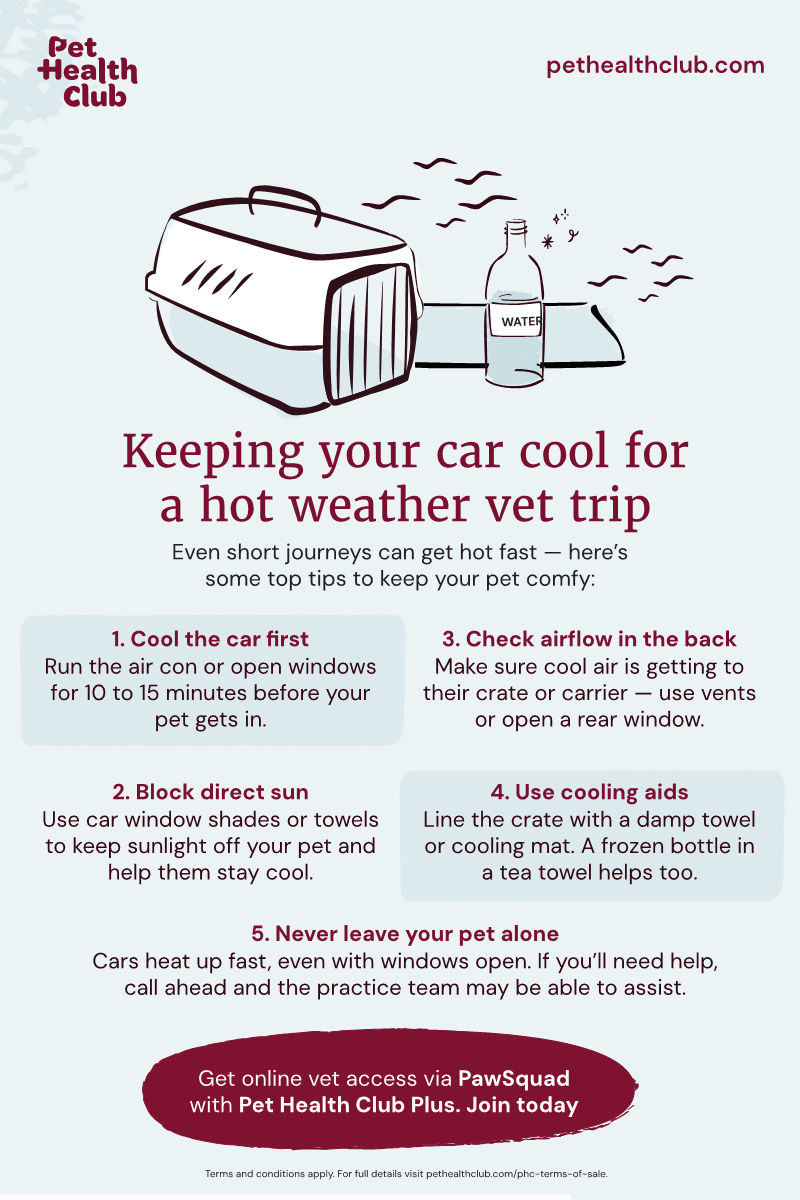
Get the air con running or open the windows before your pet gets in. It can take 10 to 15 minutes to bring the temperature down. Just a few minutes in a hot car can be risky — temperatures inside can quickly rise above 30°C, even when it doesn’t feel that hot outside. While it’s not illegal to leave a dog in a car, it is an offence if they suffer as a result.
3. Choose a carrier with good airflow
Use a well-ventilated carrier. Only cover it if you need to block direct sun, and even then, make sure air can still circulate. This is especially important for flat-faced breeds, who are more prone to breathing difficulties.
4. Keep their body temperature down
Cooling mats, damp towels, or a frozen water bottle wrapped in cloth can all help. Safe frozen treats, like ice cubes or broth lollies, are another option, just supervise while your pet enjoys them. Cool coats can also be useful for some dogs.
5. Bring water and consider a taxi
Always bring fresh water and a bowl. Offer it regularly, but don’t try to make your pet drink — they’ll drink as much as they need. If you don’t drive, avoid walking in the heat. Instead, book a taxi — and unless you’re using a dedicated pet taxi service, call ahead to check they’re happy to take your pet (and their water bowl). Give yourself a bit of extra time too, in case the cab’s running late or there’s traffic. Be cautious about using public transport unless you are confident that the temperature will be cool.
6. Call ahead if you’re worried
If you're unsure whether to travel, or have concerns about the heat, phone the practice before setting off. They may be able to offer support on arrival, or advise what’s best.
Read more: BBQ safety for pets
Quick checklist for a safe journey
Travel early or late in the day
Cool the car before setting off
Use a ventilated carrier or crate
Pack water and a bowl
Bring cooling aids (like damp towels)
Call ahead if you're unsure
What to expect at the vets
We know hot weather can make vet visits more stressful, especially if your pet is already unwell. Our practice teams will do everything they can to keep your visit safe and comfortable.
If you're concerned, call ahead. We may be able to see you promptly or make arrangements to reduce your time waiting.
If your pet is more vulnerable to heat — such as flat-faced breeds, older animals, or those with heart or lung conditions — let us know when you book. We’ll take extra steps to keep them cool, calm and cared for.
What to bring to the vets on hot days
Cooling mat or damp towel for the journey
Toy or blanket to help your pet feel settled
Water bottle and bowl
Personal fan or cooling aid if you have one
Any medication or notes the vet may need
Signs that need emergency vet attention
If you’re ever worried about your pet in the heat, call your vet straight away. But if you spot any of the signs below, treat it as an emergency, don’t wait.
Excessive panting
Rapid breathing
Drooling or foaming
Red, pale, or purple gums or tongue
Vomiting
Diarrhoea
Weakness or collapse
Staggering or unsteady movement
Seizures
Disorientation
Unconsciousness

Read more: Common health issues in flat-faced dogs
When to stay home and call instead
In some cases, it may be safer to speak to a vet remotely first. Consider calling for advice before travelling if:
Your pet has mild or stable symptoms and you're unsure whether they need to be seen
They’re very old, very young, or have a breathing issue like brachycephalic obstructive airway syndrome
But don’t delay if your pet shows signs of heat stroke or serious illness. These symptoms need urgent, in-person care. If you're a Pet Health Club Plus member, remember, you can also speak to a vet online 24/7 through PawSquad.
More advice on keeping pets cool
For extra help, check out our seasonal advice:
And if you want to talk to a vet directly, find your nearest vet with our Find a Vet page.
Show references
British Veterinary Association (2023a) “If in doubt, don’t go out” – dog owners urged to rethink walks during hot weather. Available at: https://www.bva.co.uk/news-and-blog/news-article/if-in-doubt-don-t-go-out-dog-owners-urged-to-rethink-walks-during-hot-weather/ (Accessed: 14 July 2025).
British Veterinary Association (2023b) Vets issue urgent heatstroke advice for pet owners as temperatures soar across the UK. Available at: https://www.bva.co.uk/news-and-blog/news-article/vets-issue-urgent-heatstroke-advice-for-pet-owners-as-temperatures-soar-across-the-uk/ (Accessed: 14 July 2025).
Dogs Trust (2023) Caring for your dog during hot weather. Available at: https://www.dogstrust.org.uk/dog-advice/life-with-your-dog/seasonal/hot-weather (Accessed: 14 July 2025).
Met Office (2023) Looking after pets during hot weather. Available at: https://weather.metoffice.gov.uk/warnings-and-advice/seasonal-advice/health-wellbeing/looking-after-pets-during-hot-weather (Accessed: 14 July 2025).
Medically reviewed by Gemma Williams, BVetMed MRCVS
Published on 15/07/2025 • Reviewed on 15/07/2025