

Overview
Fleas are the most common parasite affecting dogs in the UK. They thrive in warm, humid places — including our homes. Dogs can get fleas from other pets, wildlife, or even from us if we bring them indoors on our clothing or belongings. Once they are on your dog, fleas bite, feed, and lay eggs. They quickly multiply and can cause nasty itching, scratching, hair loss, and sometimes more serious conditions.
The usual way dogs get fleas
Most often, dogs and puppies get fleas from their surroundings rather than from other pets — they don’t need to spend time around other dogs to be at risk. Fleas live absolutely everywhere. That’s why it’s so easy for us to be the ones who end up bringing them indoors — fleas can catch a ride in on our shoes, clothes, or bags. Sometimes one hitchhiking flea is all it takes. They’re always looking for a host, and even if you’re very careful this could end up being your dog.
Whether indoors or out and about, fleas can sense warmth, movement, and carbon dioxide. This is how they know when your dog is walking nearby, giving them their cue to jump on.
Flea life cycle
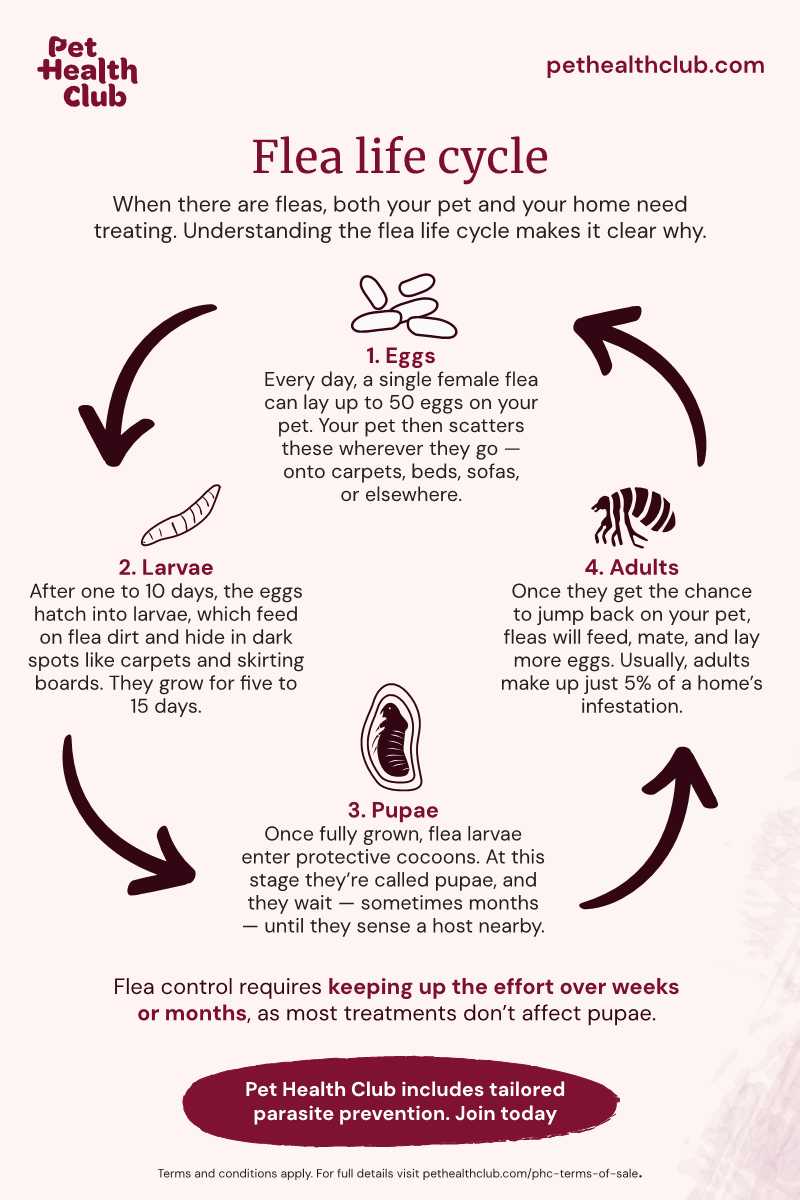
Does your dog keep getting fleas, even after treatment? Knowing how fleas live and grow makes it clear how dogs get fleas so easily, and why they’re tough to get rid of. The life of a fleas has four stages: egg, larva, pupa, and adult. Adult fleas live on dogs and feed on their blood, but younger fleas mostly live around your home. Fleas lay their eggs on your dog, and these fall off and land in fabrics or cracks. Scattered all around, they hatch into larvae.
Flea larvae hide from light, crawling deep into carpets or under furniture. Once hidden away, they spin cocoons for themselves. Inside these, they turn into pupae — waiting for warmth or signs of movement before they hatch. Inside their cocoons, they become resistant to many treatments. This means you’ll want to keep treating your home to be certain you get them once they emerge and become vulnerable again.
Our flea life cycle chart has the full details:
Read more: How to get rid of fleas on dogs
Spotting the signs: symptoms of fleas in dogs
Fleas start feeding fast, and their bites cause irritation and swelling. This is why the first sign of fleas is often scratching, biting, or licking at the skin. You might also see red bumps — especially near the tail or back legs — hair loss, over-grooming, or restlessness. In more serious cases, fleas can cause anaemia, which may cause pale gums or low energy.
Flea dirt — tiny black specks made from digested blood — offer a reliable way of checking for fleas. You’ll often spot flea dirt around the neck or tail, and it will come off when you brush your dog’s fur with a flea comb. Dab these specks from your comb onto a damp tissue is the way to check. If they turn reddish-brown, that’s flea dirt, and proof your dog has fleas.
Some dogs have flea allergy dermatitis (FAD), which means they have a nastier reaction to flea bites. If your dog has this allergy, they may scratch intensely — even if there are only one or two fleas. This often leads to sore skin, scabs, or bald patches, especially around the lower back or thighs.
Read more: How to check your dog for fleas and ticks
Treating dogs for fleas
Because dogs can get fleas just by doing the normal things a dog does, regular prevention is the best way to protect them. Preventative treatments stop fleas before they become a problem. These include spot-ons, tablets, and collars — your vet can offer guidance on which is the most suitable for your dog. Pet Health Club membership includes tailored parasite prevention (including flea treatment) to guarantee your dog is getting exactly what they need to stay flea-free.
Flea treatments work in different ways. Some treatments kill adult fleas when they bite, and some work before fleas can bite or lay eggs, helping stop the places where your dog sleeps or plays becoming flea hot-spots. Year-round protection is key — especially in centrally heated homes where fleas get comfy and thrive. Feeding on your dog is an important part of the flea life cycle, so being consistent with treatments can break the cycle completely.
Flea treatment for home
The great outdoors will always come with a risk of fleas, but there are things you can do to keep your home a safe zone. Give your dog’s bedding regular washes, vacuum the floors and furniture, and consider a home spray — or professional help if fleas keep coming back.
Getting rid of fleas takes time, because fleas can be hidden in every nook and cranny. Remember — while they are in their cocoons, flea pupae are more resistant to treatments. To make sure you get them once they’ve left their cocoons, keep using treatments consistently - multiple applications of household flea spray at weekly or fortnightly intervals may be necessary to fully eradicate all the flea stages.
My dog keeps getting fleas even after treatment — help!
Persistent fleas can be frustrating, but not unusual. Remember — most of the flea life cycle happens off your dog — in carpets, bedding, and quiet corners. This makes it easy for fleas to return, even after treatment. Getting rid of them completely can take weeks or even months as pupae will resist most treatments while they lie low. Consistent, regular treatment of your dog and other pets in the household is essential, as without a susceptible host the flea population will not survive.
On the other hand, you might just be getting unlucky. Every trip outdoors carries at least a small risk of your dog getting fleas — even a short walk or contact with another pet can bring fleas back into your home. To stop this, treat every pet in the household, vacuum regularly, and wash bedding on a hot cycle. If things don’t improve, it might be time to call in a pest control expert.
If shop-bought treatments aren’t doing the job, speak to your vet. They might suggest a fast-acting tablet, an injection, or a plan that tackles both adult fleas and their young. And remember — Pet Health Club includes regular parasite protection tailored to your dog, helping guard against fleas, ticks, mites and worms, all year round.
Ask your vet for help
For long-term peace of mind, Pet Health Club includes regular flea and worm treatment, and year-round support to help keep your dog healthy. Use our Find a Vet tool to locate your nearest Pet Health Club practice.
Medically reviewed by Lizzie Youens, BSc(Hons) BVSc MRCVS
Published on 08/06/2025 • Reviewed on 08/06/2025