

Overview
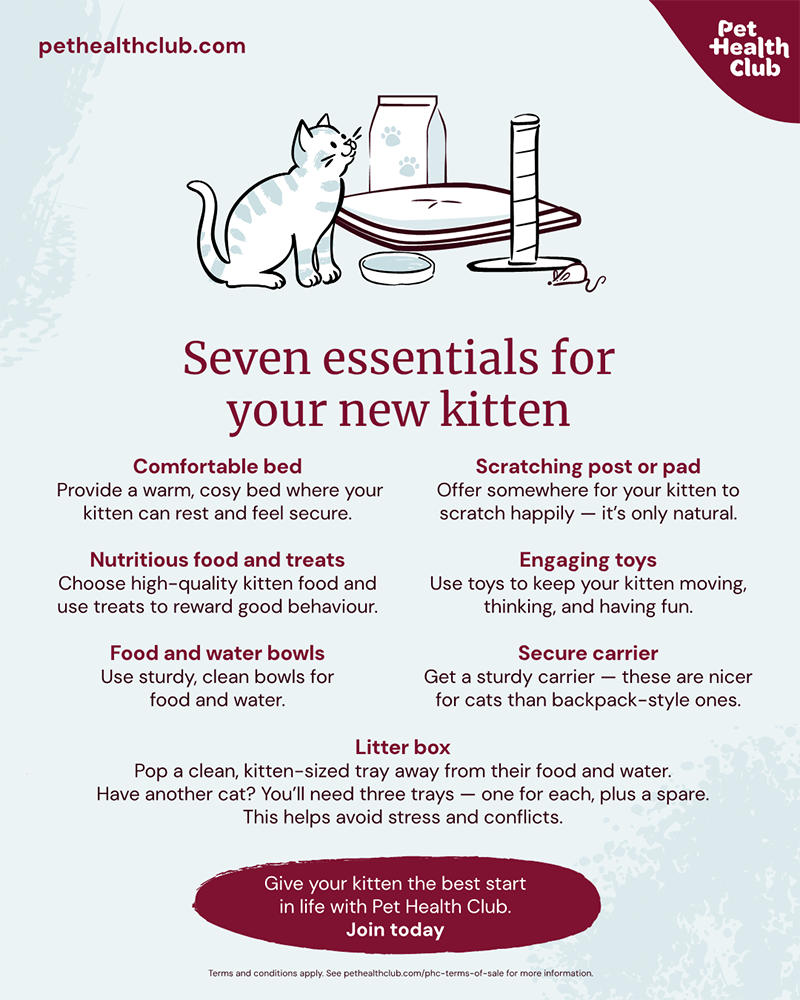
What do you need for a new kitten? The basics are simple: a cosy place to sleep, good food, fresh water, a clean litter tray, toys to play with, and regular vet check-ups. But getting the kitten essentials ready is more than just ticking off a shopping list — it’s about thinking ahead and getting into good habits.
This new kitten checklist is here to help you get everything in place before your new kitten arrives. From cosy beds to scratching posts, and microchipping to preventive healthcare, a bit of planning now will help your kitten settle in happily, healthily, and with confidence.
A cosy, welcoming space
Let’s start with setting up a calm, quiet space just for your new kitten. Giving them their own room helps them settle in and feel safe while getting used to their new home. Start small — one quiet room is enough to begin with. It’ll help them adjust without feeling overwhelmed.
What essentials do I need for my new kitten’s room?
Here’s a quick list of things you’ll want for your kitten’s room:
A soft, warm bed — a cardboard box with a blanket works just fine
Separate bowls for food and water
A litter tray in a quiet corner, away from where they eat and drink
A few safe toys to keep them entertained
A cosy hiding place, like a box or a covered bed
Something to climb or perch on — a cat tree, or a blanket on a shelf
A sturdy plastic or metal cat carrier lined with a blanket for vet visits or travel (putting your kitten’s carrier where they can see it will help them be comfortable with it later)
How to set up your kitten’s new space
Having the right kit is a great start — but knowing how to use it is just as important. Start by putting their bed in the quietest corner of the room. Cats love warmth, so anything that keeps heat in is a good pick. For their first night, try popping a warm (not hot — this can risk burning them) water bottle in a blanket to help them feel cosy, like they’re still curled up with their mum and littermates.
Let your kitten explore at their own pace. If they choose to hide, just sit nearby and speak gently — there’s no need to coax them out. They’ll come to you when they’re ready.
Tip: Ask the breeder or rescue centre for something — ideally a towel or blanket — that smells of your kitten’s mum or littermates. It’s a simple way to make them feel a little more at-home in their new space. You can also plug in a pheromone diffuser like Feliway to help reduce stress and make settling in easier.
Mealtime: kitten essentials for feeding
The next items on our new kitten checklist are all about food and water, starting with bowls. The best bowls are shallow and wide, because this means your kitten’s whiskers won’t brush the sides — you’ll notice quickly how sensitive your kitten’s whiskers are. Go for stainless steel or ceramic bowls if you can, as they are easier to keep clean, and plastic can alter the taste and put them off their food or water.
The water bowl in your kitten’s quiet space should always be kept topped up. Their water and food should be in separate bowls, and be placed apart — most cats prefer to eat and drink in different spots. Some kittens like running water, so if yours does, a cat water fountain might be a good investment.
At first, you should stick to the same food that the breeder fed your kitten — young kittens can be prone to tummy upsets if their diet has any sudden changes. If you want to switch to something new, let them settle into their new home for a few days first, then switch diets slowly over a few days, mixing the new food with the old. And remember, kitten food only — dog food or human food doesn’t have the nutrition they need.
For the full picture, take a look at our kitten diet guide — but here are a few tips to help you get started with their nutrition:
Pick a food that’s labelled complete and made for kittens
Offer a mix of wet and dry food — it helps with hydration and can reduce fussiness later on
Feed little and often – four small meals a day is about right in the early weeks, transitioning to two meals a day by the time your kitten is around 6 months old
Measure portions to avoid overfeeding, especially after they’ve been neutered
Litter training: kitten toilet training essentials
Many kittens will have already learned how to use a litter tray while with their breeder, but you can help them keep their good habits by choosing the right products and using them well.
Start with a low-sided tray that’s easy for them to climb into. As they grow, you can move to a larger tray where they have room to turn around comfortably. Open-topped trays are usually best – they tend to be preferred by cats and make cleaning up simpler too.
Check with their breeder what type of litter they used, and stick to that to begin with. If you need to switch, do it bit by bit. Clumping litter can make scooping easier. Scoop out any solid waste or clumps of urine out of your kitten’s litter tray at least once a day, and give it a full clean each week using mild soap or diluted bleach. Avoid strong-smelling disinfectants — cats are sensitive to smells and may be put off.
A litter mat placed just outside the tray can help catch any bits that get kicked out. It’s also best to keep the tray in a quiet, private spot, well away from where your kitten eats and drinks. As a general rule, you’ll need one tray per cat, and then one extra as a spare – and it’s best to place them in different areas around the home. If your kitten isn’t doing too well using the tray, try experimenting with different styles or litter types until you find what suits them.
Kitten safety essentials
Kittens are naturally curious. We all know what they say about curiosity and cats — but it’s also how they learn and grow. While we don’t want to discourage them from exploring, we do want to keep them safe. That’s why creating a safe space for your kitten is just as important an item on our new kitten checklist as their bowls and beds.
Before your kitten moves in, tuck away any electrical cables or cover them with protectors. Tie up blind cords and curtain ties to avoid tangles, and check your houseplants — some plants can be harmful to cats, like lilies and poinsettia. Keep cleaning products and medicines out of reach, or use baby locks on cupboards just to be safe. And don’t forget to close windows and toilet lids to help prevent any accidents.
Before your kitten arrives, take a moment to check for hidden hazards. Put away any breakables or small items they could swallow. Block off gaps behind furniture and appliances — kittens sometimes wriggle into tight spaces and get stuck. It can help to use baby gates or simply keep doors shut to limit where they can go.
Kitten-proofing isn’t just something to tick off once and then it’s done — it’s a habit to get into. Keep your kitten’s safety in mind when you buy new furniture, decorate, or move things around.
Kitten essentials for playtime
Toys should be on every first time kitten owner’s checklist. Play isn’t just fun — it helps your kitten learn, and use up some of that endless energy. Guiding them to play with toys early can also help prevent things like scratching furniture or biting at hands and feet. Here’s how to keep playtime safe and stimulating:
Mix it up: get a range of toys, like teaser wands, soft mice, balls, puzzle feeders, and tunnels
Keep it fresh: don’t put all the toys out at once — rotate some in and out if your kitten is getting bored
Encourage solo play: puzzle toys are great when you’re busy or out — but kittens shouldn’t be left alone too long
Stay nearby: supervise play with wand toys or anything string-like, and put them away when you’re done
Think safety first: avoid toys with small parts or sharp edges. Check toys regularly for wear or damage.
Get creative: simple homemade toys like cardboard tubes, ping pong balls or scrunched-up paper can be just as exciting
Kitten scratching essentials
Scratching is completely natural for kittens — it helps them stretch, shed old claw sheaths, and mark their territory. The right setup will both protect your sofa and let them act on their instincts in a healthy way.
The main kitten essentials you need for scratching are some tall, sturdy scratching posts or boards. Try offering a mix of textures like sisal, carpet, and cardboard. Most kittens will want to scratch horizontally sometimes and vertically at others — it’s best to have at least one of each type. Spacing them around the house means they’ll always have one nearby when they feel the need to scratch.
Scratching posts should be tall enough for a full-body stretch. Stability matters too. If a scratcher wobbles, they’re far less likely to use it. If your kitten isn’t taking to a new scratcher, placing toys nearby or sprinkling it with a little catnip may do the trick.
Kitten grooming essentials
Grooming your kitten doesn’t just keep them looking glamorous — it gets them used to being handled, which will pay off as they grow older. So what grooming items do you need on your new kitten checklist?
For short-haired kittens, a soft bristle brush usually does the trick. Long-haired breeds may need a wide-toothed comb or a slicker brush to prevent tangles. A flea comb can also be useful, especially if your kitten has come from a rescue or shelter (and it's important to know even indoor cats can get fleas). Try to make grooming part of your weekly routine. Keep sessions short and positive — many kittens enjoy it, especially if there’s a treat or a bit of playtime at the end.
Your kitten essentials kit should also include a pair of cat nail clippers — smaller styles with curved blades are usually the best. For your first go at clipping their nails, it can also help to have some styptic powder nearby, just in case you trim a bit too far.
Registering your kitten with a vet
No kitten checklist is complete without your go-to partner for all things health-related: your vet. It’s a good idea to find and register with a local practice before your kitten comes home. Book a check-up in the first few days and take along any records you got from the breeder. This helps your vet understand your kitten’s background and plan what’s needed next.
During your first visit, your vet will:
Give your kitten a thorough health check, including their weight, teeth, eyes and ears
Start or continue their vaccinations — usually given at around eight and twelve weeks, with a third dose sometimes recommended at around sixteen weeks
Talk through flea and worm treatments — parasite prevention is essential even for indoor cats
Talk through neutering — which usually happens at around four months — which stops unwanted litters and comes with health benefits
Explain the importance of microchipping — UK law now means all cats must be microchipped by the time they are 20 weeks old
It’s a good time to ask about out-of-hours services too, and save your vet’s emergency number in your phone — just in case.
Insurance and preventive care essentials
Preparation is key — but so is prevention. Alongside all the right supplies, it’s important to think about how you’ll manage your kitten’s routine healthcare as they grow older. Healthcare costs can add up.
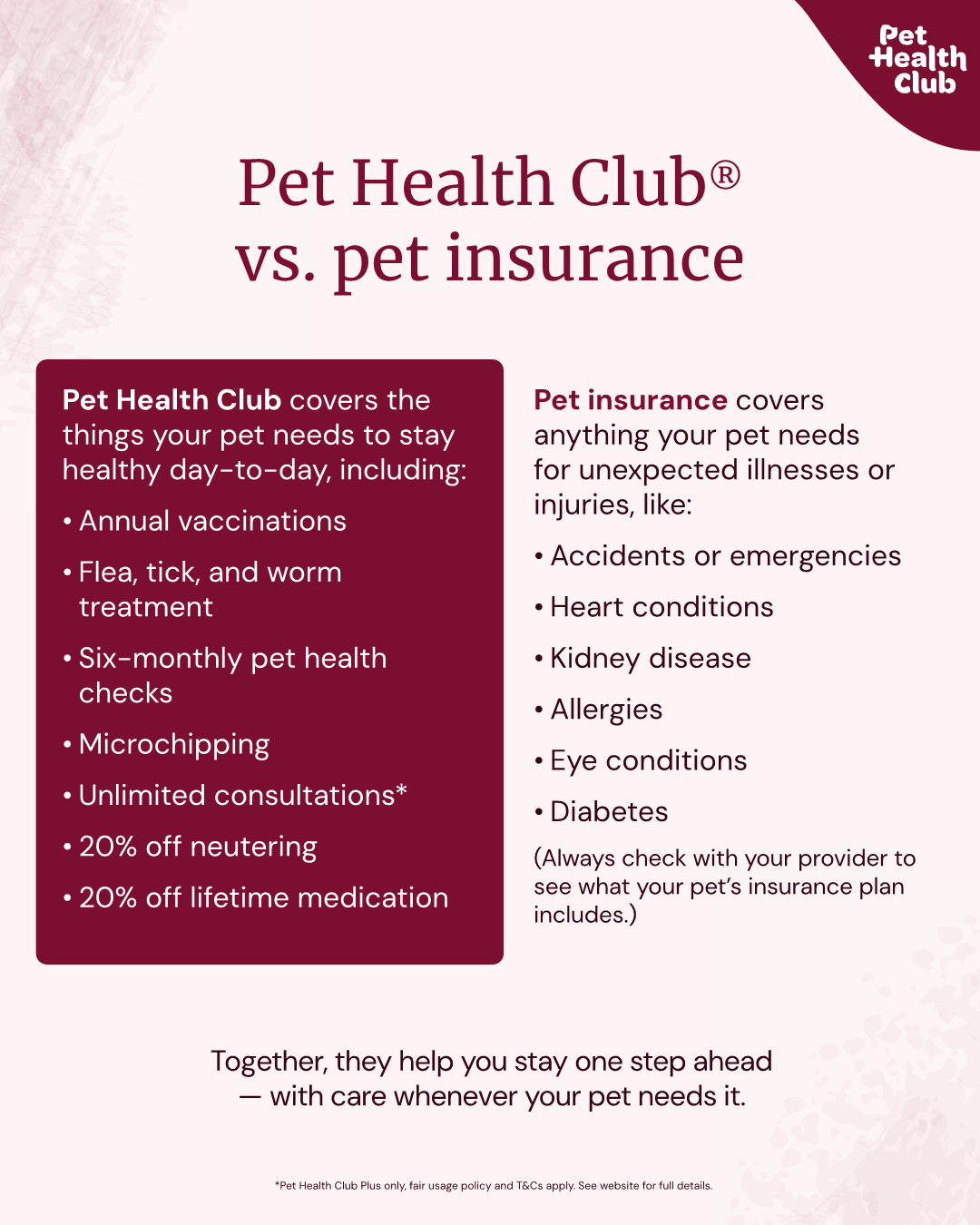
That’s where Pet Health Club comes in. Our preventative healthcare plans cover all the routine care your kitten needs, including vaccinations, flea and worm treatment, health checks and microchipping. It’s designed to give your kitten the best chance of a healthy life, and you some well-earned peace of mind — while also making vet bills more manageable with a simple monthly payment.
Our Essentials plan is named for exactly that reason — it covers everything your kitten needs to stay protected as they grow. And our Plus plan adds unlimited consultations and 24/7 access to online vets. Getting your new kitten a Pet Health Club membership should certainly be on your checklist.
Pet Health Club is different from insurance. Our plans are designed to cover routine care, while insurance is there for unexpected illnesses or emergencies. That’s why it’s a good idea to have both, so your kitten is covered for whatever comes their way.
When choosing a pet insurance provider, look for one that offers clear cover for accidents and illnesses, and check what’s excluded — some policies won’t cover dental treatment, for example, or may exclude conditions your pet has already had. Lifetime policies offer the most comprehensive cover, but it’s worth comparing what's available to find the right fit for you and your kitten.
Need more new kitten advice?
For expert advice on what you might need for your new kitten, or if you have any other questions about kitten ownership, get in touch with your local vet.
Find your nearest vet using our Find a Vet page.
Medically reviewed by Lizzie Youens, BSc(Hons) BVSc MRCVS
Published on 16/04/2025 • Reviewed on 16/04/2025