

Overview
If you have a cat or kitten, then at some point, you'll have to decide whether to have them neutered. Neutering is the surgical process of preventing your pet being able to reproduce. If you don't want your cat to have kittens or don't plan on breeding from them, then neutering is recommended.
Brief summary
Neutering cats can have several benefits, including preventing unwanted pregnancies, reducing undesirable behaviors, preventing some medical conditions, and improving life expectancy.
For male cats, neutering can reduce urine spraying and marking behaviors, prevent prostate and testicular cancer, reduce aggression and fighting, decrease the likelihood of wandering, and prevent infectious diseases.
For female cats, spaying can prevent unwanted pregnancies and phantom pregnancies, prevent pyometra, stop heat cycles, prevent mammary, ovarian, and uterine cancer.
Before neutering, the vet will check the cat's health and ask you to restrict food (but not water) overnight.
The surgery involves general anesthesia and the removal of the reproductive organs.
The ideal age for neutering is four months old, and it is recommended for outdoor cats before they are allowed to roam.
What is cat neutering?
Neutering is a simple operation that prevents cats from breeding by removing their sexual organs. It's called spaying in females and involves the removal of the ovaries and (usually) the uterus. In males, it’s known as castration and involves the removal of the cat’s testicles. We've compiled this guide to help you make the best decision for your cat or kitten.
You can tell your cat might need to be neutered when they start showing signs of sexual maturity. Male cats may become more aggressive, try to get out of the house more or spray in the house. Female cats may come into heat and start showing associated behaviours such as calling, trying to escape or becoming very affectionate.
Why should you neuter your cat?
Neutering has many benefits, including preventing unwanted pregnancies, reducing undesirable behaviours and preventing some medical conditions.
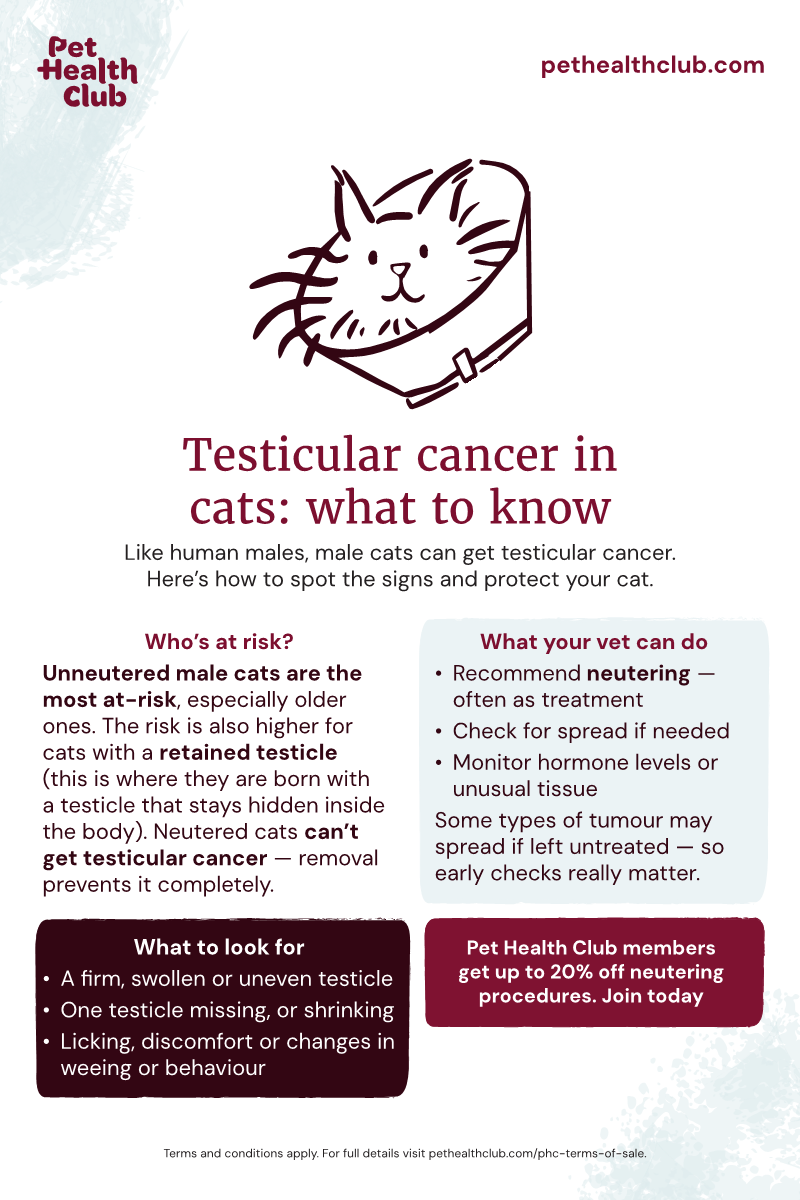
Benefits of neutering a male cat include:
Reduces urine spraying and marking behaviours.
Eliminates the chance of getting testicular cancer.
Decreases the likelihood of getting prostate cancer.
Reduces aggression and fighting behaviours with neighbouring cats.
They’re less likely to wander far in search of mates, decreasing the chance of getting run over or injured.
Reduces the chance of getting infectious diseases such as FeLV and FIV.
Unneutered indoor cats may get frustrated and try to escape, which can be dangerous, especially if you don't live on the ground floor.
Increasing his life expectancy.
Read more: Genital problems in male cats
Benefits of spaying female cats include:
No unwanted pregnancies or phantom pregnancies.
Preventing pyometra (infection of the womb).
Eliminating your cat's season and stops unneutered males trying to mate with her.
Preventing unwanted behaviours (like roaming, restlessness, calling, and some forms of aggression).
Reducing the risk of mammary cancers.
Preventing ovarian and uterine cancer.
Not having to keep your cat inside multiple times a year when they're in heat.
Increasing her life expectancy.
What age to neuter a cat
Most vets recommend neutering cats from four months old, but this can be as late as six months if there is no risk of pregnancy. While this may seem young, cats become sexually mature around this age, and start displaying relevant behaviours and the potential to start breeding. If you plan on having an outdoor cat, you should have them neutered before they are allowed to roam.
Cats can be neutered at any age, although there has been lots of research into the surgical removal of reproductive organs before they reach puberty. One of the important factors is body weight, as cats under 2kg are at a higher risk when placed under anaesthetic. Your vet will guide you on the best time for neutering your cat.
Read more: Cat heat cycles
What happens during cat neutering?
Neutering is a simple procedure. Once you've dropped your cat to the vet, they will:
Check over your kitten. This is where your vet will check the sex of your kitten to make sure they do the correct procedure, and check that they are in good general health.
Place them in a warm, comfortable bed and give them a light sedative to help them relax
Once calm and relaxed, they will give your cat their general anaesthetic and pain killers.
The surgical site will be shaved and cleaned. This makes it easier for your vet to do the operation and makes sure no foreign bodies, like hair, will get inside your cat. In a male, only the testicles will be shaven, in female cats there will be a patch either on their tummy or on their side.
Monitor your cat's vital signs as they are under anaesthetic
If your cat is male, the vet surgeon will make small incisions over each testicle, from which they will carefully remove your cat's testes. Because these incisions are so small, stitches aren't normally needed
If your cat is female, your vet will make a small incision in the middle of their belly, or on the left flank. They then remove the ovaries and uterus before closing the wound with stitches. They may have internal stitches only, or they may have some sutures on the outside of the wound.
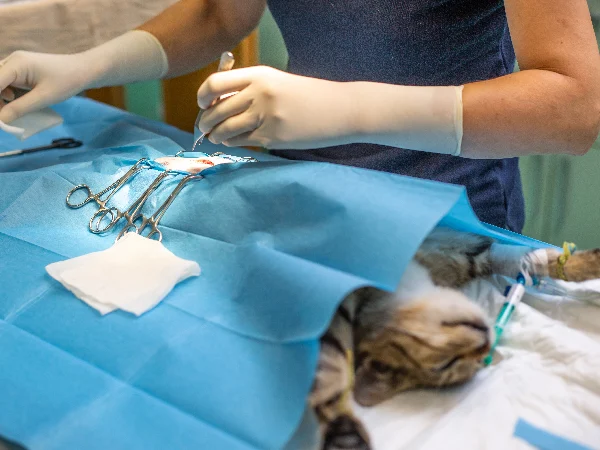
Cats often go home a few hours after surgery, when fully awake.
Preparing for the neutering procedure
If you’re having your cat neutered or spayed, there are certain things your vet will want you to do.
Ensure your cat hasn't eaten anything during the four to six hours before the operation. This means they won't regurgitate any food and possibly choke whilst under anaesthetic because their stomach will be empty. Your vet will give you guidance as to how long to restrict food for before the procedure, but it is usually overnight. It's important to note that only food needs to be restricted, and that you should still give your cat access to drinking water at all times.
Keep your cat indoors overnight before the operation. This makes sure they don’t find food elsewhere (and it can also make them easier to find and get them into a carrier).
Tell your vet if your cat has been unwell in the days leading up to the operation, as they will want to make sure your cat is healthy enough to go under anaesthetic.
Recovery from neutering
Cats generally recover from being neutered remarkably well. They will need to be offered small meals of highly digestible food, and will often have painkillers to be given over the next few days. They may be tired and drowsy as the anaesthetic wears off, but they’ll typically be their lively selves again the next day. It's highly recommended to keep your cat calm and quiet for a few days. This will allow the internal wounds to heal.
You may be offered a cone or bodysuit to prevent your cat from interfering with their wound. The wounds are often very small and most cats will ignore them. Pay careful attention to your cat following their surgery, and contact your vet if they are licking or scratching at their surgical site.
Pre-procedure guidelines | Post-procedure care |
|---|---|
• Last feeding at 8PM the previous evening; withhold food (but not water) overnight. • Keep your cat indoors with access to a clean litter box. • Don't bathe your cat shortly before the procedure, unless they seem very dirty or muddy. | • Cats typically return home a few hours after the surgery on the same day. • They will be monitored to confirm stable recovery. • Anticipate some lethargy and supervise closely for the first 24 to 48 hours. • Re-examination appointments are typically scheduled for two to three days and 10 to 14 days later to remove stitches. • Maintain a calm environment, limiting physical activity. |
Check-ups
These tend to differ for male and female cats. Female cats will typically need a check-up two to three days after the operation as well as seven to 10 days after. Male cats may not need a check-up or only one a few days after the operation.
Side effects of cat neutering
The main side effect of neutering your cat will be weight gain. This is because neutering slows down your cat's metabolism. Feeding your cat a well-balanced diet designed for neutered cats, or dropping their food intake slightly, as well as keeping them enriched and stimulated will help keep their weight under control.
Other side effects can include:
How much to neuter a cat
The cost of neutering your cat can depend several factors, including:
Gender of your cat, with spaying being more expensive than castration
Size and weight of your cat
Your practice location
On average, the cost of castrating a male cat in the UK ranges from £115 to £135, while the cost for spaying a female cat is usually higher, ranging from £160 to £190.
Members of Pet Health Club receive up to 20% off neutering. Some charities offer financial assistance for neutering if you meet certain criteria.
Alternative options for neutering
If you're worried about surgically neutering your male cat, you can choose a chemical castration as a temporary option. It involves placing a tiny implant under the cat's skin which releases pharmaceutical drugs to deactivate the testicles.
Chemical castration has some benefits, including:
Cheaper than surgical neutering
No anaesthesia
Speedy recovery time
However, like all options, it does have some downsides. These can be:
It takes about six weeks to start working
Only lasts six to 12 months before it needs replacing, so it may become more expensive over time and it can be difficult to tell if it has stopped working
Talk to your vet about the best option for your cat.
Common questions on neutering cats
Do male cats change after being neutered?
You may see some changes in their behaviour, but these are generally positive. For example, your cat may be less aggressive, calmer, and less anxious to go outside. If you feel your cat has changed negatively, contact your vet.
How do I comfort my cat after neutering?
Ensure they have a quiet space to rest when you bring them home from the vet. If they want affection, give it to them. If not, leave them to sleep or relax, and try to keep other pets from bothering them. In a day or two, they should be back to normal.
Will neutering make my cat lazy and fat?
Neutering doesn't make cats lazy, although it can predispose to weight gain. Simple dietary adjustments prevent cats putting on weight after neutering. To keep your cat healthy, watch how much food they eat and make sure they have fun ways to play and be active.
Should my cat have a litter before being spayed?
There’s no benefit to allowing your cat to have a litter before spaying. In fact, spaying before the first heat cycle can reduce the risk of mammary gland tumours in female cats.
Are there any reasons not to neuter your cat?
The main reasons not to neuter a cat are if they are at more risk from the anaesthetic, due to age or health concerns, or if you want to breed them. Very young kittens and cats with compromised immune systems are likely to be too weak for the procedure. Responsible breeders may also decide against neutering their cats.
Can you spay a pregnant cat?
If you want to spay your cat, but they are pregnant (or you've noticed signs of pregnancy) you should speak with your vet. It is possible to spay a pregnant cat, and the pregnancy is terminated in the process. In these cases, the vet removes both the ovaries and uterus during the procedure. Neutering a cat in the early stages of pregnancy is usually similar to neutering a non-pregnant cat. Neutering a cat later in her pregnancy (later than three weeks) can be more complex and may involve a larger surgical incision. Your vet will be able to explain the procedure, discuss any additional considerations, and help you make an informed decision based on your cat's individual circumstances.
Do spayed female cats still attract males?
When a female cat is spayed, the vet takes out her ovaries. These ovaries make hormones that cause the cat's body to get ready to have kittens. After spaying, she won't go into heat anymore, so she will act differently and won't smell as interesting to male cats. However, the leftover hormones might take a while to go away completely.
Is neutering a cat cruel?
While that’s a matter of personal opinion, neutering has many benefits. Those include preventing overpopulation, improving your cat’s health and behaviour and helping to contribute to a happier home.
Can you spay a cat in heat?
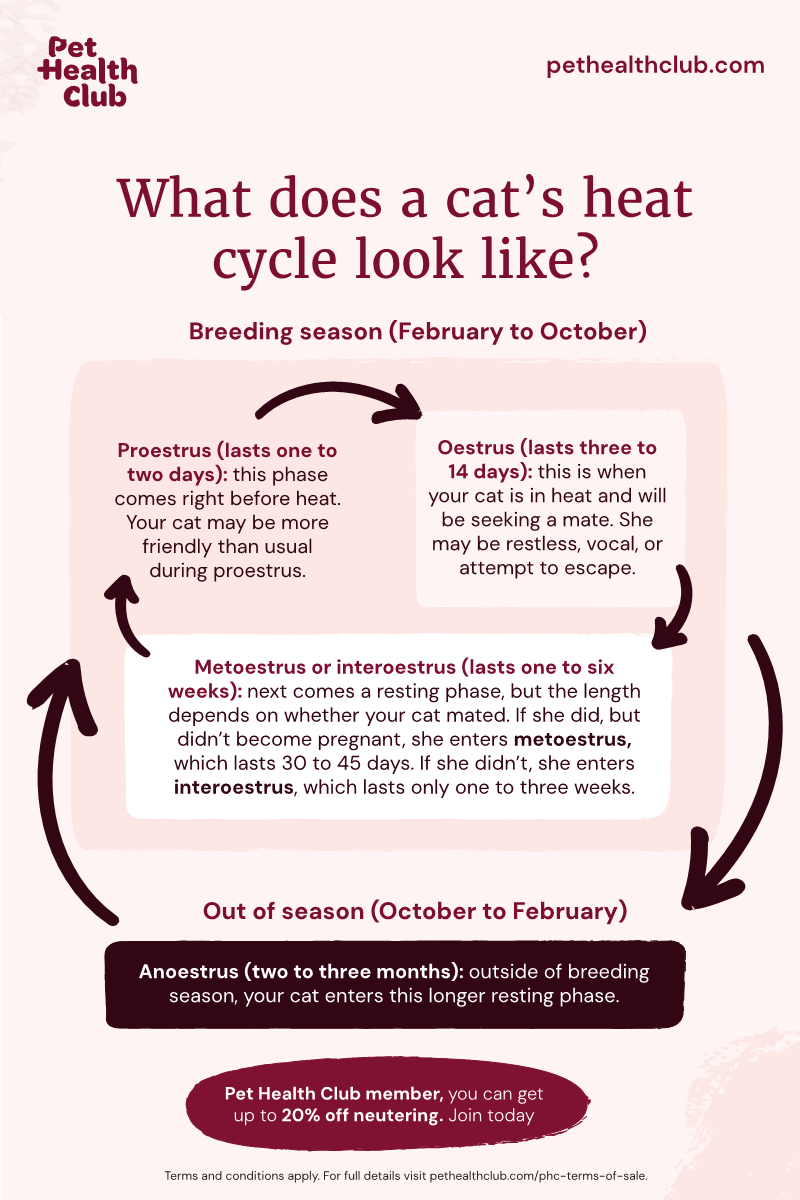
Spaying cats in heat is possible, but it isn't ideal. The surgery can be trickier because the cat's body undergoes some changes during this time, with larger blood vessels and delicate reproductive organs. When a cat is in her heat cycle, she is fertile and receptive to pregnancy. . Typically, feline heat cycles last around four to seven days. If the cat doesn’t find a mate, she’ll keep going into heat every few weeks. Chat to your vet about the best time to spay your cat.
Do cats have periods after being spayed?
Cats don't have periods, full stop. Cats have something different called a heat cycle. This is when their body gets ready for pregnancy, but they don't bleed or lose any tissue from their uterus like humans do. Cats are seasonal breeders, only having heat cycles in the lighter, warmer months.
What are medical shirts for cats?
Medical shirts can be given to cats who've just been neutered to offer comfort and protect surgical sites. Their features include pouches for ice packs, which can reduce swelling and discomfort The light interior makes it easy to spot any discharge or bleeding. The double-layered fabric promotes air flow and helps regulate body temperature.
What are the most obvious signs of infection after neutering a cat?
After surgery, you need to keep an eye on the area where the cut was made. Signs of infection can include:
Redness and swelling
Pus coming out of the cut
The cut starting to smell
Your cat suffering pain or appearing uncomfortable
Continual licking or biting around the area of the cut
The cut feeling hotter than elsewhere on your cat’s body
Fever or prolonged tiredness
Call your vet immediately if you see any of these signs or are worried about how your cat is healing after their surgery.
Can neutering change my cat’s fur colour?
Neutering itself doesn’t cause a change in fur colour, but in some colourpoint cats (such as Siamese, Birman, Himalayan, and Ragdoll cats) fur around the surgical site may temporarily grow back darker. This is because colourpoint coat patterns can differ based on temperature, with cooler areas of the body producing darker fur.
After surgery, the clipped skin can be slightly cooler while the coat regrows, which may affect the colour of the new fur. The change is harmless and usually fades with time, often becoming less noticeable after the next moulting season.
Studies into neutering your cat
Several studies have been done which provide valuable insights into neutering cats, including its health benefits, risks, and impact on behaviour. These include a study in the Journal of Feline Medicine and Surgery investigating the association between neutering and feline lower urinary tract disease (FLUTD). It suggested neutered cats are less likely to suffer from FLUTD than intact cats.
Another piece of research on neutering and obesity in dogs concluded there’s a potential link between neutering and obesity in male pets. Meanwhile, a study into prepubertal gonadectomy (the removal of the reproductive organs in animals before they reach sexual maturity) in the Journal of the American Veterinary Medical Association found both health benefits and risks. It urged owners to discuss the timing of the procedure with their vet. Two other studies on the same topic concluded that prepubertal gonadectomy is safe and effective in cats and that early neutering doesn’t have a negative effect on a kitten’s development.
Cat neutering near me
For expert advice on cat castration and cat spaying, contact your local vet. Find your nearest vet using our Find a Vet page. And remember, Pet Health Club members get up to 20% off neutering, so join today.
Join the club today
Get regular health checks, vaccinations, and more, all included in your plan.

Medically reviewed by Lizzie Youens, BSc(Hons) BVSc MRCVS
Published on 27/11/2018 • Reviewed on 06/08/2026