

Overview
Cats vomit for all kinds of reasons. Some causes, like hairballs or eating too fast, are usually nothing to worry about, but your cat being sick may also be caused by more serious conditions, like kidney disease or even cancer. It’s not always easy to tell if it’s a one-off or a sign of something more. This guide explains what different types of vomit can mean, how to tell when it’s time to worry, and what you can do — at home and with your vet — to help your cat recover.
Is my cat being sick, or regurgitating?
Cats often give clues that they’re about to be sick — lip licking, drooling, swallowing more than usual, or retching. Vomiting usually requires effort from your cat, contracting their stomach to bring up digested food and is often preceded by retching. This is different from regurgitation, which happens without any effort and often comes without any warning signs. Regurgitation usually occurs soon after eating or drinking, bringing up undigested food in clumps which are often log-shaped and mucus-covered.
It’s also worth knowing the difference between vomiting and coughing, as they can look alike. A cat that’s coughing often crouches with their neck stretched out and might bring up froth or foam, which they sometimes swallow again. Vomiting is usually more forceful, involves visible contractions of the tummy, and can follow signs of nausea, like restlessness or hiding away somewhere quiet.
If you’re unsure whether your cat is vomiting, coughing, or regurgitating, try recording a video to show your vet. It can help them diagnose the problem and give more tailored advice.
Common causes of a cat being sick
Occasional vomiting may be caused by:
Hairballs from grooming — though frequent hairballs might point to skin or digestive issues
Eating too quickly or too much, especially in multi-cat homes where pets may feel competitive
Sudden changes in your cat's diet or eating something unfamiliar
Stressful changes in their routine or surroundings — particularly in more anxious cats
Eating grass, food that’s gone off, or non-food items like plants or insects
Food intolerances or allergies, which can also cause diarrhoea or itchy skin
Travel or motion sickness, especially on car journeys or when stressed in a carrier
More serious causes include:
Gastrointestinal conditions like inflammatory bowel disease (IBD)
Kidney or liver disease
Pancreatitis
Hyperthyroidism
Intestinal parasites or blockages
Cancer
Swallowing foreign objects such as string, rubber bands, or small toys
Poisoning from things like human medicine, antifreeze, onions, or chocolate
Heat stroke, especially in warmer weather
Even within these loose groups of ‘not-so-serious’ and ‘serious’, some of these causes require more urgent attention than others. The best way to be safe is to speak to your vet if vomiting happens often or comes with other worrying signs.
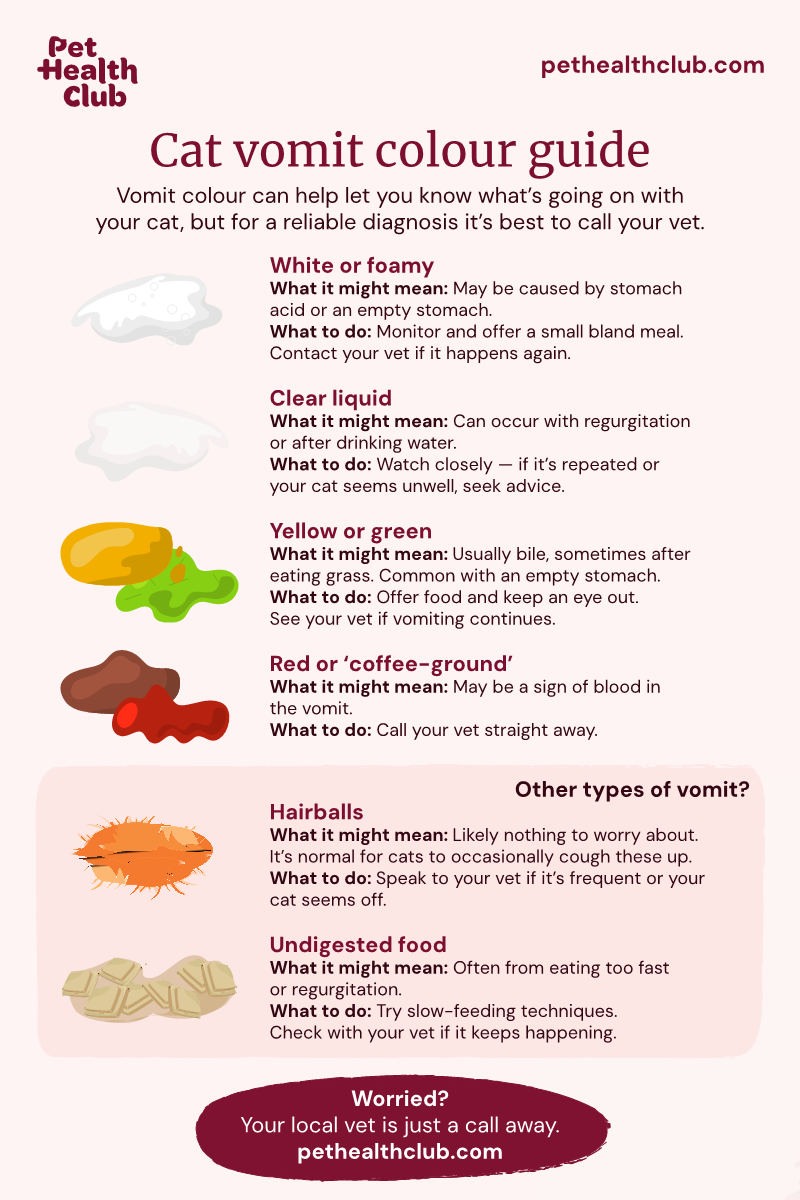
What cat vomit looks like and what it might mean
The look of vomit can offer useful clues. We’ve got some explanations to help you figure out what the appearance of your cat’s sick might be telling you, but be aware that these are general guidelines and not a sure diagnosis.
What it looks like: white foam or clear liquid
What it might mean: can occur when the stomach is empty or mildly irritated.
What to do: offer them small, bland meals for the next 24 to 48 hours if you catch your cat vomiting white foam but seem otherwise well. Keep an eye on them, and contact your vet if vomiting continues or if they show other signs of illness such as diarrhoea, lack of appetite, or a fever.
Appearance: yellow or green vomit
What it might mean: bile is likely present — this often happens when the stomach is empty or mildly irritated. Eating grass can also lead to greenish vomit.
What to do: Offer a small meal and keep an eye on your cat. If vomiting continues or they seem unwell, contact your vet.
Appearance: hairballs (tube-shaped, with fur and sometimes foam)
What it might mean: normal now and then — especially during moulting seasons. But frequent hairballs can be a sign of overgrooming or a digestive issue.
What to do: brush your cat regularly and consider a hairball-control diet if you haven’t already. Speak to your vet if hairballs are frequent or your cat shows other signs of being unwell.
Appearance: undigested food
What it might mean: may point to regurgitation or eating too quickly.
What to do: try slow-feeding methods — use puzzle feeders or spread food on a flat surface. If your cat keeps being sick and can’t keep their food down, speak to your vet.
Appearance: partially digested food
What it might mean: could suggest a problem further along the digestive tract, like delayed stomach emptying. On the other hand, it can be caused by issues outside of the digestive tract such as kidney disease or pancreatitis.
What to do: keep an eye on things and contact your vet if vomiting happens again or your cat seems unwell.
Appearance: brown vomit
What it might mean: could be linked to food colouring or, more rarely, old blood.
What to do: if it happens once and seems food-related, there’s usually no need to worry. But if you're unsure or it happens again, check with your vet.
Appearance: red or coffee-ground vomit
What it might mean: suggests fresh or digested blood — potentially from ulcers, poisoning, or severe irritation.
What to do: urgent vet care needed.
When to take your vomiting cat to the vet
If your cat keeps being sick over several days, or vomits more than twice in 24 hours, it’s time to speak to your vet. Vomiting isn’t normal in cats — even occasional sickness can be a sign of something more serious. Frequent vomiting can quickly lead to dehydration and low blood sugar, especially if coupled with diarrhoea. You should definitely see a vet if your vomiting cat is a young kitten, elderly, or has other ongoing health problems. Vomiting in these cats is more dangerous than in otherwise healthy ones.
Even if your cat has only vomited once, you should get veterinary advice if they also show any of the following signs:
Vomiting after every meal or drink
Lethargy, hiding away, or avoiding contact
A swollen or painful tummy, or bad reactions to being touched
Weight loss or a drop in condition
Blood in the vomit (bright red or coffee-ground appearance)
Vomiting unusual things like worms, string, or plants
Diarrhoea, fever, or changes in normal behaviour
Rapid or heavy breathing
If vomiting is severe or keeps coming back, your vet may suggest tests — these could include blood work, imaging (like x-rays or ultrasound), or checks for toxins or blockages. Don’t wait to see if it gets better. It’s always safer to check, as vomiting can quickly lead to dehydration and other serious problems if left untreated.
Managing cat vomiting at home
If your cat seems otherwise well and has only vomited once or twice, you may be able to manage things at home.
Offer small, frequent portions of something bland — plain boiled chicken or white fish works well. Meals should be unseasoned, at room temperature, and free from oils, dairy, flavourings, or sauces. A veterinary gastrointestinal diet is another good option. If you’re using shop-bought food, check with your vet for recommended brands or a suitable veterinary diet. If your cat copes well, continue for 24 to 48 hours before slowly mixing in their usual food over a few days. Make sure fresh water is always available, and watch for any other signs of illness.
Feeding your cat in a quiet spot, away from other pets, helps reduce stress and competition. To slow down fast eaters, try puzzle feeders, muffin trays, or spreading food on a flat surface.
If hairballs seem to be a trigger, regular grooming — especially during moulting — can help. Your vet may also suggest a special diet or supplement to reduce hairball build-up.
Only try home care if your cat seems otherwise bright and well. If they keep on being sick or show other symptoms like tiredness, diarrhoea, or a loss of appetite, it’s best to call your vet.
Monitoring your vomiting cat's health
Keep a diary of any vomiting episodes. Note down:
How often your cat is sick, the timing of episodes (e.g. how long after a meal), and what the vomit looks like
Any changes in food, routine, or behaviour
Appetite, weight, litter tray use, and hydration
Any medications, supplements, or recent treatments
Look for patterns over time rather than one-off events. Even occasional vomiting — with instances of your cat being sick spaced weeks apart — can point to an underlying issue. Keep an eye on whether your cat is drinking normally and producing urine. Signs like dry gums, brittle fur which sheds easily, or less frequent urination could suggest dehydration.
Even small changes can help your vet build a clearer picture.
Cat vomiting diagnosis and treatment
Wondering how vets work out what’s causing the problem when there are so many possibilities? Here’s how they narrow it down.
Your vet will usually start by asking for a full history — when the vomiting began, how often it happens, what it looks like, and whether there are any other symptoms. Sharing a photo or video of the episode can really help. Next comes a physical exam. This lets your vet check for pain, dehydration, bloating, or anything unusual. They will gently feel your cat’s tummy to look for swelling, lumps, or blockages.
If the cause isn’t immediately clear, your vet may recommend blood tests to check organ function and for signs of infection or inflammation. X-rays or ultrasound scans can help spot blockages, tumours, or fluid build-up. In some cases, they might suggest an endoscopy or exploratory surgery to look more closely.
Treatment depends on what’s causing the vomiting. It could involve anti-sickness medicine, fluids, dietary changes — or, in more serious cases, surgery. Parasites are treated with wormers, and poisonings may need activated charcoal or an antidote.
The key is not to wait — especially if vomiting is frequent or comes with other symptoms. Your vet can quickly assess the situation and start the right treatment to help your cat feel better.
Kitten being sick
Kittens are especially vulnerable to vomiting. Because kittens are small and still developing, they can become dehydrated or unwell much faster than adult cats. Common causes include sudden changes in diet, eating things they shouldn’t, viral or bacterial infections, or weaning issues. Vomiting can also be linked to congenital problems or, in rare cases, reactions to vaccines or medication.
If your kitten vomits more than once, refuses food, or seems tired, contact your vet straight away. Don’t wait — young kittens can go downhill quickly without help. Keep their vaccinations, parasite treatments (just like adult cats, kittens can get worms and fleas), and diet on track, and try to avoid sudden changes to feeding routines.
FAQs about vomiting in cats
Is it normal for cats to vomit occasionally?
Not really. While some cats may occasionally bring up a hairball, regular vomiting — even if it’s spaced out — shouldn’t be seen as “normal.” It often means something isn’t quite right.
Why does my cat eat grass and then throw up?
Some cats eat grass to help bring up hairballs or ease an upset stomach. But it can also irritate the stomach lining and trigger vomiting.
Should I feed wet or dry food if my cat vomits often?
It depends on your cat and the reason for their vomiting. Wet food can be easier to digest and provides more moisture, which helps some cats. Others may need a prescription or hypoallergenic diet. Your vet can advise on what’s best based on your cat’s medical history, and what’s behind their vomiting.
Can I give my cat anti-nausea medication at home?
Only if it’s been prescribed by your vet. Never give human medicine to your cat, or reuse old prescriptions without checking first.
Academic research into cat vomiting
Veterinary research has shown just how complex vomiting in cats can be. One study from 2017 sheds light on how vomiting is often just one part of a bigger picture. For example, chronic vomiting — defined as at least three episodes a month over three months — can sometimes be the only visible sign of deeper issues like pancreatitis, food-responsive disease, or lymphoma. The study also covered how endoscopy helped diagnose cats with ongoing vomiting, revealing that cases once put down to hairballs or ‘sensitive tummies’ were actually caused by treatable long-term conditions.
Researchers are also exploring how best to manage vomiting. Cats are famously tricky to induce vomiting in, especially after eating something toxic. But a recent trial using the sedative dexmedetomidine showed promise: five out of six cats vomited after taking it by mouth, with no major side effects. This could give vets a more practical, cat-friendly option in emergencies.
There’s one thing the research community agrees on — there’s a need for more cat-specific studies. A 2013 paper pointed out that much of what we know still comes from small case reports or is based on research in dogs. That same year, a review of past studies listed over 130 possible causes of vomiting in cats. With so many potential reasons, the authors stressed the need for more focused research on how best to manage it. Thankfully, years later, that work is now well underway.
Need more info?
Seeing your cat being sick can be worrying but you don’t have to guess alone. Trust your instincts. If they’re not themselves, reach out to your vet.
And if you’re not already a member, this is where Pet Health Club can really help. Our plans include regular check-ups, parasite treatments, and expert advice to catch issues early, before they become emergencies.
Join the club today
Get regular health checks, vaccinations, and more, all included in your plan.

Medically reviewed by Lizzie Youens, BSc(Hons) BVSc MRCVS
Published on 22/06/2018 • Reviewed on 20/06/2024