

Overview
Male cats can develop a variety of problems with their genitals, from common urinary troubles to rare physical conditions. These issues can affect how they feel, how they behave, and their overall health. Some can even become serious if not treated quickly. A male cat who is struggling to pass urine should always be treated as a veterinary emergency.
What’s normal for a male cat’s penis and genitals?
The cat penis is usually hidden inside a protective sheath and only shows when they urinate or are aroused. Because it’s not often seen, it can be hard to know what’s normal, or when to worry.
At the tip of the cat penis are tiny, backward-facing spines. These are completely normal in unneutered males and play a role during mating. After neutering, these spines usually shrink and fade as testosterone levels fall. If your neutered cat still has visible spines, it could mean there’s still hormone activity, such as a retained testicle. In this case it’s best to check in with your vet.
If your male cat hasn’t been neutered, you’ll usually see the scrotum under the tail, which holds the testicles. These should look like two even, oval shapes. If one is missing or looks smaller, it’s worth asking your vet to take a look.
Your cat’s genitals should be clean, even-looking and free from swelling, discharge, or discomfort. If your cat often licks the area, seems sore when going to the toilet, or if their penis is showing for no clear reason, it could be a sign something’s wrong.
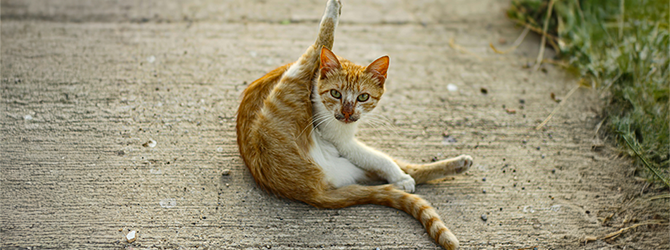
Read more: The importance of routine health checks for cats
Why are cat penises barbed?
The barbed shape of a male cat’s penis can take many owners by surprise, but it’s a normal part of feline mating. These tiny, backward-facing spines are made of keratin and are found only in unneutered males. When cats mate, the sensation of the spines helps trigger ovulation in the female. Mating is often brief, and the female may yowl or move away quickly afterwards. This is completely natural. Some males may lick or nuzzle the female afterwards, which is thought to be an instinctive way of offering comfort.
Behaviours like mounting, humping, or signs of arousal are common in unneutered males, especially around females. These usually settle down after neutering, although some cats may keep doing them out of habit, especially if neutered later in life. If you are a Pet Health Club member, you get up to 20% off neutering procedures — very handy if your cat’s behaviour is causing issues.
What are the most common cat penis issues?
Paraphimosis
This is when a cat penis gets stuck outside the sheath and can’t go back in. It can be painful and, if not treated, might lead to swelling or damage. It’s usually caused by an injury, mating, trapped fur, or a nerve problem. Treatment often includes gentle cleaning, use of vet-approved ointments, and anti-inflammatory medicine. In more serious cases, surgery may be needed.
Phimosis
This is the opposite of paraphimosis — when the cat penis can’t come out of the sheath. Some cats are born with it, while others develop it after an injury or infection. Some cats don’t seem bothered, but if it causes trouble with weeing or mating, your vet may recommend surgery to help.
Priapism
Priapism is when a cat has a long-lasting, often painful erection that isn’t linked to mating. It’s rare, but it is a medical emergency. It can be caused by injury, infection, or nerve problems, and usually shows as a firm, swollen penis that stays out for over an hour. Treatment depends on the cause and might involve medicine, drainage or, in serious cases, surgery. Getting help quickly is key to avoiding long-term tissue damage.
Balanoposthitis
This means the cat penis and sheath become inflamed, usually because of infection, injury, or hygiene issues. You might notice redness, swelling, discharge, a strong smell, or that your cat is licking the area a lot, and they may have trouble passing urine or have discomfort urinating. Treatment often includes cleaning, antibiotics, or antifungal medication. Sometimes your vet will need to treat any underlying cause. Regular checks and good hygiene can help stop it coming back.
Genital injuries
These can happen for all sorts of reasons, like bites, scratches, accidents, or things getting caught where they shouldn’t. Signs include swelling, bleeding, limping, or licking the area more than usual. Even small wounds can get infected, so it’s always worth asking your vet for advice. Treatment might include pain relief, antibiotics, or minor surgery, depending on what’s needed.
What urinary problems can affect a cat penis?
Male cats are more likely than females to have urinary problems because their urethra (the tube that carries urine out) is very narrow. This makes them more prone to blockages and infections, which can affect the cat penis and cause discomfort or health risks.
Urinary tract infections (UTIs)
UTIs happen when bacteria get into the urinary system. Signs include straining to wee, going more often, blood in the urine, vocalising when toileting, or weeing outside the litter tray. Your cat might also lick around their genitals more. UTIs are usually treated with antibiotics, and your vet may suggest changes to your cat’s diet or routine to help stop them coming back.
Feline Lower Urinary Tract Disease (FLUTD)
FLUTD is a group of conditions that affect the bladder and urethra – including inflammation, stress-related problems and tiny crystals that form in the urine. These crystals can irritate the bladder and sometimes lead to blockages. Symptoms are similar to a UTI and can include straining, frequent weeing, blood in the urine and licking the area. Treatment will depend on what’s causing the problem, but may include a special diet, pain relief, extra fluids, or help with stress.
Urethral obstruction
This is a serious and life-threatening condition where the urethra becomes blocked. It’s usually caused by a mix of inflammation, mucus and tiny mineral crystals forming a plug. Cats may strain to wee but not pass anything, make frequent and agitated visits to the litter tray, cry out in pain, seem tired, or go off their food. It needs urgent treatment. Vets usually treat it by placing a catheter to clear the blockage, giving fluids, and monitoring closely. In some cases, surgery is needed to create a new opening for urine to pass through.
Bladder stones (urolithiasis)
these are hard lumps of minerals that form in the bladder and can sometimes move into the urethra. They can cause irritation, bleeding, and blockages. Signs include straining, weeing more often, and blood in the urine. Treatment depends on the type of stone. Some can be dissolved with a special diet, while others may need to be removed with surgery.
You can help prevent urinary problems by feeding a diet recommended by your vet, making sure your cat drinks enough (wet food or a water fountain can help), keeping their litter tray clean, having the appropriate number of litter trays if you have multiple cats, and reducing stress at home. Regular check-ups give your vet the chance to spot early signs before they become more serious.

Read more: Bladder issues in cats
What issues can affect cat testicles?
Unneutered male cats are more likely to develop testicle issues, especially as they get older. Here are some of the most common concerns about cat testicles:
Cryptorchidism (retained testicles)
This condition is when one or both testicles don’t descend into the scrotum, often from birth. You might notice your cat seems to have only one testicle, or none. Retained testicles can still produce testosterone, which may lead to behaviour changes. Retained testicles are at higher risk of developing testicular cancer. Surgery to remove both testicles (including any hidden in the abdomen) is usually recommended.
Orchitis and epididymitis
Caused by injury, infection, or illness, orchitis and epididymitis are types of inflammation of the testicles or spermatic cord. Signs include swelling, pain, fever, and changes in behaviour like tiredness or being more irritable. Treatment often includes antibiotics, pain relief and, in some cases, removing the affected testicle.
Testicular tumours
While not common, unneutered cats can develop tumours in one or both testicles. These may be benign or cancerous. Symptoms can include testicular enlargement, firmness, or asymmetry. Treatment typically involves neutering, which is often curative if the tumour hasn’t spread.
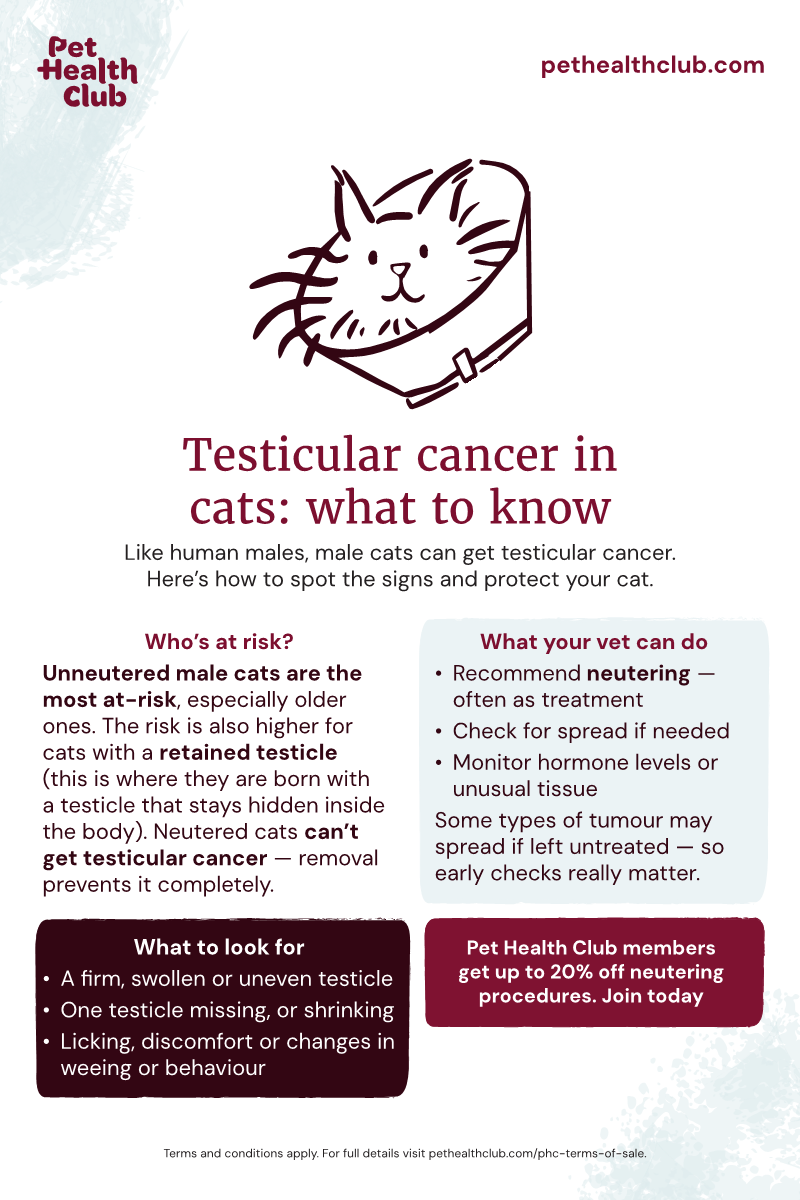
Read more: Cancer in cats
Accessory gland disease
Male cats have glands (known as prostate and bulbourethral glands) in their genitals which can develop infections, cysts, or tumours. These issues are rare, but symptoms can include straining to urinate, blood in the urine, or swelling near the anus or penis. Diagnosis and treatment require veterinary assessment and may include antibiotics, surgery, or neutering.
Scrotal dermatitis or trauma
Your male cat's scrotal skin can become inflamed due to allergies, poor hygiene, or external injuries. This may cause redness, swelling, or discomfort, and cats may lick excessively. Mild cases often respond to cleaning and topical treatment, but more severe irritation or infection may need antibiotics or anti-inflammatories.
Regular checks and a clean, stress-free environment can also support long-term genital health, but the most effective way to prevent any cat testicles issues is neutering. Neutering male cats significantly reduces the risk of most of these conditions and eliminates the risk of reproductive cancers entirely. And remember, if you’re a Pet Health Club member, you get a discount of up to 20% on neutering procedures.
Do male cats get congenital issues?
Some male cats are born with structural differences that affect the penis, sheath, or urethra. These may not be obvious until puberty, but they can lead to problems with weeing, hygiene, or mating. Most of these conditions are rare, and many can be managed well with the right vet care.
Hypospadias
This is when the opening of the urethra is in the wrong place — either further down the penis or closer to the base. It can lead to leaking urine or infections. Surgery may help in more serious cases, but mild ones might not need treatment if they aren’t causing issues.
Penile agenesis or hypoplasia
These very rare conditions mean the penis is underdeveloped or missing. Some cats may have trouble weeing or may leak urine. Treatment depends on how severe it is, but with the right support, many cats can live comfortably.
Sheath abnormalities
Some kittens are born with a very small or oddly shaped opening to the sheath. This can trap the penis or cause urine to spray in different directions. It’s sometimes linked to conditions like phimosis. If it leads to discomfort or makes it hard to keep the area clean, your vet may recommend surgery to help.
Intersex conditions (ambiguous genitalia)
A few cats are born with both male and female traits because of differences in chromosomes or hormones. This is often only discovered during neutering. Most intersex cats live full, healthy lives and don’t need extra treatment, but in some cases there are problems with weeing or hormone levels.
While these conditions might sound worrying, many are easily managed. Some don’t even cause any issues at all. If your vet spots something unusual during a check-up, they can let you know if it’s something to monitor or treat.
Symptoms of congenital issues in male cats include:
Swelling or redness
Discharge or blood
Constant licking
Pain while weeing
Frequent weeing or accidents in the house
Vocalising whilst on the litter tray
If you notice any of these, it’s best to get your cat checked by a vet.
How do you help a male cat with genital issues?
At your cat’s routine check-up, your vet will take a look to make sure everything looks healthy. But if you’ve spotted something unusual at home, you can do a quick check yourself. Gently lift their tail and look for any redness, swelling, discharge or anything that doesn’t seem quite right. It’s also normal for the penis not to be visible, so don’t worry if you can’t see it.
Pick a quiet time when your cat is relaxed. You don’t need to touch the area – just looking is enough. If your cat seems uncomfortable or doesn’t want to be examined, don’t push it. Instead, keep an eye on how they behave, especially when using the litter tray or if they’re licking more than usual.
It’s a good idea to keep an eye on your cat’s litter tray habits. Straining to wee, going more often than usual or missing the tray can all be early signs of a urinary or genital problem. If you see blood, notice a stuck penis, or your cat can’t wee at all, it’s an emergency – contact your vet straight away. Never try to push the penis back in yourself, and don’t apply creams or ointments unless advised by a vet.
Male cat genitals FAQs
Is it normal to never see my male cat’s penis?
Yes, that’s completely normal. A cat’s penis stays tucked away inside a protective sheath and only comes out when they wee or are aroused. If it’s visible when your cat is relaxed or seems stuck, it’s a good idea to get it checked by your vet.
Do neutered cats still have a penis?
Yes, neutering removes the testicles, not the penis. The penis stays, but after neutering, the tiny spines on it shrink and disappear as testosterone levels drop.
What happens to a male cat’s testicles after neutering?
The testicles are removed during surgery. Afterward, the scrotum usually shrinks but doesn’t disappear completely – so it’s normal for the area to look a bit flatter.
My cat had only one testicle removed — is that a problem?
It could be. Some male cats are born with a testicle that stays hidden in the abdomen. If one was missed during neutering, your cat may still produce testosterone. Your vet can check and let you know if further surgery or hormone testing is needed.
Are genital problems more common in male cats than female cats?
Generally, yes — especially when it comes to urinary blockages. Male cats have a narrower urethra, which makes them more likely to develop blockages from things like crystals or mucus plugs. This can be very serious and needs emergency vet care.
Should I clean my male cat’s genitals at home?
Usually not. Most cats do a great job of keeping themselves clean. If you notice the area looks dirty or there’s any discharge, it’s best to get your vet to take a look rather than trying to clean it yourself — it can be stressful or even cause injury.
Why does my neutered male cat still try to mate or hump?
This can happen out of habit, excitement, or if your cat was neutered after they reached maturity. It often fades over time. If it doesn’t, your vet can check for any underlying causes.
How do I know if something’s wrong?
Look out for swelling, redness, discharge, signs of pain, or any changes in weeing or grooming. If something doesn’t seem right, it’s always worth checking in with your vet.
Why is my cat licking his penis?
A bit of licking is normal, especially after a wee. But if your cat is licking a lot or seems uncomfortable, it could be a sign of irritation, infection, or a urinary problem. It’s best to get them checked by your vet.
Are there any studies into male cat genital health problems?
Congenital phimosis case study
In one study, an eight-week-old kitten had a condition called congenital phimosis. This is where the foreskin is too tight, meaning the penis can’t leave its sheath properly. The kitten was weeing every 10 minutes, drinking a lot, and later developed blood in his wee. Because his wee was getting trapped, the kitten ended up with a bladder infection caused by E. coli. A short, simple surgery to gently widen the foreskin cleared up all the symptoms. It goes to show unusual toileting habits (especially in young kittens) shouldn’t be ignored.
Healthy cats can carry fungi on their genitals
An Iranian study looked at stray male cats and found that about a quarter carried fungi like Penicillium or Candida around the penis or foreskin. These cats didn’t show any obvious signs of illness, but it shows how hygiene and living conditions can affect skin health — especially for outdoor cats who are at a greater risk of infection.
Most testicle problems aren’t cancer
A 2024 study into testicular problems in male cats shows that most issues are caused by inflammation, not cancer. Conditions like epididymitis (inflammation near the testicle) and irritation of the surrounding tissues are fairly common. Undescended testicles (cryptorchidism) were also reported — these can be removed by neutering, but when they are left they carry a higher risk of cancer later on. Actual testicular cancer is rare and mostly seen in older cats.
Infertility in breeding cats is a growing area of research
A clinical review from the Journal of Feline Medicine and Surgery found that infertility in male cats is becoming more common. The authors found that more male cats are struggling to reproduce because of poor sperm quality or physical problems like swelling, birth defects, or even fur getting wrapped around the penis. These issues appear to be more common in long-haired or pedigree breeds. Again, undescended testicles are a factor here.
More advice on male cat genital issues
If you have more questions about cat penis, testicle, or other genital health issues, speaking to your vet is a good idea. They can also advise you on cat castration, and whether it's a good option for your male cat.
Find your nearest vet using our Find a Vet page. And remember, Pet Health Club members get up to 20% off neutering, so join today.
Join the club today
Get regular health checks, vaccinations, and more, all included in your plan.

Medically reviewed by Lizzie Youens, BSc(Hons) BVSc MRCVS
Published on 19/11/2025 • Reviewed on 19/11/2025