

Overview
If your female cat is in heat, you might notice she’s more vocal, restless, or keen to get outside. It can be a little worrying if you’re not expecting it, but it’s what she naturally does while looking for a mate. The best thing you can do is keep her safely indoors — away from male cats — to avoid any surprise litters. Other ways of helping include:
Creating a calm, safe space at home
Giving her extra attention and gentle fuss
Keep her busy with playtime or treat-filled toys
Try a pheromone diffuser to help her feel more settled
Double-check that windows, doors, and cat flaps are secure
Most female cats (known as queens) have their first heat when they’re around four to six months old — and they can get pregnant even on their first cycle. If they don’t mate, they’ll usually come back into heat every couple of weeks throughout their breeding season (spring and summer). You might spot signs like loud calling, rolling around, restlessness, or trying to sneak outside to find a mate. The simplest and safest way to avoid heat cycles and unexpected litters is to have your cat spayed.
How do I tell if a cat is in heat?
When your cat is in heat, you’ll usually notice a few clear signs — though some can be a bit puzzling if it’s your first time seeing them. Here’s what to watch for:
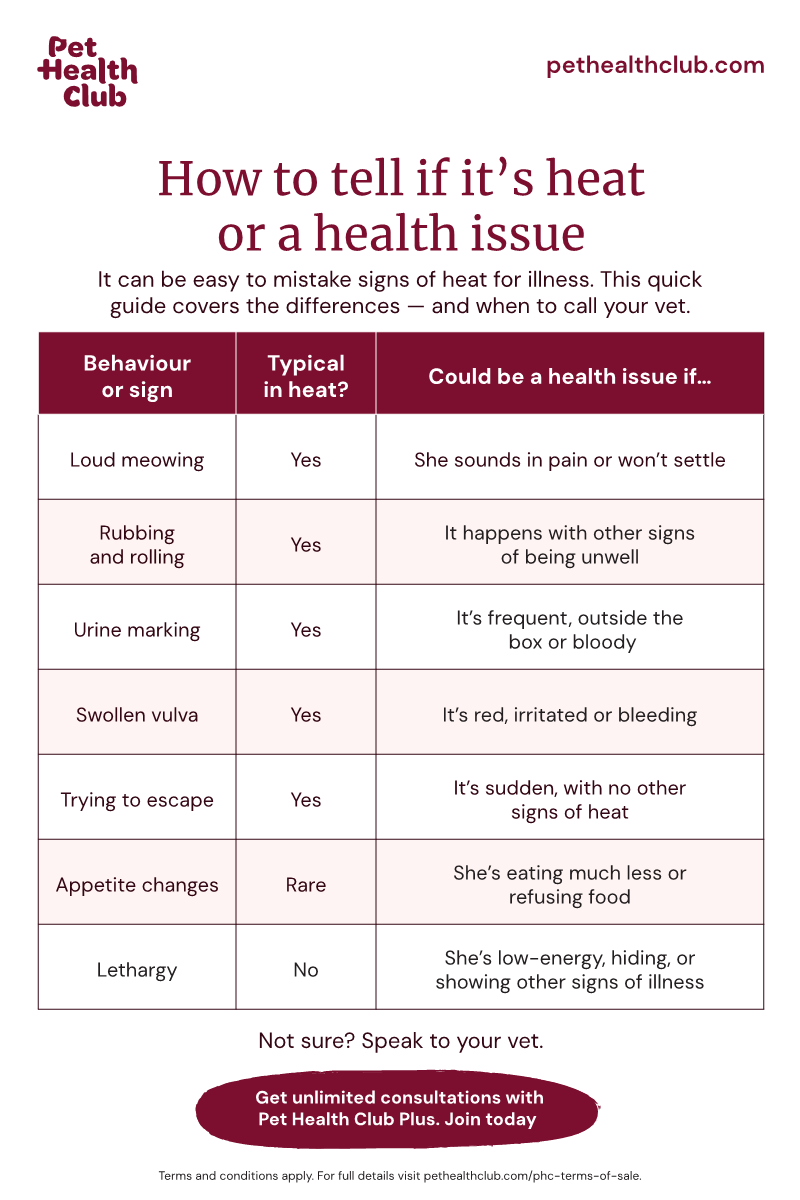
More vocal than usual: often loud and persistent, especially at night. This is known as ‘calling’ and it’s how she tries to attract a mate. Often it can be confused with a painful cry, which can be worrying, but this loud vocalisation is perfectly normal for a cat in oestrus.
Restlessness: she might pace around or seem unsettled, finding it hard to relax
Trying to escape: she may look for any chance to sneak outside in search of a male cat
Extra affectionate: rubbing against you, furniture, or door frames to leave her scent
Rolling on the floor or arching her back
Raising her back end and moving her tail to one side: a typical mating posture
Spraying or marking with urine: this carries hormones to let male cats know she’s around
Grooming her rear end more than usual: it may also look slightly swollen
Mood changes: she might be all cuddles one minute, then grumpy the next
It’s not common, but if you spot any blood around your cat’s back end or in her urine, it’s best to contact your vet. While this could be part of her heat cycle, it’s just as likely to be a health problem.
How often do cats go into heat?
Most cats have their first heat cycle — also called the oestrus cycle — between four and six months of age, but it can vary. Some may start as early as three to four months, while others might not have their first season until around 10 to 12 months, depending on their breed and size.
Cats are known as ‘induced ovulators’, which means they usually need to mate before they can release eggs and become pregnant. If mating doesn’t happen, they will return to heat after a short break, making repeated cycles common for unspayed females.
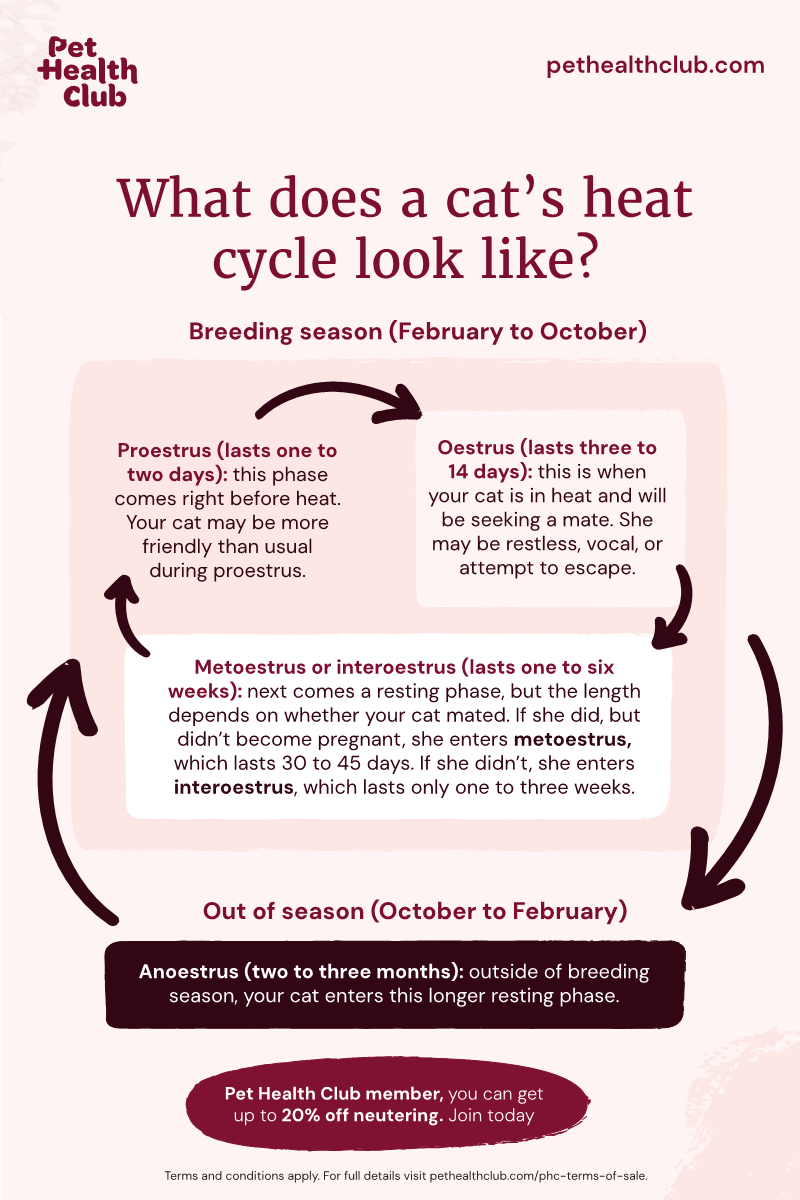
The feline heat cycle has four stages:
Proestrus (one to two days): your cat may seem more affectionate or rub up against you and furniture, but she won’t be ready to mate just yet.
Oestrus (in heat): this stage can last anywhere from three to 14 days, but it’s usually about a week. You’ll likely notice clear signs like calling, restlessness, and trying to escape to find a mate. She’s fertile during this stage.
Metoestrus or interoestrus: if your cat mates and ovulates but doesn’t become pregnant, her body enters metoestrus, a resting phase which usually lasts between 30 and 45 days. During this phase, her hormone levels may cause her to behave as if she’s pregnant, and she won’t show signs of heat for a while. However, if your cat doesn’t mate, she will instead enter interoestrus. This also involves her going through a break before her heat cycle begins again, but a shorter one than metestrus — usually just one to three weeks. If your cat mates and ovulates successfully, she enters dioestrus.
Anoestrus: this is another resting phase in your cat’s cycle — but unlike metoestrus and interoestrus, anoestrus lasts much longer. It happens when the breeding season ends, usually around October, and can last for two to three months. During anoestrus, your cat’s hormone levels drop, so she won’t show any signs of being in heat and won’t be able to mate.
Read more: Cat neutering
What affects your cat's heat cycle?
The timing and frequency of your cat’s heat cycles can vary. This is because every cat is different, but also because some external factors might be making a difference too:
Daylight hours: cats are known as ‘long day breeders’, which means their cycles are triggered by longer days. Outdoor cats tend to follow the seasons — in the UK, their heat cycles usually run from February to October. Artificial light can trigger cycles too, which is why indoor cats sometimes cycle all year round.
Temperature: warmer weather can mean more frequent heat cycles, or even year-round cycles in some cats.
Presence of other cats: being around other unneutered cats, especially males, can sometimes trigger heat cycles. This is quite common in homes with more than one cat.
Breed and body weight: some breeds, like Siamese cats, tend to mature earlier and can have their first heat as young as four months old. Bigger breeds or those that mature more slowly might not start until around 10 to 12 months. Most cats will come into season when they’ve reached about 80% of their adult body weight.
How do you prevent heat cycles and unwanted pregnancies?
The only reliable way to prevent your cat from coming into heat is to have her spayed. This is a routine operation where the ovaries and the womb (uterus) are removed, which stops her heat cycles and prevents any surprise litters. Spaying also helps protect against several health problems, including mammary tumours, womb infections (called pyometra), and other reproductive diseases.
Vets usually recommend spaying once your cat has reached sexual maturity. For most cats this is between four and six months of age, but it can vary. If you are planning on getting your cat spayed, it’s good to know members of Pet Health Club get up to 20% off neutering.
Remember: if your female cat ventures outside when she’s in heat, it’s highly likely you'll soon be noticing her nipples 'pinking up', and changes to her appetite, behaviour, and heat cycle — all signs that your cat is pregnant.
Read more: Appetite loss in cats
What are the common myths about cats in heat?
There are plenty of myths about cats and their heat cycles. Here are some of the common ones — and the facts to set them straight:
Myth: Female cats should have a litter before they’re spayed.
Truth: There are no proven health or behavioural benefits. In fact, delaying spaying can increase the risk of health problems.
Myth: Only outdoor cats go into heat.
Truth: Indoor cats have heat cycles too, especially if they’re exposed to lots of artificial light.
Myth: Cats bleed during heat.
Truth: It’s rare, but it can happen. Most cats don’t bleed at all, so if you do spot blood it’s best to check with your vet. It can be a sign of a health problem rather than part of the heat cycle.
Myth: Cats are constantly fertile.
Truth: Cats have repeated heat cycles during breeding season, but they’re not fertile all the time — unless environmental factors, like lots of artificial light, extend the season.
Myth: You can delay spaying if your cat stays indoors.
Truth: Indoor cats still go through heat cycles and face the same health risks if they’re not spayed.
How to help your cat when she’s in heat
Differences between male and female cats during heat
Only female cats go into heat, but male cats can certainly tell when a female is nearby and ready to mate. When it comes to changes in your male cat’s behaviour (or that of others in the neighbourhood), here’s what you might spot:
More vocal and restless: male cats often become louder and more unsettled as they search for a mate.
Spraying and marking: tomcats may spray strong-smelling urine around the house, garden or neighbourhood to mark their territory and let other males know they’re around.
Escape attempts and surprise visitors: unneutered male cats may try to escape the house or garden to find a female in heat. Unneutered male cats often roam further than neutered males, increasing the risk of traffic accidents. And if there’s a female nearby, local tomcats might hang around your home — and sometimes even try to sneak inside.
For male cats too, neutering is the best way to help reduce these behaviours and prevent surprise litters. And remember, Pet Health Club has discounts of up to 20% on neutering — for tomcats as well as queens.
Cat in heat FAQs
How long does a heat cycle last?
The full heat cycle can last a few weeks, but the stage when your cat is in heat — showing noticeable signs — usually lasts around a week. It can be as short as three days or as long as 14.
How often do cats go into heat?
Every two to three weeks during their breeding season, which runs from February to October in the UK. Some indoor cats can have heat cycles all year round, especially if they’re exposed to lots of artificial light.
Is my cat in pain?
No — being in heat isn’t painful, but it can make your cat feel restless or unsettled. It’s normal for her to be more vocal and behave differently. If you’re ever unsure or worried, it’s always best to check with your vet.
Should I let my cat outside during heat?
No — it’s best to keep her indoors and safe. Even indoor cats can get pregnant if they manage to escape, so make sure doors, windows and cat flaps are secure.
Can I spay my cat while she’s in heat?
Yes, many vets can carry out the procedure while she’s in heat, though some prefer to wait until her cycle has passed. Your vet will be able to advise on the best timing for your cat.
Can my cat get pregnant during her first heat?
Yes — female cats can get pregnant on their very first heat cycle, which can happen as young as four months old.
Research into cats in heat
Recent studies have helped us better understand how a cat’s heat cycle works — and how owners can manage it.
A 2022 clinical review showed that while cats might seem easy to breed, their reproductive cycles are more complicated than they look. Female cats are seasonal breeders, so they usually come into heat between February and September in the UK. But for indoor cats, artificial lighting can mean heat cycles happen all year round.
The same review also showed that other cats can influence your queen’s heat cycles. If she’s around other females in heat or unneutered males, she may come into heat sooner — and more often. Most cats need to mate to release eggs, but in some cases, they can ovulate on their own, even without mating.
There are medical options to help manage heat cycles, but these should only be used under close vet supervision. Hormone treatments can be used to either delay or trigger heat, but they do carry risks, especially if used long term. Your vet can talk you through the options and what’s right for your cat.
Looking at temporary birth control options, a 2025 study tested very low daily doses of a hormone called Megestrol Acetate (MA). The research found that this ultra-low dose was safe and effective for stopping heat cycles for up to six months. It also helped reduce behaviours like loud calling or spraying, and prevented surprise litters. Some cats did gain weight, but this usually went back to normal once the treatment stopped. The study recommended a full vet check — including a hormone blood test — before starting this option, along with regular check-ups if it’s used for more than four months.
There’s also promising research underway to develop long-lasting, non-surgical birth control for cats. But for now, spaying is still the most reliable and safe way to prevent heat cycles and unwanted pregnancies.
Want more information on cat heat cycles?
For expert advice on how to help your cat through her heat cycle, get in touch with your local vet. If you are planning on neutering, remember that Pet Health Club members get up to 20% off.
Find your nearest vet using our Find a Vet page.
Join the club today
Get regular health checks, vaccinations, and more, all included in your plan.

Medically reviewed by Lizzie Youens, BSc(Hons) BVSc MRCVS
Published on 23/01/2020 • Reviewed on 07/06/2026