

Overview
If your cat is pregnant, one of the first things you’ll notice is a change in her nipples. This can start as early as three weeks after mating, and it’s often one of the clearest signs that kittens are on the way.
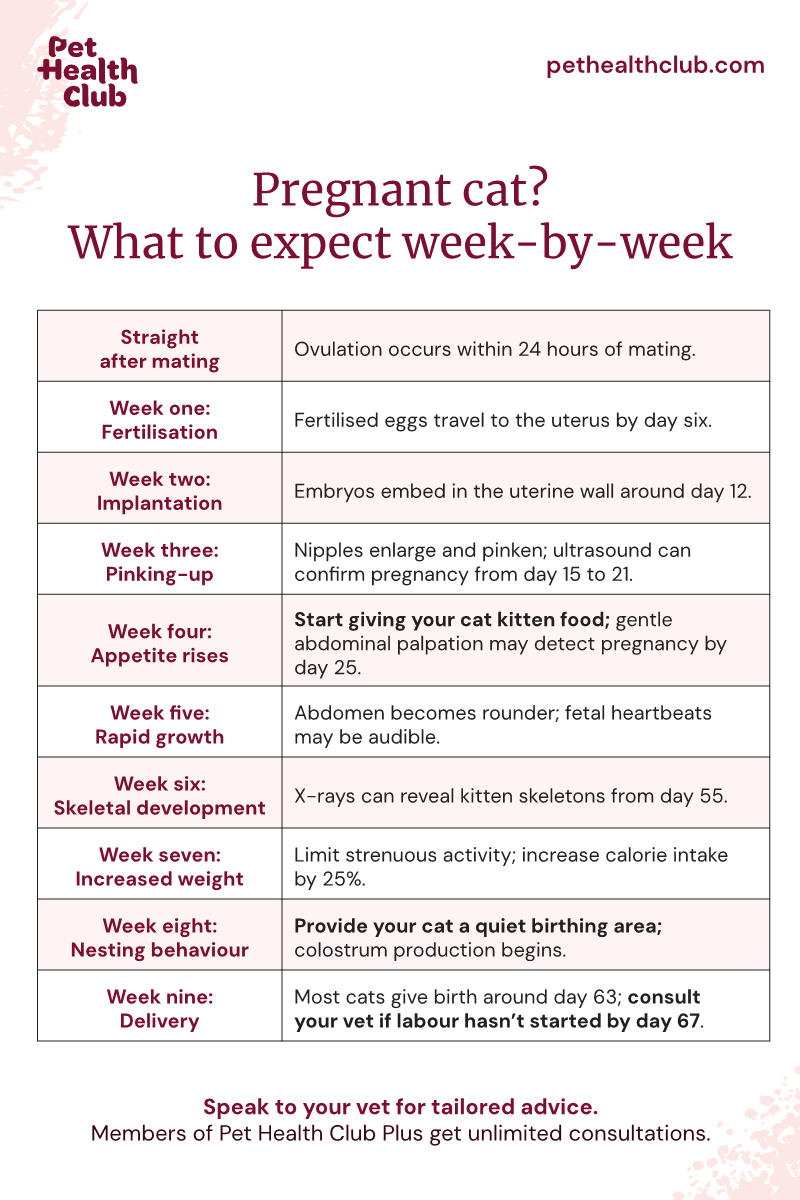
Cat pregnancy typically lasts about 63 to 65 days, and each stage comes with its own changes. Recognising early signs, like the nipples becoming more visible or a shift in your cat’s behaviour, can help you support her through a healthy pregnancy.
What do pregnant cat nipples look like?
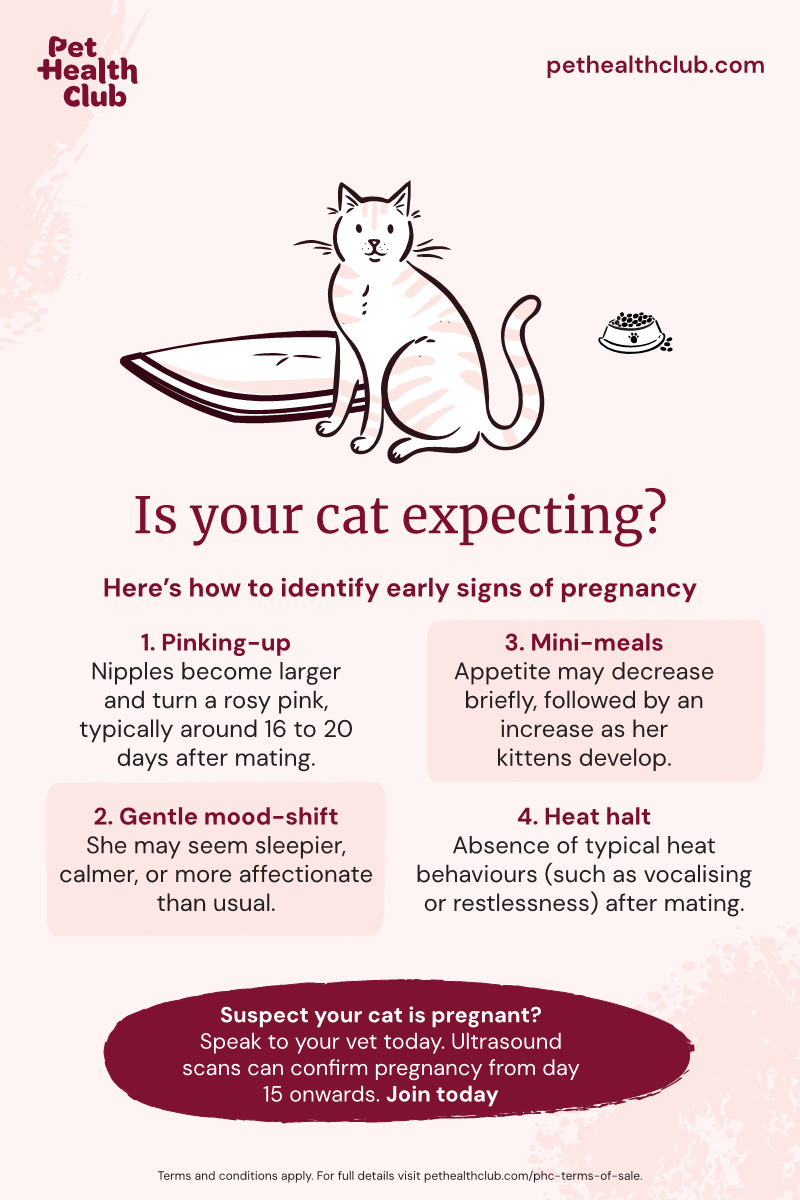
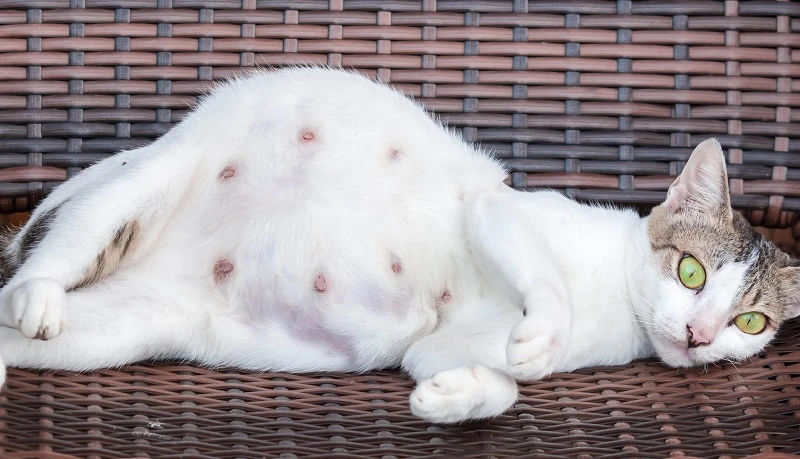
At around 16 to 21 days after mating, your cat's body will begin to change and their nipples may show a change called pinking up. This simply means her nipples:
Become larger and rounder
Turn a deeper pink or red
May become more visible as the fur around them thins
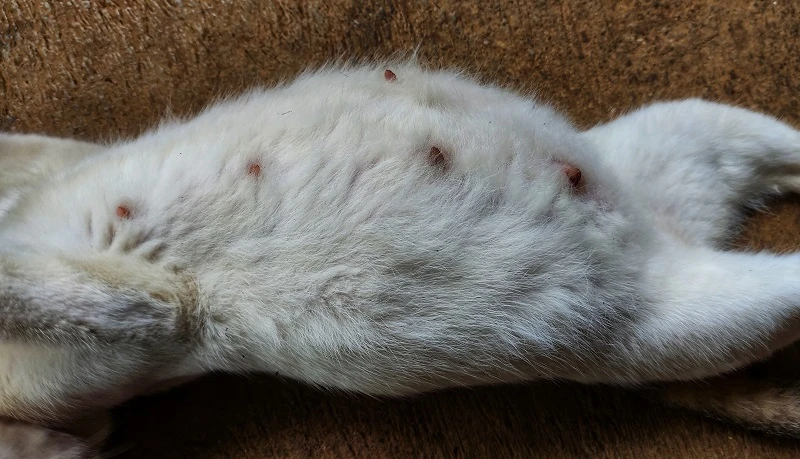
Normal cat nipples vs. pregnant cat nipples
In comparison, normal cat nipples are usually small, pale, and flat, often hidden under her belly fur. During pregnancy, the increased blood flow and preparation for milk production make them stand out more clearly.
If your cat is light-coloured or short-haired, these changes may be easier to spot. It’s common for a small, hairless patch of skin to appear around each nipple too, helping kittens latch on more easily after birth.
Tip: At three weeks, there should be no milk or discharge from the nipples. If you notice any fluid, swelling, redness of the surrounding skin, or signs of pain, speak to your vet.
How to check if your cat’s pregnant
The most definite way to tell if a cat is pregnant is for her to have an ultrasound scan at the vets. However, there are often some clear signs of pregnancy that you can spot at home.
Firstly, you can check for nipple changes. If your cat is relaxed and used to being touched, you can gently part the fur on her belly, perhaps when she rolls over or is having a cuddle. There’s no need to press or squeeze the nipples, and you should avoid touching her abdomen directly. Every cat is different. If this is her first pregnancy, the nipple changes might be more obvious. In cats who’ve had kittens before, the signs can be subtler.
Alongside the changes in her nipples, your cat might act a little differently. These early behavioural signs can support what you’re seeing physically.
You might notice that she:
Eats a bit more than usual (though some cats have a few days of reduced appetite in the early stages). Some cats may even vomit in early pregnancy — similar to morning sickness in people.
Sleeps more often or finds quiet places to rest
Avoids rough play or high jumps
Stops showing signs of being in heat
Some cats become more affectionate during early feline pregnancy, following you around or asking for extra fuss. Others may prefer to be left alone. Both responses are completely normal.
Read more: Cat heat cycles
How to care for your cat in early pregnancy
Most cats manage the various cat pregnancy stages well, but there are a few easy ways you can help.
Book a vet check-up
If you think your cat is pregnant, your vet can usually confirm this by feeling her tummy or using an ultrasound. This visit is also a good time to check her overall health and ask any questions you might have.
Feed the right diet
Pregnant cats need extra calories and nutrients to support their kittens. Around week four, your vet might suggest switching her to kitten food, which is specially formulated to support growth and development. Keep feeding this through her pregnancy and while she’s nursing.
Keep her safe and calm
It’s a good idea to keep your pregnant cat indoors, or supervise outdoor time, to protect her from injury, illness, or further matings. Offer a quiet space to rest, and as she gets closer to giving birth, provide a cosy nesting box in a quiet room.
Stick to safe parasite control
Flea and worm treatments should only be used under veterinary guidance during pregnancy. Worming treatment is often recommended for cats towards the end of their pregnancy — this is to prevent her kittens getting worms while they are still in the womb. Some products aren’t safe for pregnant cats, so always consult your vet before using anything new.
How many kittens is my cat likely to have?
The average litter size ranges from three to six kittens, although it can vary. Your vet may be able to give you an estimate later in the pregnancy using ultrasound or X-ray.
By knowing what to look for and offering the right care, you’re giving your cat the best chance of a smooth and healthy pregnancy, and a happy start for her kittens.
Preventing unwanted pregnancies in the future
Female cats can get pregnant from as young as four months old, and they can have multiple litters each year. Spaying your cat not only prevents unexpected pregnancies, but also helps reduce the risk of certain illnesses and behaviours linked to mating.
Booking a spay appointment with your vet is a simple way to protect your cat long term, and help reduce the number of unwanted litters in your community. Pet Health Club also includes discounts of up to 20% on neutering, meaning it's a great idea to join before bringing your cat in to be spayed.
Read more: What you need to know about neutering your cat
When to speak to your vet
Pregnancy usually goes smoothly, but there are some cat pregnancy signs that mean it’s time to call your vet:
You notice blood, pus, or unusual discharge from the vulva or nipples
Her nipples are painful, swollen, or leaking anything abnormal
She’s hiding more than usual, seems in pain, or is unusually tired
As always, trust your instincts, and if something doesn’t feel right, it’s better to check.
What to do next
At three weeks, your cat’s pregnancy is still in the early stages. Over the next few weeks, you might notice her belly becoming rounder, her nipples more prominent, and her behaviour changing as she gets ready for birth.
If you're unsure about anything, or just want peace of mind, speak to your vet. And remember, Pet Health Club includes discounts of up to 20% on neutering. And if you’re a Pet Health Club Plus member, your consultations are already covered. Find your local vet here.
Show references
International Cat Care (2023) Cat pregnancy. International Cat Care. Available at: https://icatcare.org/articles/cat-pregnancy (Accessed: 31 May 2025). International Cat Care
Merck Veterinary Manual (2024a) Management of reproduction of cats. Merck Veterinary Manual. Available at: https://www.merckvetmanual.com/cat-owners/reproductive-disorders-of-cats/management-of-reproduction-of-cats (Accessed: 31 May 2025). Merck Veterinary Manual
Merck Veterinary Manual (2024b) Pregnancy determination in dogs and cats. Merck Veterinary Manual. Available at: https://www.merckvetmanual.com/management-and-nutrition/management-of-reproduction-dogs-and-cats/pregnancy-determination-in-dogs-and-cats (Accessed: 31 May 2025). Merck Veterinary Manual
Merck Veterinary Manual (2024c) Feeding practices in small animals. Merck Veterinary Manual. Available at: https://www.merckvetmanual.com/management-and-nutrition/nutrition-small-animals/feeding-practices-in-small-animals (Accessed: 31 May 2025). Merck Veterinary Manual
Medically reviewed by Lizzie Youens, BSc(Hons) BVSc MRCVS
Published on 19/06/2025 • Reviewed on 19/06/2025