

Overview
If your cat not eating is becoming a worry, it’s often a sign something’s wrong. Illness, pain, dental problems, or stress are all frequent causes. But sometimes, even small changes to their food, routine, or environment can put them off eating. Kittens and overweight cats are most at risk, as not eating for even a short time can quickly lead to serious illness like fatty liver disease (hepatic lipidosis).
Some cats still want to eat but struggle to do so — this is called pseudo-anorexia and is often linked to dental pain, mouth injuries, or illness. Others lose interest in food completely — known as true anorexia — which can be caused by nausea, illness, or stress. If your cat hasn’t eaten for more than 24 hours — or 12 hours for kittens — it’s best to contact your vet. Acting early can make all the difference.
My cat’s not eating — should I see the vet?
If your cat won’t eat, it’s important to take it seriously — and this is all the more true for kittens who need the right nutrients to grow up strong. For kittens under six weeks old, missing even one meal can be dangerous. On the other hand, if an older cat won’t eat, even for just a day or two, it can lead to problems like fatty liver disease. This can develop quickly, particularly in overweight cats, so it’s always best to speak to your vet if they’re off their food.
Speak to your vet straight away if:
Your cat hasn’t eaten for 24 hours (12 hours for a kitten)
They’re losing weight
They seem low on energy or generally unwell
They have other symptoms like sickness, diarrhoea, breathing problems, or yellow gums or eyes (a sign of jaundice)
They want to eat but seem to struggle — it could be dental pain or another health issue
A bit of stress or a change in routine can sometimes lead to your cat not eating for a short while. But if they refuse to eat for more than a day — whatever the reason — it’s safest to get them checked by your vet. It’s also good to know that mild appetite loss after vaccinations is quite common and usually short-lived. But if they still won’t eat or seem unwell in other ways too, speak to your vet.
Read more: Can cats eat human food?
What are the causes for a cat not eating?
Several health problems can put cats off their food:
Dental disease: sore teeth or gums — like gingivitis, tooth resorption, or stomatitis — can make eating painful, even if your cat is otherwise acting normal.
Breathing problems: cats rely on their sense of smell to enjoy food. Infections like cat flu, nasal polyps, or nose tumours can affect their sense of smell and reduce appetite.
Tummy troubles: issues like inflammatory bowel disease, constipation, pancreatitis, or a blockage (from a foreign object or tumour) can make eating uncomfortable or impossible.
Kidney disease: common in older cats, this can cause nausea and reduce appetite.
Liver disease and triaditis: inflammation of the liver, pancreas, and intestines (triaditis) can lead to pain, sickness, and appetite loss.
Diabetes and hyperthyroidism: both can affect appetite. Cats with hyperthyroidism often eat more but still lose weight, while feline diabetes can affect thirst, appetite, and energy.
Heart disease: can cause tiredness and breathing problems, which may reduce interest in food. Fluid building up in the tummy due to heart failure can also affect appetite.
Cancer: many types of cancer can cause weight loss, low energy, and loss of appetite as symptoms.
Other types of pain: general pain — like joint or muscle problems — can make it hard for a cat to reach their food or feel comfortable enough to eat.
Older cats are more at risk of these problems, so regular check-ups are important if their appetite changes.
Stress, environment, and emotional factors
Cats like routines and knowing what to expect. Big changes and stressful events — like moving house, bringing in a new pet, or welcoming a new baby — can unsettle them and put them off their food. If your cat loses a friend, grief can also cause them to lose their appetite.
Environmental factors can also play a part. Noisy surroundings, dirty bowls, or placing food near the litter tray can all put your cat off their food. In multi-cat homes, competition or food guarding can make timid cats reluctant to eat. Feeding cats separately in quiet spots often helps.
Routine matters to cats. Sudden changes to feeding times, food location, or diet can make them anxious and put them off their food. Where possible, make changes gradually. Hot weather can also affect appetite. It’s often temporary, but keep an eye on how they are getting on.
Cat not eating and diet changes
Cats can be fussy eaters, so sudden changes to their food can put them off from eating. If they associate a certain food with feeling unwell — after illness, medication, or a stressful trip to the vets — they might go off it for good. Some cats also refuse food if their favourite brand changes, if the food’s stale or has been left out too long. Many are sensitive to flavours, textures or temperature — some prefer fishy foods or meals gently warmed to bring out the smell.
To avoid problems, change your cat’s diet gradually over at least a week, mixing more of the new food with the old each day. Try not to offer too many choices or swap foods often, as this can encourage fussy eating. Cats quickly learn that refusing one option means something ‘better’ might appear — reinforcing picky habits.
What can I do to encourage my cat to eat?
Simple changes to how you feed your cat can really help their appetite. Here are some useful tips and when to try them:
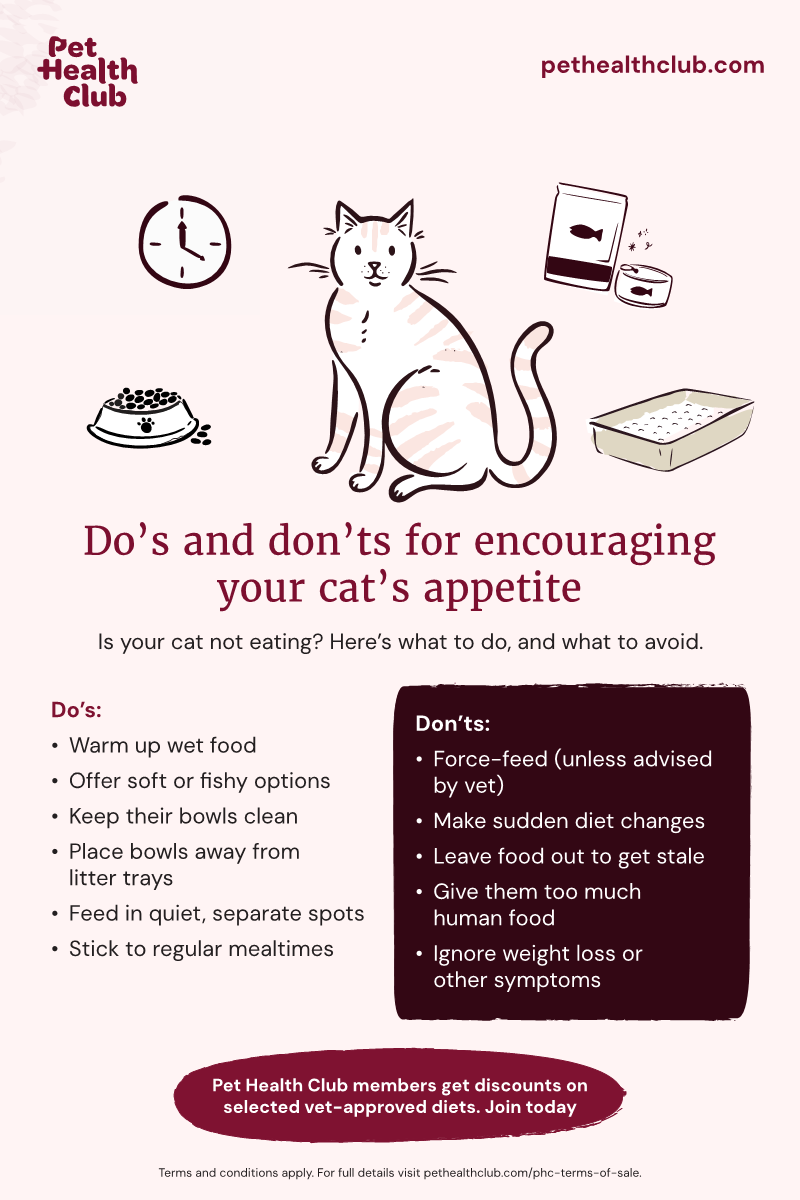
Warm up wet food to boost the smell: great for cats with a reduced sense of smell, like those with breathing problems or snotty noses — five to ten seconds in the microwave on defrost or a low setting will be enough. Be sure to give it a stir before serving.
Offer soft, wet food that’s easy to chew: helpful for cats with sore teeth or recovering from dental treatment.
Try different textures and flavours: can help fussy or stressed cats, but swapping foods too often can encourage pickiness.
Offer strong-smelling options like fishy foods or tuna juice: these are particularly great for cats recovering from illness.
Feed small, freshly opened portions: helps stop food going stale and suits cats who prefer to eat little and often.
Use separate bowls in quiet spots: ideal for anxious cats or multi-cat homes to reduce stress and competition. Keep food bowls away from litter trays and also not too close to water bowls.
Stick to regular mealtimes: helps build appetite in cats unsettled by change or disruption.
Keep an eye on outdoor cat’s weight: if you suspect they’re snacking elsewhere and skipping meals at home, a handy way to be sure is to monitor their weight.
Whatever the reason, keeping bowls clean and placing them away from litter trays are all simple ways to encourage your cat to eat.

Read more: What's the best food for cats?
How is anorexia in cats diagnosed and treated?
In the event of your cat not eating, your vet will first work out whether it’s:
True anorexia: Your cat has no interest in food
Pseudo-anorexia: Your cat wants to eat but can’t — often due to pain or discomfort, like dental problems, jaw pain, or a sore throat
They’ll ask about your cat’s recent diet, home environment, health, and behaviour, then give them a thorough check-up. This usually includes checking their weight, temperature, heart, and internal organs, as well as taking a close look at their teeth and mouth.
Based on what they find, your vet might recommend:
Blood and urine tests: to check for infection or organ problems
X-rays or an ultrasound scan: to look for things like blockages or tumours
Sometimes, the cause isn’t clear straight away. In that case, your vet may start supportive care while they investigate further.
Treatment depends on the cause but might include:
Appetite boosters like mirtazapine: to encourage eating
Medication for pain, sickness, or other symptoms
Dental treatment: if sore teeth or gums are found
Fluids, sometimes by drip: to treat dehydration
Assisted feeding: often with a temporary feeding tube to get food straight to your cat’s digestive system and take the stress out of eating. This might sound daunting, but feeding tubes are simple for vets to place, cause little stress for your cat, and can be lifesaving if it has been days and your cat still won’t eat.
Avoid force-feeding at home unless your vet advises it, as this can make food aversion worse.
Cat not eating FAQs
How long can a cat go without eating?
Healthy adult cats can usually manage 24 to 48 hours without food before it becomes a serious risk. But overweight cats are more prone to hepatic lipidosis — a life-threatening liver condition — if they stop eating. Kittens under six weeks old are especially vulnerable to hypoglycaemia and other effects of appetite loss, and shouldn’t go more than 12 hours without food.
What if my cat is drinking but not eating?
It’s good your cat is drinking, but not eating is still a worry and can be a sign of illness. Common causes include dental pain, sickness, or stress.
Is it normal for a new kitten to eat very little?
It’s common for shy or recently weaned kittens to eat less at first and it is normal for small kittens to eat little and often. But if they refuse food for more than 12 hours, it’s a concern. All kittens need a good diet, as they need the right nutrients to grow up strong. Kittens can go downhill quickly, so if your new kitten isn’t eating, speak to your vet.
My cat keeps asking for food but won’t eat it — why?
If your cat shows interest in food but won’t eat, they might have dental pain, sickness, or a food aversion. It’s often a sign they need to see the vet to find out what’s going on.
Can I tempt my cat to eat with people food?
Sometimes, offering small portions of plain tuna, sardines, or cooked chicken can help tempt them to eat. But people food shouldn’t replace a proper cat diet.
What if my cat not eating but acting normal?
If your cat seems fine but is eating less, it could be down to stress, hot weather, or snacking elsewhere if they roam. Keeping an eye on their weight can give you an idea if they are being fed by someone else, but if they are losing weight or you suspect they have gone 24 hours without eating then you should speak with your vet.
Is it dangerous to wait and see if my cat will eat later?
Yes. It’s risky to delay, especially for kittens or overweight cats, as they’re more prone to liver problems like hepatic lipidosis.
Could my cat’s vaccinations have caused appetite loss?
Mild appetite loss is common after vaccinations and usually settles within 24 hours. But if your cat still won’t eat or seems unwell after that, it’s best to contact your vet.
What do studies say about loss of appetite in cats?
Recent research shows how closely appetite is linked to a cat’s health. Loss of appetite — or anorexia — is often one of the first signs something’s wrong.
A 2001 study found that cats can develop “learned food aversion” — if cats feel sick, sore, or uncomfortable while eating, cats may start to associate the food itself with these negative feelings. This can carry on even after they’ve recovered, making it harder for them to eat. To help avoid this, vets recommend not forcing food on a cat who’s clearly feeling sick or in pain. Instead, try small, fresh meals in wide, shallow bowls. You can also experiment with different textures, temperatures or even change where they eat to help tempt them back to food when they’re ready. If your cat doesn’t eat the food offered, never force them and always remove food which is not eaten to prevent further aversion.
Cats are famously fussy about the texture, smell and taste of their food. The same 2001 study found they generally prefer acidic, non-sweet flavours and familiar foods. So, sudden diet changes or unfamiliar textures can easily put them off — a common problem when recovering from illness.
An article in the Journal of Feline Medicine and Surgery also highlighted how vet visits and hospital stays can lead to appetite loss. This isn’t just from illness, but from stress, pain, or medication. It described appetite as the ‘fifth vital assessment’ — as important to monitor as temperature, pulse, breathing, and pain. Not eating can weaken the immune system, slow healing, and delay recovery. That’s why vets now use appetite boosters and feeding tubes, as well as give advice to owners to help cats stay nourished, even when they’re struggling to eat.
Lastly, A 2022 study on food ingredients showed that what’s in your cat’s diet can affect their appetite and how full they feel. High-protein foods tend to help cats feel more satisfied, while certain fibres — like inulin — can help manage appetite. In contrast, heavily processed or finely ground foods may leave them feeling less full, which could lead to overeating over time.
Need more advice on your cat's appetite?
For more help with your cat's appetite, speak to your local vet. And remember, Pet Health Club members get 10% off selected vet-approved cat diets.
Find your nearest vet using our Find a Vet page.
Join the club today
Get regular health checks, vaccinations, and more, all included in your plan.

Join the club today
Get regular health checks, vaccinations, and more, all included in your plan.
Medically reviewed by Lizzie Youens, BSc(Hons) BVSc MRCVS
Published on 22/06/2018 • Reviewed on 23/07/2025