
Overview
Autumn can be a wonderful time to share with your dog, with woodland walks, crunchy leaves, and cosy evenings. But while making memories, you should be aware of some hidden risks. With mould, mushrooms, frightening fireworks, and more, knowing what to look out for helps you keep your dog safe while enjoying the very best of autumn together.
1. Acorns and conkers
Fresh acorns contain tannins that can cause vomiting, diarrhoea, and stomach pain in dogs — it’s unpleasant enough for your dog if they eat just one, but in large or repeated amounts they may harm the liver or kidneys. They can also trigger pancreatitis in some cases. Every few years, all the oak trees in an area will ‘mast’, which means they drop many more acorns than usual. You’ll need to be even more careful when the oak trees near you are masting.
Conkers (horse chestnuts) are mildly toxic, but the more serious risks are choking or gut blockages due to their size. Puppies are especially at risk, as they tend to explore with their mouths. To stay safe, keep dogs on a lead near oak or horse chestnut trees, discourage foraging, and clear fallen nuts from your garden.
2. Wild mushrooms
Dogs are natural scavengers, which means autumn can put them at risk of mushroom poisoning. Some fungi can grow in gardens or on lawns, especially in damp, shaded spots. These include fool’s funnel and stinking dapperling. In woodlands, your dog might come across other toxic fungi like death cap, funeral bell, and deadly webcap. Eating any of these mushrooms can cause vomiting, diarrhoea, muscle tremors, or even organ failure — and while some can cause symptoms to appear very quickly, others may act slower, appearing only after 24 hours.
Keep dogs on a lead during woodland walks, and remove any mushrooms you spot in your garden. Often, harmful and harmless mushrooms look alike, so always contact your vet straight away if you suspect your dog has eaten one. Taking a photo of the mushroom type can help with identification.
3. Harvest mites
A common nuisance in autumn, harvest mites are tiny orange pests who often gather on paws, bellies, or ears, causing intense itching. This can lead to hair loss, scabs, or skin infections from scratching. Vets may suggest soothing shampoos to wash off mites and calm the skin. Some flea treatments can be effective at treating harvest mites,and vets may recommend spray or spot-on treatments with ingredients like fipronil. After woodland or grassy walks, check your dog carefully and speak to your vet about the best ways to prevent or treat an infestation.
Read more: Mites on dogs
4. Seasonal canine illness (SCI)
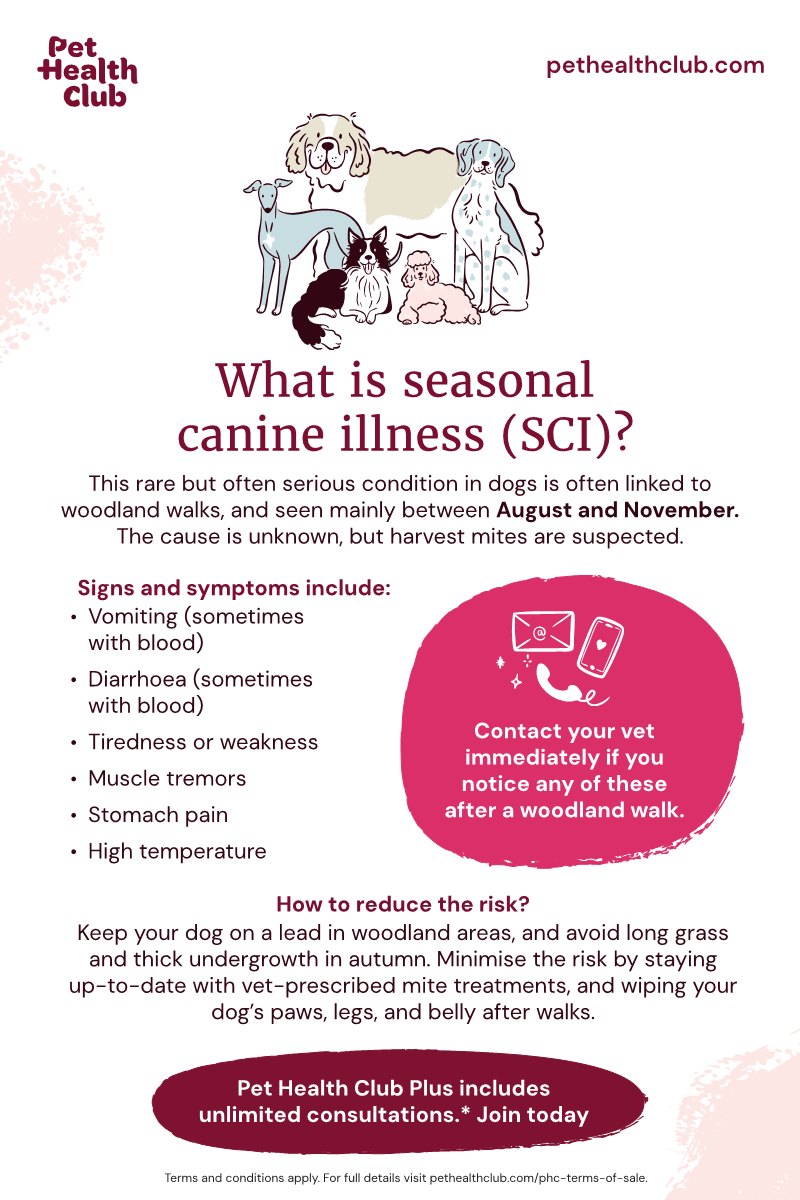
Seasonal canine illness (SCI) is a rare but serious condition seen mostly in autumn, and is associated with woodland walks. First seen in 2010, it can affect any breed (though small to medium dogs seem more at risk), and symptoms often appear within 24 to 72 hours after walking. These include vomiting, diarrhoea, tiredness, loss of appetite, stomach pain, fever, and muscle tremors — and the illness can get worse quickly. The exact cause isn’t known, but harvest mites are suspected as they’re often found on affected dogs. To stay safe, keep a close eye on your dog after woodland walks, especially if local cases have been reported, and contact your vet straight away if any symptoms appear.
Read more: Seasonal canine illness in dogs
5. Fireworks and Bonfire Night
According to the 2022 PAW Report, 41% of UK dogs show signs of distress during fireworks. Common signs of stress include panting, pacing, drooling, barking, hiding, toileting accidents, or behaving in a destructive way. Stress can also make existing health conditions worse.
In the run-up to bonfire night, sound therapy can help by gently getting your dog used to the noises. This involves quietly playing firework sounds inside the house, and over the weeks increasing the volume slowly so that your dog becomes desensitised to the noise. This can be very effective, but takes time and patience. That’s why sound therapy needs to be started months before the season.
On the night, set up a safe indoor den, close the curtains, and play distracting background sounds. Walk your dog before dark and always use a lead, just in case they get spooked. And make sure their microchip details are up to date in case they run off. If your dog becomes very distressed by firework noise, speak to your vet about short-term medication which can help keep them calm.
6. Lungworm from slugs and snails
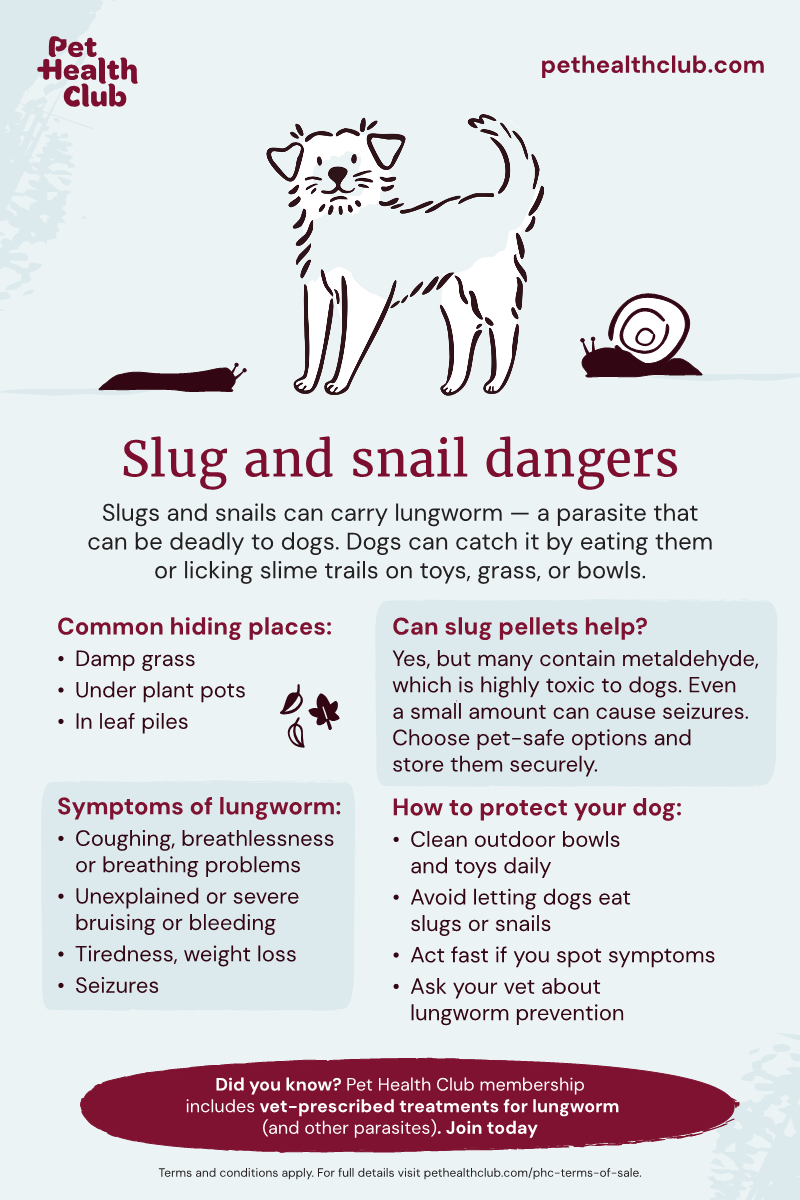
Lungworm is a growing risk for dogs, especially in autumn when slugs and snails (who carry the parasite) are more active. Dogs can catch it by eating them — or by licking toys, bowls, or grass touched by their slime trails, which can stay infectious for over two weeks. Once inside the body, the parasite affects the heart and lungs, causing coughing, weight loss, tiredness, bleeding, or bruising. Left untreated, lungworm can be fatal. Treating lungworm can also be difficult, so the best protection is vet-prescribed prevention, along with keeping outdoor items clean. If you’re a Pet Health Club member, your benefits include treatments for lungworm, as well as for many other parasites common in autumn.
Read more: How often should you worm your dog?
7. Halloween hazards
Halloween can be fun for the family, but it can be overwhelming for dogs. Chocolate is toxic to them, and so are sweets with xylitol. Meanwhile, wrappers, candles, or decorations can pose choking or burn risks. The doorbell, costumes, and spooky sounds can also be unsettling, making some dogs anxious or more likely to try to escape. To keep things safe, avoid dressing your dog up — most find it stressful. Store treats securely, keep candles out of reach, and give your dog a quiet, cosy space where they can relax.
8. Dark evenings and road traffic
Shorter autumn days mean more walks in low light, making dogs — especially those with dark coats — harder for drivers to see. The risk is highest at dawn and dusk, when visibility drops but traffic is still busy. To help keep your dog safe, use reflective or LED collars, leads, and harnesses, stick to well-lit routes, and walk before dark where you can. Always keep dogs on a lead near roads, even if their recall is generally good, as sudden sounds or movements could make them bolt.
9. Fallen leaves and mould
Autumn’s big leaf piles might look fun, but they can hide some nasty surprises. Damp, rotting leaves often grow mould that produces toxins, which can cause vomiting, diarrhoea, tremors, or seizures if eaten. Fallen leaves can also shelter parasites like ticks and fleas — fleas are especially pesky at this time of year, as home infestations become more common while they shelter from the cold. Sharp sticks, bacteria, or slug trails may also be lurking underneath, risking injury or an upset stomach if chewed. To keep your dog safe, supervise outdoor play, discourage foraging in leaf litter, and clear damp piles from the garden.
Need more advice?
If you’re worried about any of these autumn hazards, or if there's anything else concerning you or your dog, use our find a vet page to find your nearest practice. And remember, Pet Health Club membership makes your dog’s routine care as simple as it can be.
Join the club today
Get regular health checks, vaccinations, and more, all included in your plan.

Medically reviewed by Lizzie Youens, BSc(Hons) BVSc MRCVS
Published on 09/09/2025 • Reviewed on 09/09/2025