

Overview
Worming your dog regularly helps protect them, and your family, from harmful parasites. But with so much advice online, it’s easy to feel unsure. So, how often should you worm a dog?
At Pet Health Club, we recommend worming all adult dogs at least every three months. This helps tackle common worms like roundworm and tapeworm and follows guidance from leading experts, including ESCCAP (European Scientific Counsel Companion Animal Parasites). Some dogs need worming more often. If your dog scavenges, eats raw food, mixes closely with other dogs, or lives with young children or vulnerable adults, monthly worming may be the safer choice. Lungworm is another concern, now more common in the UK, and often requires monthly protection using a licensed product.
It's also important to use treatments responsibly. Like many vets, we’re mindful of the potential environmental impact of parasiticides. That’s why our approach is always risk-based and tailored to your pet. Your vet can help you choose an individual schedule that keeps your dog protected, and keeps unnecessary treatments to a minimum.
Why is it important to worm your dog?
Worming doesn’t stop your dog picking up parasites, but it does act against any worms already in their system. That matters, because even without symptoms, infected dogs can spread worm eggs through their poo. These eggs can linger in soil and on surfaces for months, posing a risk to other pets and people. Regular worming helps break the cycle. It’s a simple step that protects your dog, and everyone around them.
What are the types of worms in dogs?
Dogs can pick up several types of worms, each one posing a different health risk to your dog. Most live in the gut, but some can travel through the body or even affect the lungs. Here are the ones you’re most likely to come across:
Roundworms: these are the most common, especially in puppies. Two main types affect dogs —Toxocara canis and Toxascaris leonina. Adult worms look a bit like spaghetti and live in the intestines, where they steal the nutrients your dog needs to stay healthy. Toxocara canis can be passed to people, especially children, and may travel through the body. If roundworm larvae end up in your dog’s lungs, they can cause long-lasting damage and, in rare cases, even be fatal.
Tapeworms: these are flat, ribbon-like worms made up of segments. They live in the small intestine and absorb nutrients as they go. Dogs can pick them up by swallowing fleas or eating raw meat. You might spot tapeworm segments — which look like grains of rice — around your dog’s bottom or in their poo.
Hookworms: these short, blood-sucking worms can enter through your dog’s skin (often through their paws) or be swallowed. They’re most dangerous for puppies and can cause anaemia and internal bleeding. Before settling in the gut, they move through the body, including the lungs.
Whipworms: thin and thread-like, these worms live in the large intestine. They prefer warm, humid climates – so, not exactly the UK. They’re rare here, but when they do turn up they can be serious — causing diarrhoea, vomiting, weight loss, and anemia. If untreated, they can be life-threatening.
Lungworm: unlike the others, these aren’t intestinal worms, so they need a different type of treatment. Dogs can pick them up by eating slugs or snails — or even from toys or outdoor water bowls which slugs or snails have touched. A heavy lungworm infection can cause lasting damage or even be fatal.
Many types of worms can be treated at the same time using a broad-spectrum wormer from your vet. But not all treatments cover every parasite. For example, many shop-bought wormers don’t protect against lungworm or tapeworm. That’s why it’s so important to choose the right wormer for your dog — based on things like their age, lifestyle, and where you live. Your vet can help you find the best option, or mix of treatments, to keep your dog fully protected. They’ll also let you know how often your dog needs worming to stay covered.
What are the symptoms of worms in dogs?
Worms aren’t always easy to spot. Many dogs — especially adults — don’t show obvious signs. But that doesn’t mean they’re worm-free. Some things to look out for include:
A bloated tummy, especially in puppies
Weight loss, even if they’re eating well
Low energy or tiredness
Being extra hungry or not growing as expected
Scooting or licking their bottom more than usual
Worms or segments that look like grains of rice in their poo, vomit, or around their rear
Regular worming helps remove worms before they cause visible problems or spread further. But if you do notice any of the signs we’ve mentioned, get in touch with your vet. More specific treatment might be needed to clear a heavier load and any associated symptoms.
And remember, signs like scooting or weight loss aren’t always caused by worms. It’s best to check with your vet so you can find out what’s going on and make sure your dog gets the care they need.
How do dogs catch worms, and how do you reduce the risk?
Dogs can pick up worms in lots of everyday ways:
Sniffing or eating soil, poo, or raw meat
Swallowing fleas while grooming — these can carry tapeworm eggs
Eating prey animals or scavenging from bins
Catching them from their mum — either before birth or through her milk
Coming into contact with slugs, snails, or their slime trails — this is how lungworm is often spread
Worm eggs and larvae can survive for a long time in soil or on outdoor surfaces. Dogs don’t always need to eat something nasty — just licking or sniffing contaminated ground can be enough. But that doesn’t mean you should stop them enjoying the outside world. With regular worming, you can let them explore without worrying.
There are a few simple ways to help reduce your dog’s chances of picking up worms:
Clean up poo promptly — at home and on walks
Keep flea treatments up to date
Avoid feeding raw or uninspected meat
Try to stop scavenging and steer them away from slugs or snails
Wash their bowls, toys, and bedding regularly
Doing all of this helps lower your dog’s risk — but how often they need worming still depends on their lifestyle. Your vet can help you decide what’s right for them.
What are the different types of worming treatment for dogs?
There are a few different types of wormers available:
Tablets and chewable treats: usually given every one to three months, there are a large range of worming tablets which target various parasites. Many come in highly palatable, ‘chew’ versions which can be easier to give to your dog.
Liquid wormers: often used for puppies, as they allow for accurate dosing even with low bodyweights. In very young puppies, they’re usually given every two to four weeks, then monthly as they grow.
Spot-on treatments: These are applied to the skin on the back of the neck. Some cover both worms and fleas, but it’s not common for store-bought products to contain the active ingredients which protect against tapeworm or lungworm — so it’s always worth checking. They’re usually used monthly.
You can buy wormers over the counter, but they don’t always cover every type of worm — and some may be less effective than prescription options. Lungworm and certain tapeworms, for example, usually need a vet-prescribed treatment.
It’s always best to check with your vet before choosing a wormer. They can make sure it’s right for your dog’s age, weight and overall health — and that it is an environmentally-friendly option well suited to your dog’s lifestyle.
Read more: How to apply flea treatment to dogs
What does a ‘tailored worming schedule’ mean for dogs?
How often you should worm a dog depends heavily on their age and life stage – but lifestyle matters too.
Puppies and their mothers: puppies are often born with worms passed on from their mother. Their worming schedule is more frequent to help catch larvae that hatch after the initial treatment. They should be wormed every two weeks until 12 weeks old, then monthly until they’re six months old. We’ve covered this in more detail in our guide to worming puppies. Mum will need treatment too, to minimise the chance of passing on worms during her pregnancy or when she is nursing after the birth. Treatment often starts around day 40 of pregnancy, but your vet will recommend the right schedule.
Adult dogs: most adult dogs need worming every one to three months. If your dog tends to scavenge, eats a raw diet, spends time with children, or explores gardens, parks, or woods where lungworm might be found, monthly worming is usually the safest option. That’s because lungworm can be life-threatening, and monthly worming is currently the only way to stop it early — often before any signs appear. Dogs with lower risk may not need worming quite as often. Your vet can help you decide what’s best.
Senior dogs: Older dogs still need regular worming too. It’s important that their treatment is right for their age and any existing health issues. If your dog has a long-term condition, or other age-related issues, your vet might have special recommendations.
How do I know if my dog is at high risk of worms?
Most dogs in the UK are considered high risk for worms — even if they seem perfectly healthy. That’s because ‘high risk’ doesn’t mean something’s wrong. It just means your dog is exposed to things that make worm infections more likely.
The ESCCAP places dogs into risk groups based on their lifestyle. Their advice states that dogs in Group D — the highest risk group — should be wormed every month. A study has suggested that over 90% of UK dogs fall into this group. This might seem like an alarming figure, but it doesn’t mean most UK dogs have worms — it just means their lifestyles may expose them to worms more often. Your dog might be classed as high risk if they:
Are given freedom to explore parks, woods, or gardens
Eat raw meat, or food they come across outdoors
Hunt or chase wildlife
Eat slugs, snails, or lick slime trails
Live with children or vulnerable adults
Live in or travel to areas where lungworm or fox tapeworm is found
Sniff at (or eat) poo
If your dog does any of these things regularly — or even now and then — they may be classed as high risk.

Read more: Why do puppies eat their own poo?
What health problems do worms cause in dogs?
If worms aren’t treated, they can cause a range of health issues — from mild to more serious. The longer worms go untreated, the more damage they can cause — especially as new ones are picked up over time.
In puppies, worms can:
Slow down healthy growth and development
Lead to serious problems like anaemia or blockages in the gut — especially with roundworms or hookworms
Affect long-term gastrointestinal health
In adult dogs, a long-term worm infestation can lead to:
Weight loss and poor nutrition
A dull or patchy coat
Ongoing tummy trouble and low energy
Some worms (like Toxocara canis) can also affect people. This is called toxocariasis, and while it’s rare, it can cause serious health problems like organ damage or vision loss, especially in children who come into contact with contaminated soil or dog poo.
FAQs about dog worming
Can I worm my dog too often?
It’s best to follow your vet’s advice. Over-treatment is unnecessary, although it is unusual for it to cause any health problems. Some dogs are more sensitive than others, so sticking to the recommended schedule – usually every one to three months — helps keep them protected without overdoing it.
What if I miss a dose?
Don’t worry — just give the missed dose as soon as you remember. You might need to tweak your schedule a little, but your vet can help you get back on track. It’s a good idea to keep a note of when each treatment is due, as missing doses can increase the chance of worms building up again.
How often should I worm my dog if they’re high risk?
If your dog likes to scavenge, eats raw meat, hunts, or spends lots of time outdoors, monthly worming is usually recommended. Your vet can guide you on what’s right based on your dog’s habits and where you live.
How quickly does worming treatment work?
Most wormers start working within a few hours. You might see dead worms in your dog’s poo for a day or two — that’s normal, and it means the treatment is doing its job.
Should I worm my dog all year round?
Yes — worms can infect dogs at any time of year. Regular worming helps stop a build-up and keeps your dog protected, whatever the season.
Can you overworm a dog?
Yes — while wormers are safe when used correctly, giving too much or worming too often can cause side effects like vomiting or diarrhoea. In rare cases, overdosing can be more serious, especially for small or sensitive dogs. Always follow your vet’s advice on dose and frequency.
Is worming included in pet health plans?
Often, yes. Health plans like Pet Health Club include regular worming, flea protection, and vet check-ups — making it easier to stay on top of your pet’s routine care.
Can I reduce environmental harm by worming my dog less often?
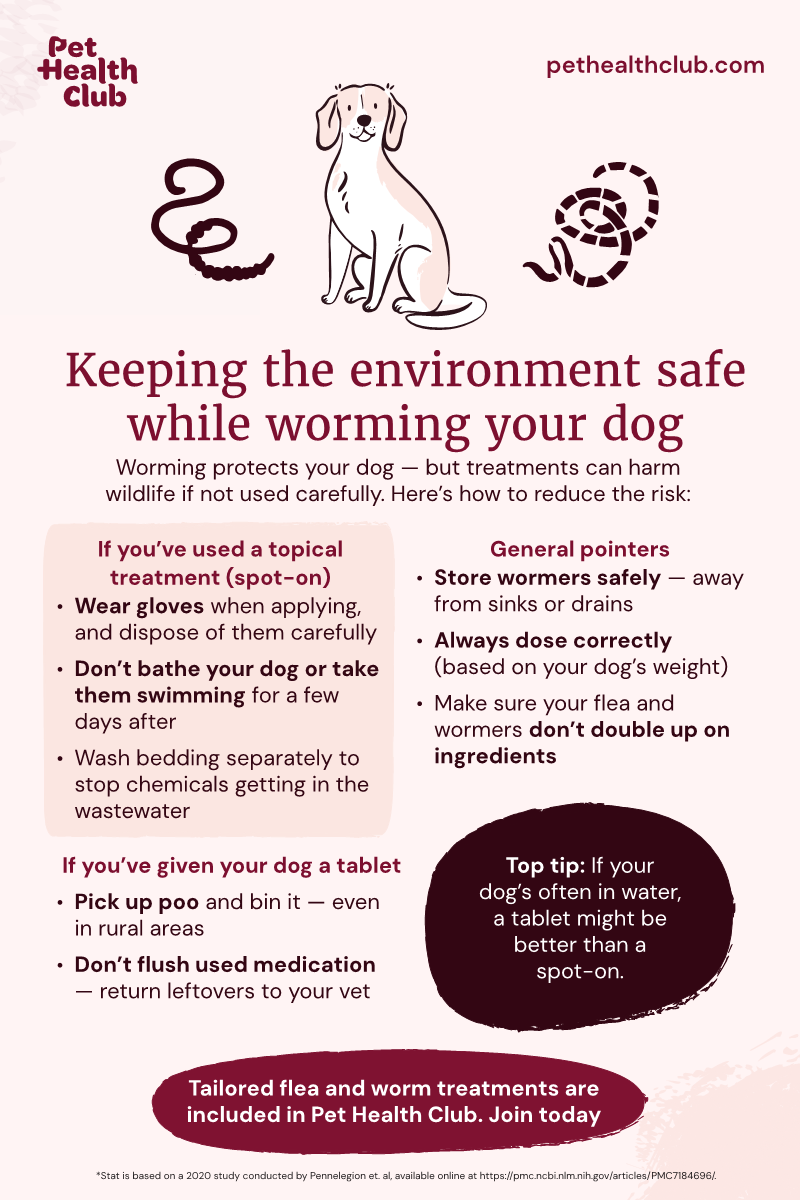
Reducing environmental impact is important, but skipping worming can put your dog — and others — at risk. Your vet can help you choose the safest, most responsible approach for your dog’s lifestyle. If your dog has a heavy worm burden, it could pose a risk to other dogs and even people nearby. Before considering stopping or spacing out treatments, it’s better to focus on using wormers responsibly. That means following your vet’s advice and taking steps to stop the worming chemicals getting into the environment after use.
What do studies say about how often to worm a dog?
Research shows that many dogs aren’t wormed as often as they should be – even when they’re considered high risk. One UK study found that 97% of dogs were classed as highest risk for parasites, based on behaviours like scavenging, outdoor access and living with children. But on average, they were wormed just 3.1 times a year — well below the monthly schedule recommended by ESCCAP for high-risk dogs, and even less than the four-times-a-year our vets often recommend as a minimum.
Similar results were found elsewhere. In Spain, 96% of dogs were classed as high risk, yet most weren’t wormed monthly — even though nine in 10 lived with children or older adults, who are more vulnerable to parasites like Toxocara. A Europe-wide survey found the same trend: 93% of dogs were high risk, but were wormed just 2.3 times a year on average.
In Canada, a large study of vet practices found that while most vets recommended worming for puppies, only 13% followed the full early-life schedule advised by public health experts – such as treatments at two, four, six and eight weeks. This means some puppies could start shedding parasite eggs before they’re treated, raising the risk for other pets and people. In the US, it’s estimated that Toxocara causes around 10,000 cases of internal organ damage (known as Visceral Larva Migrans) and 700 cases of vision loss (Ocular Larva Migrans) in people every year. Yet only 44% of vets in the study said they routinely discussed these risks with pet owners.
Need more worming advice?
If you’re finding it hard to get on top of a worm problem, your vet can offer tailored advice. For long-term peace of mind, Pet Health Club includes regular flea and worm treatment, as well as vaccinations, healthy pet checks, and more. Use our Find a Vet tool to locate your nearest Pet Health Club practice.
Join the club today
Get regular health checks, vaccinations, and more, all included in your plan.

Medically reviewed by Lizzie Youens, BSc(Hons) BVSc MRCVS
Published on 27/08/2025 • Reviewed on 27/08/2025