

Overview
Bringing home a new puppy is a special moment, and it’s best to be prepared. When thinking about puppy essentials, you need to be aware of more than a few bits to pick up from the shop. Puppy essentials also include good habits you need to get into to give your puppy the best start in life.
Setting up for your puppy’s arrival
Puppies explore the world with their mouths, so the first thing on your new puppy checklist is to puppy-proof your home before they arrive. Tuck away or secure things like electrical cables, charger leads and curtain cords. Put cleaning products, toiletries, medicines and any harmful foods — like chocolate or grapes — safely out of reach. Cable wraps and cupboard locks can come in handy, and it’s also a good idea to move breakables and small bits and bobs which could become choke hazards out of the way. For slippery floors, non-slip mats can help keep wobbly paws steady.
Puppy gates can help set boundaries and keep them out of off-limits areas, but remember that puppies grow fast. Check regularly for new risks — things like bins, worktops or stairs your puppy might have been too small to access before.
Out in the garden, block any gaps in your fences. Some plants can be mildly toxic to puppies — such as lilies or daffodils — so you may want to limit the access your puppy will have to their bulbs (frequently the most toxic part). Keep tools and garden products stored in a shed or placed well out of reach, especially chemical fertilisers, weed killers, or pest-control products.
Even if you’ve puppy-proofed your home thoroughly, it’s still a good idea to add a pet first-aid kit to your puppy checklist — just in case. A few basics like antiseptic spray, tweezers and bandages can help you deal with minor scrapes at home.
Puppy essentials for a cosy settling in
The next part of your new puppy checklist is all about setting up the calm, cosy space where your puppy will live. Pick a quiet spot that’s a bit out of the way — but still close enough for your puppy to see and hear what’s going on. A crate can work well as a safe little den. Pick one that’s just big enough for them to stand up, lie down and turn around. Some crates come with dividers, so you can adjust the space as they grow. Try not to put their crate near doors or windows where noise and movement might disturb them — it needs to be a nice place to sleep. A thick blanket on top of the crate can help keep the space dark, quiet and cosy for them.
Line the crate with bedding that’s washable and not too soft — that’s helpful while they’re still learning where to toilet. When you are getting their bedding, look for ‘dry’ or water-resistant options. These are hygienic, easy to wash, and tough enough to handle chewing. Having two means you’ve always got a spare when one’s in the wash.
You can make the crate feel more inviting by tying a toy at the back and adding a blanket that smells of their littermates — their breeder may be able to give you one of these. Some puppies also settle better with a comfort toy that has a gentle heartbeat or gives off warmth. Some owners also find calming aids helpful, like plug-in diffusers or special collars. These release comforting scents that mimic their mum, which can ease early anxiety.
If you decide not to use a crate for your puppy, provide a comfortable bed in a suitably quiet and contained area. Try to pick somewhere that can remain consistent as the puppy’s place to sleep and have some quiet rest-time when they need it.
Puppy essentials for mealtime
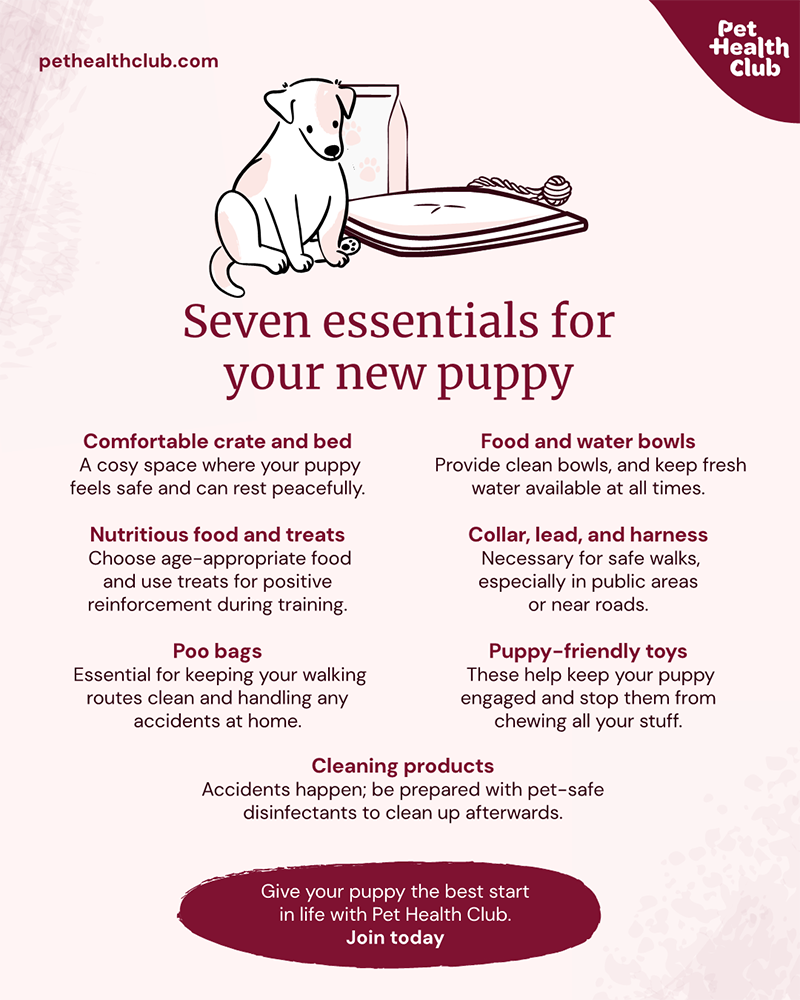
Next up on our new puppy checklist are the items to do with feeding your new puppy. Starting with their bowls, stainless steel or ceramic options are a good choice — they’re sturdy, easy to clean, and less likely to hold on to smells or bacteria. Try to avoid plastic ones, as they can scratch easily and are more tempting to chew. Look for bowls with non-slip bases to help keep mealtimes mess-free. Having a spare set can be useful for busy days or when you’re on the go.
It will be somewhere calm and quiet that you set up your puppy’s feeding station. Most puppies do best with three to four small meals a day, and they should always have clean, fresh water available. For more information, our puppy diet guide has the full details for every stage of their growth.
Before bringing your new puppy home, ask their breeder what food they’re used to. You’ll want to add this food to your puppy checklist — ideally your puppy won’t have any big diet changes while they are very young. If you want to switch to something else, do it gradually over seven to 10 days to avoid tummy upsets. Choose a complete puppy food that supports healthy growth — and if you’ve got a larger breed, your vet can help you pick the right formula for their joints and development.
Treats can be great for training, but try to keep them to under 10% of their daily calories. Pick small, soft treats — or break bigger ones into bite-sized bits — to avoid overfeeding. It’s best to steer clear of giving your puppy human foods too, as some can upset young stomachs or even be harmful. You can also use small pieces of their usual kibble as a training tool.
Puppy playtime checklist
Play is absolutely a puppy essential. It helps your puppy build confidence, learn new skills and burn off some of that endless energy. A few good starter toys for your new puppy checklist include:
Chew toys: you can freeze them to help soothe sore gums during teething and if they're biting too much
Puzzle feeders or treat balls: great for slowing down mealtimes and giving their brain a workout
Soft toys which squeak, rustle, or crinkle: these offer fun, comfort, and sensory play
Having a range of toys is best, as this lets you swap them in and out regularly to keep things interesting for your puppy.
Litter training: puppy essentials for toilet time
Toilet training your puppy starts from day one. You’ll want to add puppy pads to your new puppy checklist, especially if you live in a flat or don’t have easy access to a garden. They’re scented to encourage your puppy to use them — but think of them as a short-term support while they learn to go outside. You can choose between disposable and washable pads. Washable ones are kinder to the environment and can save money over time. Place a few near where your puppy sleeps, then gradually move them closer to the door you’ll use for outdoor trips.
Accidents happen, so it’s handy to have an enzyme-based cleaner on hand. Unlike regular cleaners, these break down smells properly — which means your puppy’s less likely to go back to the same spot. It’s also worth keeping a few old towels or cloths by the door. They’re perfect for muddy paws or quick wipe-downs when things get messy indoors.
Puppy essentials for walks and car travel
When your puppy’s ready to head out on walks, it helps to have ticked the key items off your new puppy checklist already. To keep things safe and comfortable, you’ll want:
Collar and ID tag: your puppy will need a snug-fitting collar with an ID tag. It’s a legal must in the UK. The tag should have your name and address, and many owners add a mobile number or a note about microchipping too.
Harness: a properly fitted harness takes pressure off their neck and gives you more control. Soft, breathable materials are best, and you’ll need to adjust it as they grow.
Training lead: a short lead works well in busy spots. A longer one (1.5 to 2 metres) gives your puppy room to explore while still staying close. Reflective or padded options can add comfort and help with visibility.
Check the fit of your puppy’s collar and harness regularly – they grow quickly, and outgrowing gear is easy to miss.
For car journeys, always make sure your puppy is safely secured. You can use:
A seat belt harness
A travel crate that’s strapped in
A boot guard or barrier stopping them climbing out of the boot into the rest of the car
A crate with secure fastenings and a non-slip mat works well for travel. Pop in a blanket or favourite toy from home to help them feel more relaxed. And to save your seats, it’s worth laying down an old towel or seat cover. Start with short, gentle drives to help your puppy get used to the car.
Puppy grooming essentials
Grooming is a great way to help your puppy get used to being handled. On your new puppy checklist you’ll definitely want something to brush them with, but what’s best depends on what sort of coat your puppy has. Go for a soft-bristle brush or grooming mitt for short coats. Longer or thicker fur might require a slicker brush or deshedding comb.
Your puppy won’t need baths too often, but it’s good to be ready. Use a puppy-safe, hypoallergenic shampoo and do a quick patch test before the first wash. A non-slip mat in the bath or sink can help avoid slips, and an old towel makes drying off much easier.
It's easiest to get puppies used to having their teeth brushed by starting while they are young, but you should wait until your puppy's teething phase is over first. Use a dog-safe toothpaste (never human) and a soft toothbrush or finger brush. Aim to brush a few times a week to keep their teeth and gums healthy. Dental wipes and water additives can help too – but they’re no replacement for regular brushing.
Nail care matters as well. Puppies don’t always wear their nails down naturally, especially their dewclaws (these are the extra ‘toes’ on your puppy’s wrists). Add a pair of clippers made for puppies to your checklist, and when you use them take things slowly. Let them sniff the tool first, then get them used to you touching and lifting the paws, before starting to trim just a little at a time until they’re comfortable.
Your first vet visit
Your puppy checklist should always include a local vet you can trust. Ideally, you want to find and register with a local practice before your puppy comes home. Book a check-up within the first few days and take along any paperwork from the breeder. This gives your vet a clear picture of your puppy’s background and helps shape what’s needed next. At your puppy's first vet visit, your vet will usually:
Do a full health check — including weight, teeth, eyes and ears. They’ll also check for any congenital issues, such as a heart murmur, cleft palate, or hernia.
Start or continue vaccinations — usually at around eight and twelve weeks, sometimes with a third dose around sixteen weeks
Talk through neutering — usually done between when your puppy is between six months and two years, this helps prevent unwanted litters and gives some health benefits
Explain microchipping — your puppy should already be chipped by the breeder, but your vet will make sure the details are up to date and easy to access
It’s also worth asking about out-of-hours care. Pop your vet’s emergency number into your phone, just in case. Your vet may also host puppy socialisation classes in-practice, led by a qualified member of their team. These can be fantastic way to get your puppy on the road to lasting good behaviour, so be sure to ask if your vets run them.
Insurance and preventative care
Preparation is key — but so is prevention. Alongside all the gear, it’s worth thinking ahead about your puppy’s routine healthcare as they grow. The costs can build up over time.
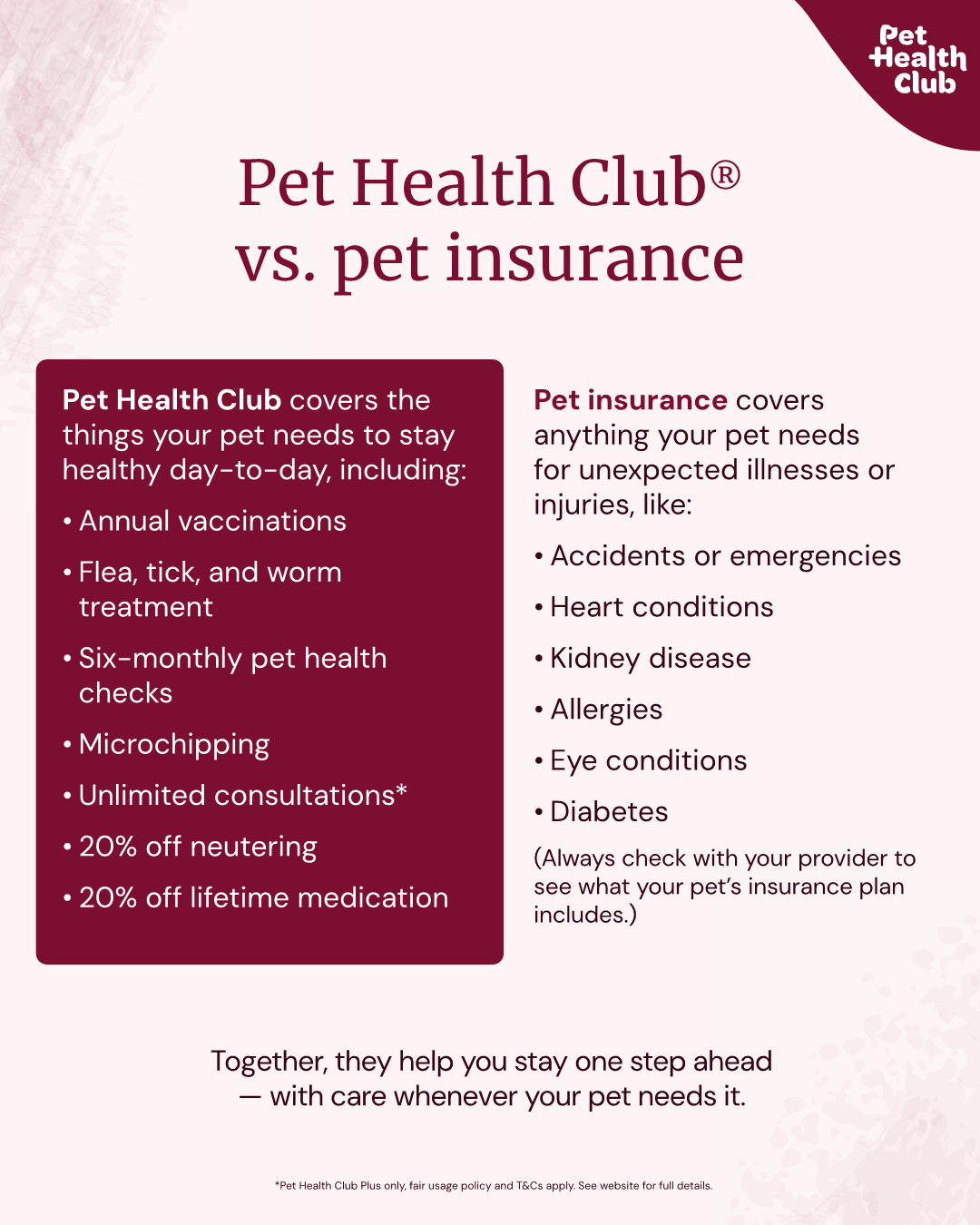
That’s what Pet Health Club is here to help you with. Our preventative healthcare plans include all the essentials — like vaccinations, flea and worm treatment, and health checks. It’s an easy way to give your puppy the best start, and make vet bills more manageable with one simple monthly payment — all while giving you peace of mind.
Our Essentials plan is called that for a reason — it covers everything your puppy needs to stay protected as they grow. And our Plus plan adds unlimited consultations and 24/7 access to online vets. Adding a Pet Health Club membership to your puppy checklist is a simple way to plan ahead with confidence.
Pet Health Club isn’t the same as insurance. Our plans cover routine care, like vaccinations and parasite treatment, while insurance helps with unexpected illness or emergencies. Having both means your puppy is covered for the day-to-day — and the ‘just in case’.
When you’re choosing pet insurance, look for a policy that clearly covers both accidents and illnesses – and check what’s not included. Some policies don’t cover dental care or may exclude conditions your puppy has already had. Lifetime cover tends to offer the most complete protection, but it’s always worth comparing a few options to find the one that suits you and your puppy best.
Need more help with your new puppy?
As magical as it is to get a new puppy, it can also be overwhelming. Sometimes you'll also have questions where the answers aren't easy-to-find online, but in these cases you can still ask your local vet or vet nurse.
Find your nearest vet using our find a vet page and, remember, Pet Health Club members have their puppy's routine health care needs covered.
Medically reviewed by Lizzie Youens, BSc(Hons) BVSc MRCVS
Published on 21/12/2018 • Reviewed on 24/04/2025