

Overview
How much should I feed my puppy, and how often, is one of the most common questions new puppy owners ask. Getting your puppy's nutrition right is important for their development. During their rapid growth period, puppies need up to twice the calories of adult dogs of the same breed. This guide will help you understand feeding schedules and portion sizes for your puppy.
Puppy feeding chart
The amount of food your puppy needs each day depends on their weight, age, and the calorie density of their food. Their breed, metabolism, activity level and body condition should also be taken into account. All good puppy foods include feeding guides on the packaging.
Most puppy feeding charts show daily portions (in grams or cups) based on your puppy’s current weight and age. Younger puppies need more calories per kilo than older ones. Divide the daily total by the number of meals your puppy needs each day.
Remember, most feeding charts give averages. Monitor how your puppy is growing and adjust the portion if needed. Speak to your vet if you’re unsure.
Puppy feeding chart (Nature’s Range Pet Food)
Expected adult weight (kg) | Age of puppy | Food per day (g) |
1–3 | 0–12 weeks | 40–105 g |
| 3–5 months | 80–135 g |
| 5–12 months | 60–100 g |
3–5 | 0–12 weeks | 105–160 g |
| 3–5 months | 185–250 g |
| 5–12 months | 100–135 g |
5–10 | 0–12 weeks | 160–240 g |
| 3–5 months | 250–400 g |
| 5–12 months | 135–210 g |
10–20 | 0–12 weeks | 240–375 g |
| 3–5 months | 400–615 g |
| 5–12 months | 210–325 g |
Source: https://www.naturesrangepetfood.co.uk/dog-food/puppy
How many calories does a puppy need?
It's also helpful to know roughly how many calories your puppy will need each day. Most puppy food packaging labels include calorie content per 100g or per cup, which you can use to work out the right portion. It's good to start off with good habits of keeping an eye on how much you are feeding your puppy while they are young — this will help you keep your dog a healthy weight throughout their life.
The table below gives rough average calorie requirements for puppies aged three to six months, based on body weight. It’s just a guide though.
How much food should a puppy eat (3-6 months)
Puppy’s weight (kg) | Average calorie intake (kcal/day) |
2 | 235 |
3 | 396 |
6 | 537 |
8 | 666 |
10 | 787 |
12 | 903 |
14 | 1013 |
16 | 1120 |
18 | 1223 |
20 | 1324 |
30 | 1759 |
40 | 2227 |
50 | 2632 |
Source: https://scrumbles.co.uk/blogs/dog/how-much-to-feed-a-puppy-chart-uk
Brand-specific puppy feeding guides
For detailed feeding recommendations for specific puppy food brands, check out the following resources:
PURINA: Offers a puppy feeding chart and guide to help determine appropriate feeding amounts and schedules.
Royal Canin: Provides detailed feeding guides tailored to breed and size.
Hill's Pet Nutrition: Provides advice on how much and how often to feed your puppy, along with nutritional information.
Nature's Range: Features feeding guides for their puppy diets, including portion sizes based on weight and age.
Why puppies need special food
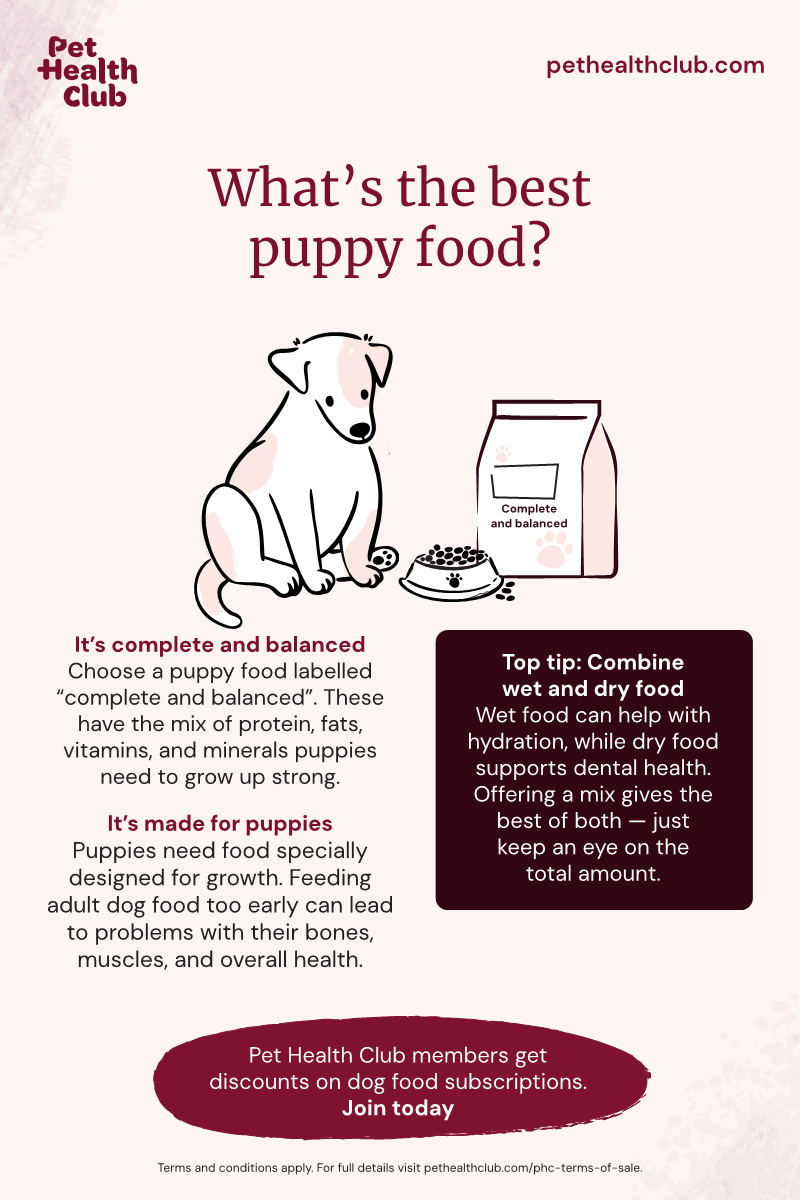
Puppies need food made specifically for growth. Puppy recipes contain more protein to support healthy development, as well as higher proportions of certain nutrients, such as calcium for bone growth and essential fatty acids for brain development. Feeding adult food to a puppy can lead to nutritional gaps and a failure to grow and thrive. Look for foods labelled as "complete and balanced" for growth. Reputable brands like Purina, Royal Canin and Hill's offer puppy diets that meet these standards.
Read more: When do puppies stop growing?
Top puppy diet tips
Avoid DIY food for puppies
Home-cooked or raw diets often don’t meet the nutritional needs of growing puppies. It’s hard to get the balance right, especially for minerals like calcium and phosphorus. This can cause serious issues with bone development. Raw food also carries risks from bacteria like Salmonella. It may be safer to stick to vet-approved puppy food unless a vet nutritionist has created a specific plan for your puppy.
Hydration
Always provide plenty of fresh water for your puppy. Puppies are active and are still developing their ability to regulate their temperature and fluid balance, so they can become dehydrated quickly. Make sure clean water is accessible at all times, especially during and after meals.
Breed size differences in puppy feeding
Every breed, from tiny Chihuahuas to Great Danes, needs a balanced diet to grow properly. This should include quality protein for muscle development, fat and carbohydrates for energy, and calcium and phosphorus for healthy bones. But there are differences between each breed size.
Toy and small breeds: small breed puppies mature faster and have small stomachs. They burn calories quickly but can only eat small amounts at a time. Regular meals and high-energy kibble made for small breeds help avoid low blood sugar. Signs of this can include extreme lethargy and poor coordination.
Medium breeds: puppies of medium size breeds (11–25 kg when grown) usually need three meals a day and can usually switch to adult food around 12 months.
Large and giant breeds: large (25–45 kg) and giant breeds (over 45 kg) grow more slowly and need extra care. They can be at risk of growing too fast, which affects their bones and joints.
Speak to your vet about the right puppy food and keep portions controlled. Large and giant breed puppy diets are designed to support steady growth with the right balance of calories and minerals. Don’t add extra calcium or supplements unless directed by your vet. With the right food, large breed puppies will grow to their full size at a healthy pace.
Read more: Puppy's first health check
How often to feed a puppy
Weaning to 12 weeks (3 months) old: Very young pups (just weaned from mother's milk at around 6–8 weeks) need very regular meals spaced throughout the day or access to ad-lib food.. By 12 weeks old, most puppies do well on four meals daily. For example, morning, midday, late afternoon and evening. Toy breed puppies may need 4–5 small meals a day up to three months old because of their risk of low blood sugar if meals are spaced too far apart.
3 to 6 months old: feed three meals per day. Around 12 weeks, you should be able to reduce to three feedings (breakfast, lunch, dinner). Many puppies are growing and developing rapidly at this age, and can comfortably eat a bit more at each meal, making four daily meals unnecessary.
6 to 12 months old: feed two meals per day. By six months old, most puppies can transition to a morning and evening meal schedule. Splitting their diet into two meals helps prevent overloading the stomach and establishes an adult-like routine. For giant breeds, you might want to stick to three meals a day until around 12 months, then two meals after that, since their growth period is longer. If your pup is neutered or spayed during this period, this can slightly reduce their calorie needs by affecting metabolism.
Over 12 months (1 year) and beyond: most adult dogs are fed two meals a day, although some toy breeds may prefer three small meals. Large and giant breed adults should never be fed just once a day. Splitting their food into two (or even three) meals will help prevent bloating and eases digestion.
Whatever schedule you choose, feed at about the same times each day to establish a routine. Puppies are creatures of habit, and a regular feeding schedule can aid in house-training and help predict toilet breaks.
Establish a feeding routine
Offer food at scheduled times, give your puppy 10-20 minutes to eat, then remove any leftovers. This teaches them to eat when food is offered and helps you monitor appetite. Scheduled meal-times also make house-training easier (you can more easily predict when your puppy will need the toilet after eating) and help prevent obesity by controlling portions. Avoid leaving food out all day for puppies. This can make it hard to track intake and may lead to overeating in some dogs.
Monitoring your puppy's weight
You should weigh your puppy every week or so and record it. This helps make sure they're growing at a healthy rate. You can compare your pup's growth to typical growth curves for their breed (your vet can provide this or use a standardised tool like the Waltham Puppy Growth Charts).
If your puppy's weight crosses the percentile lines too quickly, it might mean you're overfeeding them and if their weight goes up too slowly it could suggest underfeeding or illness. Use weight and body condition together to fine-tune feeding amounts.
Body condition scoring
Every puppy is unique and the quantity of food that keeps one puppy a healthy weight might make another puppy fat, or a bit skinny. You should let your puppy's body condition be your guide.
You should be able to feel your puppy's ribs easily but they should also have a visible "waist" tuck-up when viewed from the side and above (though this can be hard to see in very fluffy puppies).
Veterinary nutritionists use body condition score (BCS) charts to assess this. BCS is typically scored on a 9-point scale where 4–5 out of 9 is ideal (lower numbers are too thin, higher are overweight).
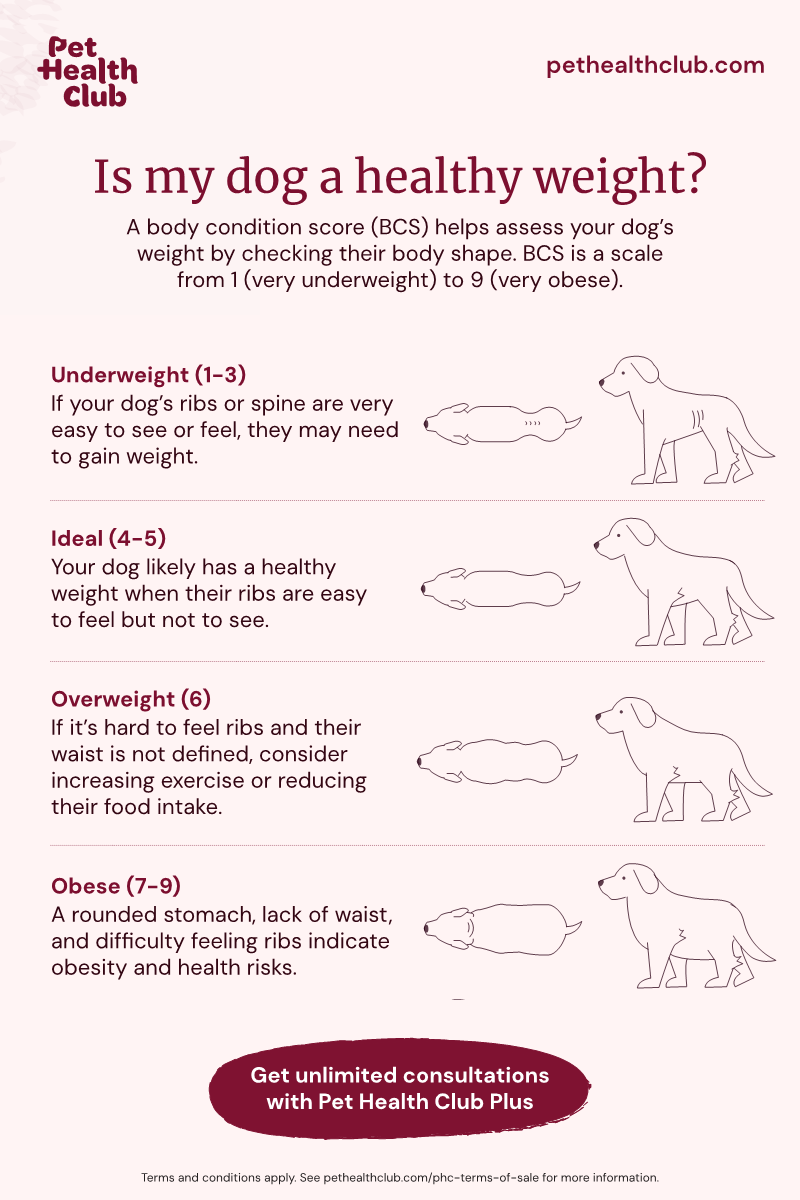
An ideal puppy is around four or five out of nine. That typically means their ribs are easy to feel but not see. Keeping your puppy in this condition helps make sure they grow at a healthy rate. Quick growth or weight gain (BCS 6–9) can lead to orthopaedic issues and obesity, especially in large breeds.
Check your puppy's body condition every couple of weeks. If they look too chunky (ribs hard to feel, loss of waist), cut back the food amount by about 10% and gradually increase exercise.
If they're too thin (prominent ribs, minimal fat), increase food by 10 to 15%, or add an extra meal, and deworm your puppy if that hasn’t already been done recently (when puppies have parasites they can cause poor weight gain). It's normal for puppies to be a bit ribby during growth spurts, but they should never be too skinny.
When in doubt, speak to your vet. They can assess your puppy and make specific feeding adjustments. Remember, growth isn’t a race. Your goal is a "slow and steady" growth trajectory, maintaining lean body mass. A balanced diet will support this.
Common puppy diet questions
Can I give my puppy treats and table scraps?
Giving your puppy treats is fun, especially for training, but be careful not to overdo it. All those little biscuits and bites of human food count toward daily calories.
A good rule of thumb is to keep treats to under 10% of your puppy's total daily calorie intake. For example, if your pup needs about 400 kcal/day, no more than about 40 kcal should come from treats. That works out as just a few small treats a day. The majority (90%+) of calories should come from nutritionally-balanced puppy food. Use kibble from your pup's daily ration as training rewards when possible, or try low-calorie training treats.
Also avoid giving dangerous human foods. Some foods are toxic to puppies and dogs because have they different metabolisms from us. These foods to be avoided include chocolate, grapes/raisins, onions, among others. If you want to give your puppy "people food" as an occasional treat, stick to puppy-safe fruits and vegetables in small amounts (like a bit of banana or carrot) and account for those calories.
When should my puppy switch to adult food?
When to switch from a puppy to an adult dog diet depends on their breed and size. Small breeds mature faster and may switch to an adult formula by around nine months old (some even as early as 7–8 months).
Large and giant breeds should stay on puppy diets longer — up to 12-18 months. Once your vet confirms your pup has reached maturity for their breed, you can transition slowly (perhaps over seven days) to an adult diet by gradually mixing increasing amounts of the new food with the old.
Read more: How heavy should my dog be?
Is it fine to mix wet and dry food?
It's fine to feed a combination of wet and dry puppy food as long as you make sure the total calories are appropriate. Although dry kibble helps with dental health, wet food is sometimes considered tastier, and it does add moisture.
If doing mixed feeding, calculate how much of each to meet the daily calorie goal (your vet can help). All foods given should be formulated for puppies.
My puppy doesn't seem to be eating normally — what should I do?
Call your vet if your puppy skips meals, is unwell, has persistent diarrhoea or isn’t growing well. Regular check-ups are the best way to keep their growth on track.
If your breed has special needs like a sensitive stomach or rapid growth, your vet can tailor advice. Puppy owners who join Pet Health Club get unlimited face-to-face consultations and 24/7 access to an online vet as part of their membership benefits. They can also enjoy up to 20% of vet-approved pet foods.
What does the science say about feeding puppies?
Do all puppy foods meet the mark?
Research published in Applied Sciences looked at popular puppy foods and found big differences in their essential fatty acid content, like EPA and DHA, which support brain and eye development. Some foods didn’t match what was claimed on the label. This shows how important it is to choose a trusted brand and speak to your vet about what’s right for your puppy.
Natural diets — are they enough?
A study in the Journal of the American Veterinary Medical Association looked at homemade dog food recipes and found that many fell short of nutritional requirements. While owners often choose these diets with good intentions, the research showed they can lack key nutrients if not carefully balanced. Puppies in particular need the right mix of vitamins and minerals, not just protein and fat, to grow up healthy and strong.
Need advice on choosing the right diet for your puppy?
For help choosing the right food for your puppy, speak to your local vet.
Find your nearest vet using our Find a Vet page.
Join the club today
Get regular health checks, vaccinations, and more, all included in your plan.

Show references
Merck Veterinary Manual, 2021. Feeding Growing Puppies. [online] Available at: https://www.merckvetmanual.com/management-and-nutrition/nutrition-small-animals/feeding-growing-puppies
Case, L.P., Daristotle, L., Hayek, M.G. and Raasch, M.F., 2011. Canine and Feline Nutrition: A Resource for Companion Animal Professionals. 3rd ed. Elsevier Health Sciences.
Freeman, L.M., Chandler, M.L., Hamper, B.A. and Weeth, L.P., 2013. Current knowledge about the risks and benefits of raw meat–based diets for dogs and cats. Journal of the American Veterinary Medical Association, 243(11), pp.1549-1558. https://doi.org/10.2460/javma.243.11.1549
Merck Veterinary Manual, 2021. Feeding Growing Puppies. [online] Available at: https://www.merckvetmanual.com/management-and-nutrition/nutrition-small-animals/feeding-growing-puppies
WSAVA Global Nutrition Committee, 2013. Global Nutrition Guidelines. [pdf] World Small Animal Veterinary Association. https://wsava.org/global-guidelines/global-nutrition-guidelines
National Research Council (NRC), 2006. Nutrient Requirements of Dogs and Cats. Washington, DC: The National Academies Press. https://nap.nationalacademies.org/catalog/10668/nutrient-requirements-of-dogs-and-cats
Royal Canin, 2025. Giant Puppy Feeding Guide. [online] Available at: https://www.royalcanin.com/uk/dogs/products/retail-products/giant-puppy-dry
The Waltham Petcare Science Institute, 2023. Puppy Growth Charts. [online] Available at: https://www.waltham.com/resources/puppy-growth-charts
WSAVA (World Small Animal Veterinary Association), 2019. Body Condition Scoring for Dogs and Cats. [pdf] https://wsava.org/wp-content/uploads/2020/01/Body-Condition-Score-Dog.pdf
Pet Food Manufacturers' Association (PFMA), 2023. Feeding Your Puppy. [online] https://www.pfma.org.uk/puppy-feeding
Hall, J.A., 2021. Feeding growing large breed puppies: What makes them different? Veterinary Focus, 31(2), pp.10–17. [Royal Canin Scientific Publications].
Nestlé Purina. (n.d.) How much should I feed my puppy? [online] Available at: https://www.purina.com/articles/dog/puppy/feeding/how-much-to-feed-a-puppy-chart
Hill’s Pet Nutrition. (n.d.) Feeding puppies: How much, how often & when to stop [online] Available at: https://www.hillspet.co.uk/dog-care/nutrition-feeding/feeding-puppies
Royal Canin. (n.d.) Puppy feeding and nutrition [online] Available at: https://www.royalcanin.com/uk/dogs/puppy/puppy-feeding-and-nutrition
Scrumbles. (n.d.) How much to feed a puppy chart UK [online] Available at: https://scrumbles.co.uk/blogs/dog/how-much-to-feed-a-puppy-chart-uk
Nature’s Range. (n.d.) Puppy food [online] Available at: https://www.naturesrangepetfood.co.uk/dog-food/puppy
Larsen, J.A., Parks, E.M., Heinze, C.R., Fascetti, A.J. and Rollins, C.E., 2013. Evaluation of recipes of home-prepared maintenance diets for dogs. Journal of the American Veterinary Medical Association, 242(11), pp.1500–1505. Available at: https://avmajournals.avma.org/view/journals/javma/242/11/javma.242.11.1500.xml
Ferro, S., Gizzarelli, M., Giovannini, A., Luciani, A., Iacopetti, I., Ferlito, R., Stabile, F., Mancusi, C., D’Addio, L. and Dall’Aglio, M., 2023. Evaluation of the Nutrient Composition and Essential Fatty Acid Content of Commercial Wet and Dry Puppy Foods. Applied Sciences, 13(21), p.11791. Available at: https://www.mdpi.com/2076-3417/13/21/11791
Medically reviewed by Lizzie Youens, BSc(Hons) BVSc MRCVS
Published on 30/09/2020 • Reviewed on 30/04/2025