

Overview
Even if your kitten stays indoors, they can still pick up fleas. Fleas can get into your home on shoes, clothes, guests, or other pets, and once inside they hide in carpets, sofas, or other soft furnishings. At the first chance, they’ll leap onto your kitten. Fleas are never pleasant for cats of any age, but the tiny size of kittens means even a few fleas can cause serious problems like dermatitis, anaemia, or tapeworms.
Knowing how to apply flea treatment is a skill all new kitten owners need to pick up, as keeping up with regular prevention is key when it comes to kittens. In this guide, we’ll show you how to spot the signs, which treatments are safe for young kittens, and what you can do to protect both your new pet and your home.
Risks of fleas in kittens
Fleas don’t just make your kitten itchy — they can also cause more serious health issues, including:
Anaemia: fleas feed on blood, and small kittens don’t have much to spare. A heavy flea burden can lead to dangerous blood loss in young kittens.
Flea allergy dermatitis: some kittens react badly to flea bites. This can cause intense itching, red bumps, and sore skin from too much scratching, and the possibility of secondary infections.
Tapeworms: kittens can swallow fleas while grooming. Adult fleas are often hosting immature tapeworms, so a flea infestation on your pet can result in them getting infected.
Infections: fleas can also carry harmful bacteria, including the one behind cat scratch disease.
For very young kittens, whose immune systems are still developing, these risks are more serious than for adult cats. Left untreated, a flea problem can become life-threatening.
How do you know if your kitten has fleas?
Look out for these common signs that your kitten might have fleas:
Scratching more than usual, especially around the neck or tail
Bald spots or sore, red skin
Actual fleas spotted when using a fine-toothed flea comb
Tiny black specks in their fur — often called ‘flea dirt’
If your flea comb picks up these tiny black specks, there’s a simple way to check if they are flea dirt. Take some damp cotton wool or a damp tissue, and try wiping the specks onto it. If they turn red, it’s probably flea poo. Fleas can be tricky to spot, especially on kittens with dark fur, so this test is a helpful way to check.
When checking your kitten for fleas, remember that fleas often bite in places your kitten can’t easily reach, like the back of their neck, the base of their tail, and their armpits. If your kitten has a flea allergy, you might also see scabs, sore patches, or hair loss in these places.
It’s also a good idea to check their bedding or favourite nap spots — you might spot flea dirt, or even the fleas themselves. If you’re not sure whether it’s fleas or ticks, your vet can take a look and help you choose the right treatment.
Read more: Can indoor cats get fleas
Flea treatment safety for kittens
Most flea treatments are only safe once your kitten is over eight weeks old and weighs at least 2lbs (just under 1kg). If they’re younger than eight weeks or weigh less than 2lbs/1kg, speak to your veterinary surgeon for the best treatment plan — the fleas still need to be treated, but your vet will recommend a product safe for very young kittens. Regular combing can also help remove adult fleas.
Where you can, it’s best to use flea treatments prescribed by your vet. These tend to be safer and work better than shop-bought options, which may not suit your kitten’s age or weight — and often don’t offer the same level of protection. If using a shop-bought treatment, always check the label to make sure it’s made for cats, and look carefully at the age and weight guidance.
Kittens under eight weeks shouldn’t be given standard flea treatments. At this age, the ingredients can be too strong for their small bodies and may do more harm than good. For this reason, pregnant cats require specific products which can target fleas without harming the unborn kittens. If you’re unsure about whether to give your kitten flea treatment, your vet can offer advice.
Important reminders:
Never use products that contain permethrin, pyrethrins, or essential oils on cats — even small amounts can be harmful
Never use dog flea treatments on cats or kittens — they contain ingredients that can make cats very ill
Flea treatment can cause mild side effects like drooling, sickness, skin irritation, or tiredness— they should pass quickly, but if not speak to your vet
Avoid herbal or natural remedies. There’s no strong evidence they work, and some can even be harmful
Join Pet Health Club
Members of Pet Health Club get flea treatments included. Your vet will be able to give your kitten flea treatments tailored to their specific needs, making the whole process stress-free. And it covers more than just fleas — the Kitten Starter Package which new kittens get when signing up also includes treatment for worms, ticks, and mites, as well as their starter vaccination course and microchipping.
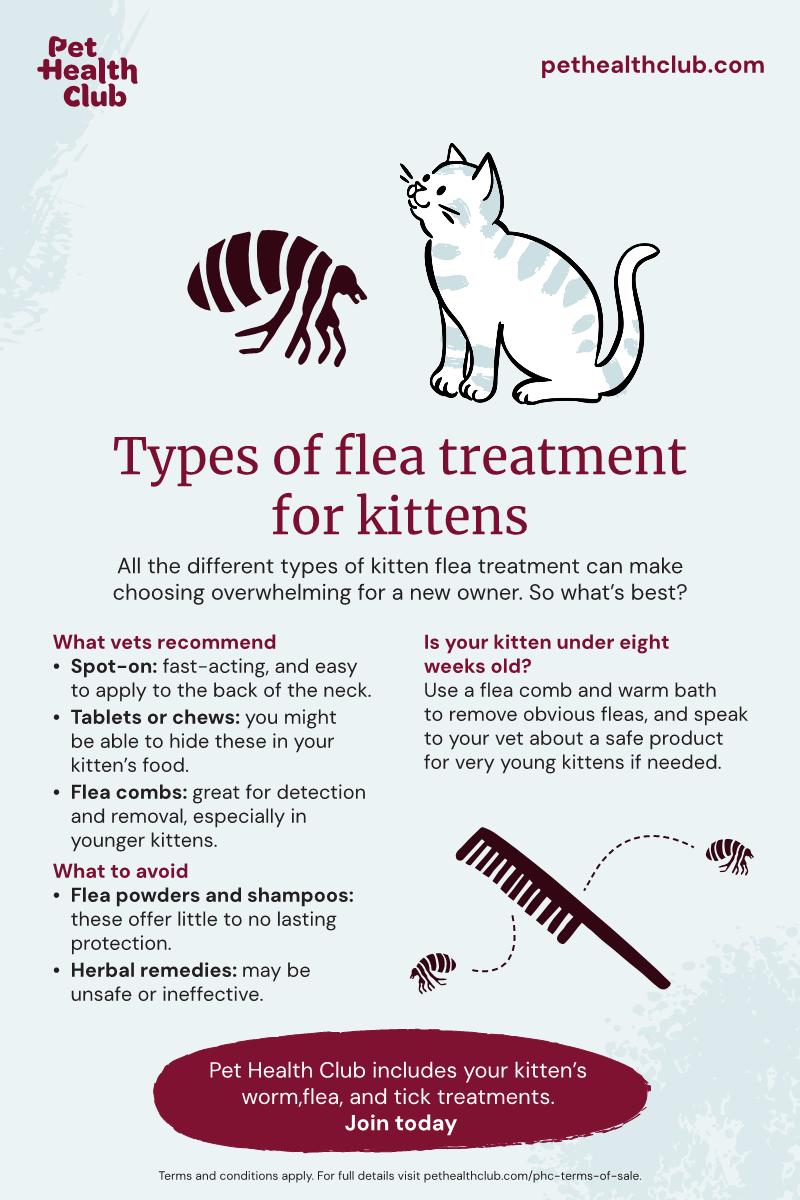
Types of flea treatments for kittens
Flea treatments come in a few different forms — and some work better than others. Here's a quick guide to the ones vets tend to recommend, and those they suggest avoiding.
Vet-recommended treatments:
Spot-on treatments: these are applied to the skin, usually on the back of the neck where your kitten can’t lick it off. Spot-on treatments may include ingredients that kill adult fleas, stop young fleas from developing, or do both. They’re fast-acting and easy to use.
Tablets or chews: these often work by entering your kitten’s bloodstream, making your kitten’s blood toxic to fleas who bite. Some start working within 30 minutes, but others are slower.
Injections: usually used for long-term control, these stop flea eggs from hatching. They’re given by a vet and can be especially helpful for cats and kittens who make spot-on treatments or tablets hard to use.
Flea combs: while not a treatment on their own, they’re very useful for spotting and removing fleas — especially in kittens who are still too young for other options.
High-quality flea collars: some collars, like those with imidacloprid and flumethrin, can offer up to 8 months’ protection. Only use them if your vet advises it’s safe for your kitten.
Vets recommend avoiding:
Flea powders: these only kill adult fleas and don’t affect eggs or larvae, so they’re not effective for long-term control.
Flea shampoos: they only work during the bath and don’t offer any lasting protection. Many aren’t safe for kittens under 12 weeks.
Herbal and ‘natural’ remedies: these often contain essential oils or other ingredients that can be toxic to cats — and there’s no strong evidence they work.
For kittens under eight weeks old, a warm bath and regular use of a flea comb can be used to keep fleas under control, but heavy infestations will require vet-recommended treatments.
Read more: Can kittens get worms?
How to give your kitten flea treatment
Spot-on treatments are one of the most common and effective ways to protect kittens from fleas. Applying them correctly is important to make sure they work. Luckily, it’s very easy — here’s how to do it:
1) Pick the right moment
Choose a calm time when your kitten is relaxed — after a meal or nap often works well. It can help to have a favourite toy or a few treats nearby to distract and reward them.
2) Prepare the area and the applicator
Sit somewhere with good light and, if needed, gently wrap your kitten in a towel to help keep them still. Open the pipette carefully and hold it upright, ready to use.
3) Apply the treatment
Part the fur at the back of your kitten’s neck or between their shoulder blades – somewhere they can’t reach to lick. Place the spot-on treatment nozzle directly onto their skin, and squeeze out all the liquid in a line along the skin. Be careful it doesn’t run off.
4) Aftercare
Wash your hands straight after applying the treatment. Try not to stroke or touch the area until it’s fully dry — this can take up to 24 hours — and keep children and other pets away from the treated area during this time. Don’t bathe your kitten or let them get wet for at least 48 hours, as this can reduce how well the treatment works.
Extra tips:
Always use the full dose – splitting it between spots or skipping applications can reduce how well it works.
If your kitten is particularly wriggly, it can help to have someone else gently hold them still.
If you're not sure or it’s your first time applying flea treatment, your vet or a nurse at your local clinic will be happy to show you how.
Preventing kitten fleas
Regular flea treatments and a clean environment are the best way to stay ahead of fleas (and ticks too).
Treat all pets in the home
Every cat, dog, and rabbit in your household should be treated regularly with a product made for their species. When one pet catches fleas, there’s a good chance they will spread. Treating your pets every month — even through winter — helps keep your kitten protected all year round.
Clean your home regularly
Once fleas get in, the problem won’t just be with your kitten. One female flea can lay up to 50 eggs a day, often hidden in carpets, bedding, and furniture. To help break the flea life cycle:
Wash your kitten’s bedding at 60°C once a week
Vacuum carpets, soft furnishings, and skirting boards every week
Use a vet-approved household flea spray that tackles all stages of the flea’s life — always follow the label and keep your kitten out of the room until it’s safe
Ask your vet for help
If you’re finding it hard to get on top of a flea problem, your vet can offer tailored advice.
For long-term peace of mind, Pet Health Club includes regular flea and worm treatment, unlimited consults, and ongoing support to help keep your pet healthy. Use our Find a Vet tool to locate your nearest Pet Health Club practice.
Join the club today
Get regular health checks, vaccinations, and more, all included in your plan.

Medically reviewed by Lizzie Youens, BSc(Hons) BVSc MRCVS
Published on 14/05/2025 • Reviewed on 14/05/2025