

Overview
Most kittens start losing their baby teeth when they’re around three and a half months old. By six to seven months, they should have all 30 of their adult teeth. Teething is usually straightforward, but it helps to know what’s normal, and how to keep your kitten comfy along the way.
This guide walks you through everything you need to know about kitten teething — including spotting the signs, picking the right toys and food, and knowing when it’s wise to call the vet.
Signs of kitten teething
Most kittens are just fine throughout their teething, but some may feel a bit uncomfortable. Teething troubles might be behind any of these signs:
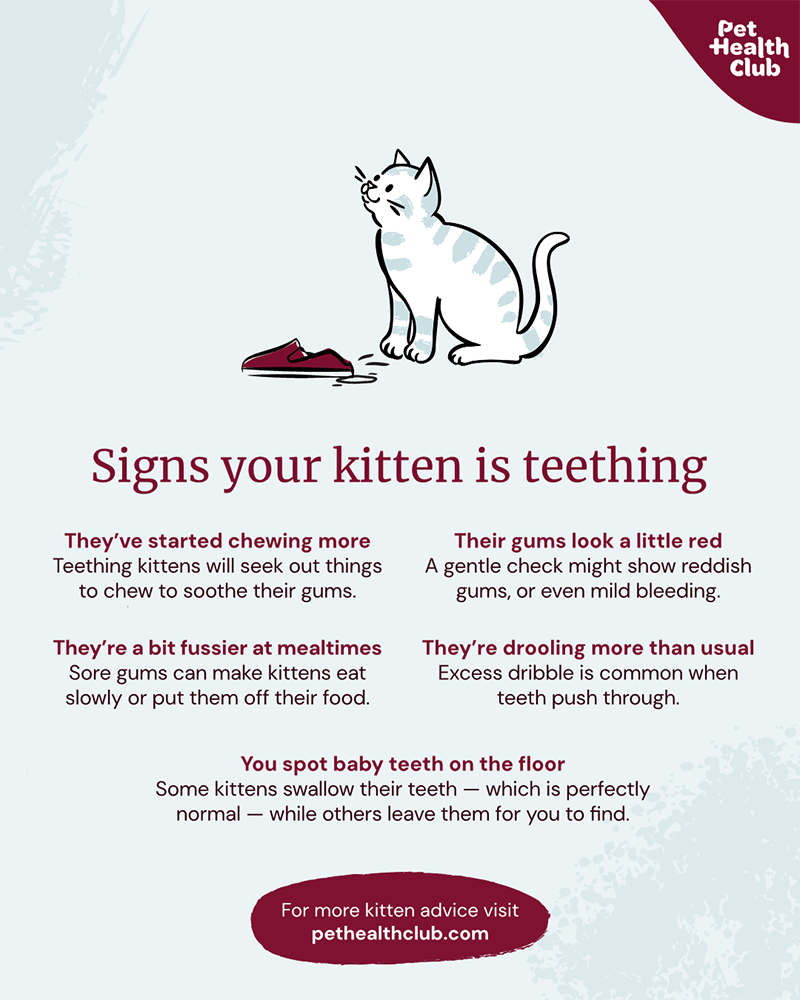
Red or bleeding gums: as baby teeth fall out and adult ones come through, it’s normal for gums to look a little red or even bleed slightly. This is often easiest to spot during meals or playtime.
Changes in chewing or eating: kittens naturally like to chew, but when their gums are sore they may chew even more. Teething can also make them eat more slowly, drop food, or go off their meals for a bit.
Bad breath and drooling: teething can irritate the gums, leading to mildly whiffy “kitten breath” and a bit more dribbling than usual.
Pawing at their mouth or shaking their head: this is how some kittens deal with the discomfort of loose or growing teeth.
Grooming less or avoiding touch: if their mouth is sore, your kitten might groom less and shy away from having their face touched.
Behavioural changes: if your kitten seems unusually irritable, more vocal, or withdrawn, they might be feeling some teething discomfort.
Baby teeth around the house: spotted a tiny tooth on the floor? That’s a clear sign your kitten’s teething. But don’t worry if you don’t see any — kittens often swallow their baby teeth, and that’s completely normal.
These are normal signs, but if your kitten shows ongoing pain, struggles to eat, or has bleeding gums, speak to your vet.
Kitten teething timeline
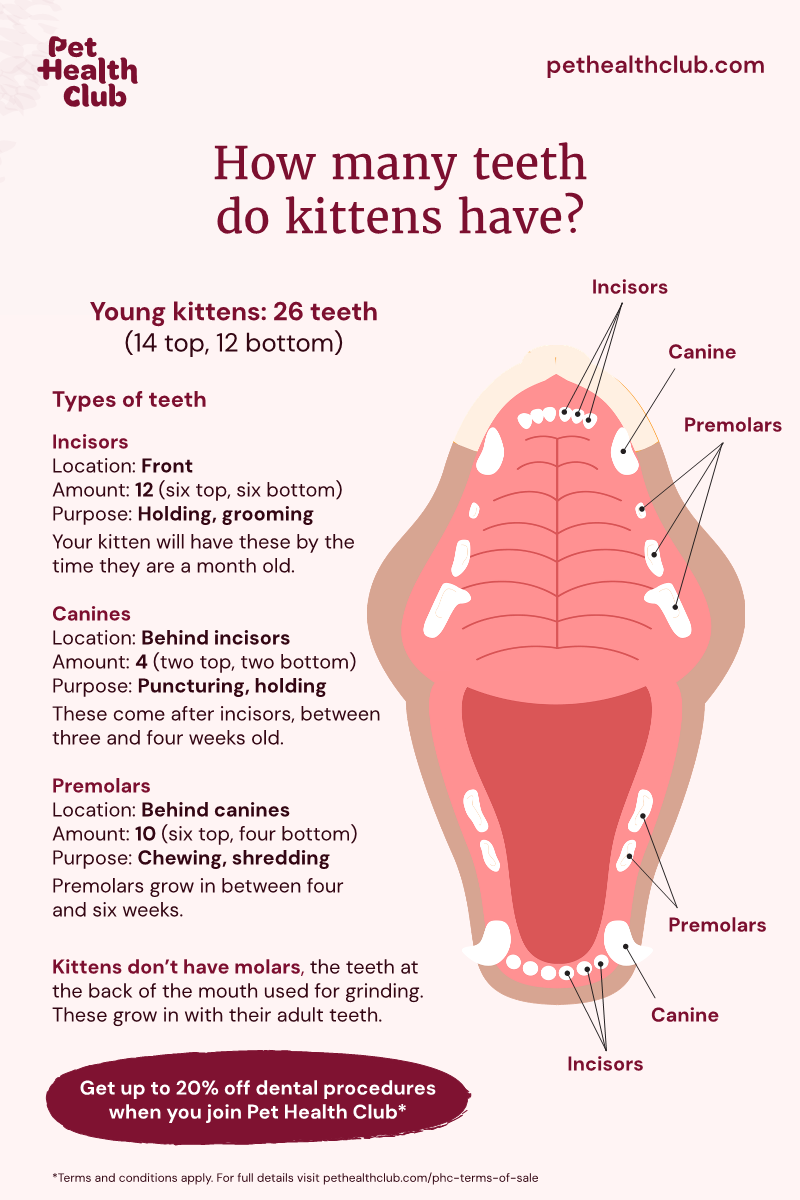
Kittens go through two teething stages. Firstly, their baby teeth come through. After that, these fall out to make way for their adult teeth. Overall, they’ll have 26 baby teeth and then 30 adult ones.
First kitten teething stage
If you get your kitten from a breeder, they’ll be at least eight weeks old — meaning their first teething stage will likely have passed. But if you’re caring for a very young kitten, their first stage of teething might look a bit like this:
Under two weeks: kittens are born without teeth
Around two weeks: baby incisors (the small front teeth) start to come through
Around three weeks: the baby canines (the pointy ones) appear
Four to six weeks: baby premolars start to erupt
Six to eight weeks: all 26 baby teeth are usually in place
Kitten baby teeth chart
Our kitten teeth chart covers the layout of your kitten’s baby teeth:
Read more: How many teeth do adult cats have?
Second kitten teething stage
Most new owners bring their kitten home between the two teething stages. Once they’ve settled in, you’ll likely start to notice something like this happening:
Three and a half to four months: baby incisors fall out and adult ones come in
Four to five months: baby canines and premolars fall out, replaced by adult versions
Five to seven months: adult molars arrive, completing the full set of 30 adult teeth
What are the different types of kitten teeth?
This timeline gives you a general idea of what to expect, but every kitten is a little different. Some may start teething earlier or later. By about seven months old, most kittens have all their adult teeth. Each tooth type has a job to do:
Incisors (the small front teeth): used for biting and grooming
Canines: help with gripping and tearing
Premolars and molars: for chewing and grinding
Helping teething kittens
When teething is unpleasant for our kittens, it’s nice to be able to soothe them in any way we can. Here’s what we recommend:
Have the right toys and food
To help soothe your kitten’s gums, consider giving them rubber or fabric chew toys. These are safe for teething and can provide some relief. Provide a variety of textures if possible, but avoid anything too hard, which may chip or damage growing teeth. A cold, damp washcloth or flannel can also do the trick. Your kitten will like it all the more if you’ve dampened it in tuna water.
Soft food can be easier for them to manage at this stage. Our kitten diet guide covers the best foods to give your kitten at each stage of their growth, including teething.
Safe play and building good habits
When playing with your kitten, keep things gentle and avoid tugging toys or pulling anything from their mouth. It’s also important to kitten-proof your home by keeping anything risky (like electrical cables or possible choking hazards) well out of reach.
While it may seem harmless at first, allowing your kitten to chew on your hands or feet can lead to habits that become painful later on. While they do need to chew on something during teething, it’s much better for it to be a toy instead.
Care and encouragement
Being a good friend to your kitten will help reassure them during teething. Gently stroke their head or body when they seem unsettled. Calming pheromone diffusers can also help ease their stress.
Your kitten will want to chew a lot during teething, so this is a good time for positive reinforcement. When you see them chewing the right things, give them praise and treats — this is a great way to build healthy habits that last.
Kitten teething toys
We’ve stressed that safe toys give your kitten something soothing to chew — and help steer them away from things they shouldn’t chew — but which are the best? Try these options:
Soft chew toys: fabric toys are gentle on sore gums
Catnip toys: help your kitten relax while they chew
Teething rings or wheels: designed to gently massage their gums
Chilled toys: pop a safe toy in the fridge or freezer for cooling comfort
Avoid toys made of hard solid plastic or wood, as these can damage fragile baby teeth and irritate sore gums. Look for toys made from non-toxic materials, and avoid anything with small parts that could break off and be swallowed. For kittens already showing some adult teeth, textured toys like chew wheels may help soothe gums and keep new teeth clean.
It’s good to have a rotation of toys, meaning your kitten won’t get too bored with any single one of them. Replace any showing signs of wear and tear, and always keep an eye on them during playtime.
Foods for teething kittens
Tender gums can make mealtimes a bit tricky, especially if you’ve been serving up dry food. You can make things easier by offering wet food or softening their usual dry food with warm water. A mix of textures can help them adjust at their own pace. If you’re changing what they eat, do it gradually over a few days to avoid any tummy upsets. And for treats, go for soft, chewy options rather than anything too crunchy while their mouth is still sensitive.
Your kitten still needs a complete, balanced diet while teething, with plenty of protein, moisture and essential nutrients to help them grow — and support healthy teeth. High-quality wet kitten food will help at this point, as it tends to have more water and protein, keeping them hydrated and growing strong. It’s fine to still serve dry food during this time as well, but keep an eye on how well your kitten is dealing with it. If your kitten isn’t eating much or starts losing weight, it’s best to check in with your vet.
Veterinary care during teething
Teething usually goes smoothly, but some kittens need a bit of extra help. It’s a good idea to contact your vet if your kitten’s adult teeth don’t come through when expected, if their gums look red or swollen, or if they get bad breath that doesn’t go away. Getting in touch with your vet is also wise if your kitten avoids food for more than a day or starts to lose weight.
At routine check-ups, your vet will look inside your kitten’s mouth to check that their teeth are coming through in the right places, their gums are healthy, and there are no signs of infection. They’ll also check for any baby teeth that haven’t fallen out — these may need to be removed if they’re getting in the way of the adult ones.
If you spot a wobbly tooth, don’t be tempted to pull it out — even if it looks like it’s about to fall. Doing so can cause pain or damage your kitten’s gums. It’s best to leave it to your vet to decide if anything needs to be done.
Regular dental checks are a simple way to spot any issues early and support your kitten’s healthy development. Your kitten’s first few vaccination visits — usually at eight weeks, and three to four months — are a great opportunity for your vet to see how their teething is coming along.
Retained baby teeth in kittens
Sometimes a baby tooth doesn’t fall out when it should. It’s called a retained baby tooth, or sometimes a persistent deciduous tooth, when the adult tooth starts to grow in without the baby tooth having fallen out. You might notice it as a double row of teeth.
Can double teeth in kittens be a problem, and how do I spot it?
If a kitten’s baby tooth stays in place once the adult one has come through, it can cause problems. These include crowding or crooked teeth, a misaligned bite, and a higher risk of gum disease or infection. It could be a retained baby tooth if you notice your kitten showing any of these signs:
Two teeth side by side in the same spot
Red or swollen gums around the area
Persistent bad breath, even after teething
Struggling to chew or favouring one side of their mouth
Routine vet visits will help catch this early. But you can also check at home by gently lifting your kitten’s lip to look for any overlapping teeth.
Treatment for double teeth
Once an adult tooth has come through, a retained baby tooth won’t fall out on its own. If it’s left in place, it can damage the adult tooth or lead to longer-term dental problems. Your vet might recommend removing the baby tooth under anaesthetic. It’s a minor procedure, but your vet might want to do it at the same time as neutering. This is so your kitten will only need anaesthetic once. After surgery, your kitten may need:
Soft food for a few days
A short break from chew toys
Oral pain relief or a medicated mouth rinse
Once your kitten has recovered, you can start regular dental care and brushing as usual. Most kittens who have a retained baby tooth removed go on to have healthy teeth and gums with no lasting issues — but the earlier it’s taken out, the better the chance of avoiding problems later on.
Oral hygiene for kittens
You can start building your kitten’s dental care routine during teething — just hold off on brushing for now. Instead, try:
Letting them lick a small amount of pet-safe toothpaste from your finger to build a positive association
Gently touching their cheeks, lifting their lips and handling their face so they get used to having their mouth touched
Use a soft finger brush to gently massage the outside of their mouth and gums (but not the teeth) once they’re comfortable with touch
Reward calm behaviour with treats, praise or gentle fuss
Always avoid human toothpaste — it can be harmful to cats. Only use products made specifically for pets. It’s good to start brushing your kitten's teeth while they are still young, as kittens get used to new experiences and routines much easier than older cats. With that being said, it’s best to wait until all their adult teeth are in and their gums feel comfortable before you start brushing. Once it’s time, keep these top tips in mind:
Use a toothbrush designed for cats and cat-safe toothpaste
Start slow — just a few teeth at a time
Be gentle, reassure them by speaking softly, and reward them with treats
Brushing helps protect against gum disease, tartar build-up and the need for costly dental treatments later on.
Need more advice on cleaning your kitten’s teeth?
For expert advice on cleaning your kitten’s teeth, get in touch with your local vet. Find your nearest vet using our Find a Vet.
Remember, prevention is always better than cure, so start taking steps today to protect your kitten's teeth. Members of Pet Health Club get up to 20% off dental procedures.
Medically reviewed by Lizzie Youens, BSc(Hons) BVSc MRCVS
Published on 15/04/2025 • Reviewed on 16/06/2025