
Overview
If you’ve found a tick on your cat, don’t panic, but don’t wait either. Ticks can pass on infections to both cats and humans, so it’s best to remove them as soon as you spot them.
To remove a tick from a cat, use a tick remover tool or fine-tipped tweezers to grip the tick by its body, twist gently (if using a tick remover), or pull straight up (if using tweezers). Avoid squeezing the tick’s body. Clean the bite area and monitor your cat for signs of irritation or illness.
Why removing ticks quickly matters
Ticks are tiny parasites that feed on blood. As they bite and attach to your cat, they can spread bacteria and other harmful organisms. Some of these can cause serious illness, including cat scratch disease, in both pets and people. If a tick carries an infection, the longer it is attached and feeding for, the more likely it is to transmit the disease — so the quicker you remove a tick, the lower the chance of infection.
You’ll also help your cat feel more comfortable. Ticks can cause irritation and inflammation, especially if they’re left to feed for too long. A very high tick burden can even cause anaemia.
What does a tick look like?
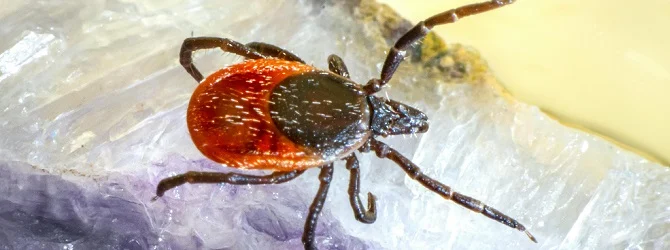
Ticks typically look like a small bump or dark wart on your cat’s skin. When newly attached, they’re tiny (a few millimetres long), brown-ish grey and flat, but as they feed, they swell up to around one centimetre long and turn a dark greyish colour. You may also see little black specks around the area. These are the tick’s droppings.
They often attach around places that are warm and hard to reach, such as the head, ears, neck, feet, armpits, and under the collar. If your cat spends time outdoors, especially in grassy or wooded areas, it’s a good idea to do a quick check when they come back in. There are no 'easy' ways to check for ticks like there are when checking your cat for fleas. Ticks can be hard to see, especially when they are first attached and small, so an easier way to check is often to feel for them by gently running your hands over your cat’s body, feeling for small bumps.
What you’ll need
Tick-twister or similar tool (available from your vet or shop.pethealthclub.com)
Gloves
Small container with rubbing alcohol (for disposing of the tick)
Cat-safe antiseptic or mild soap
Cotton wool or clean cloth
Second pair of hands (if possible)
Treats or a toy to distract your cat
Step-by-step: how to remove a tick from a cat
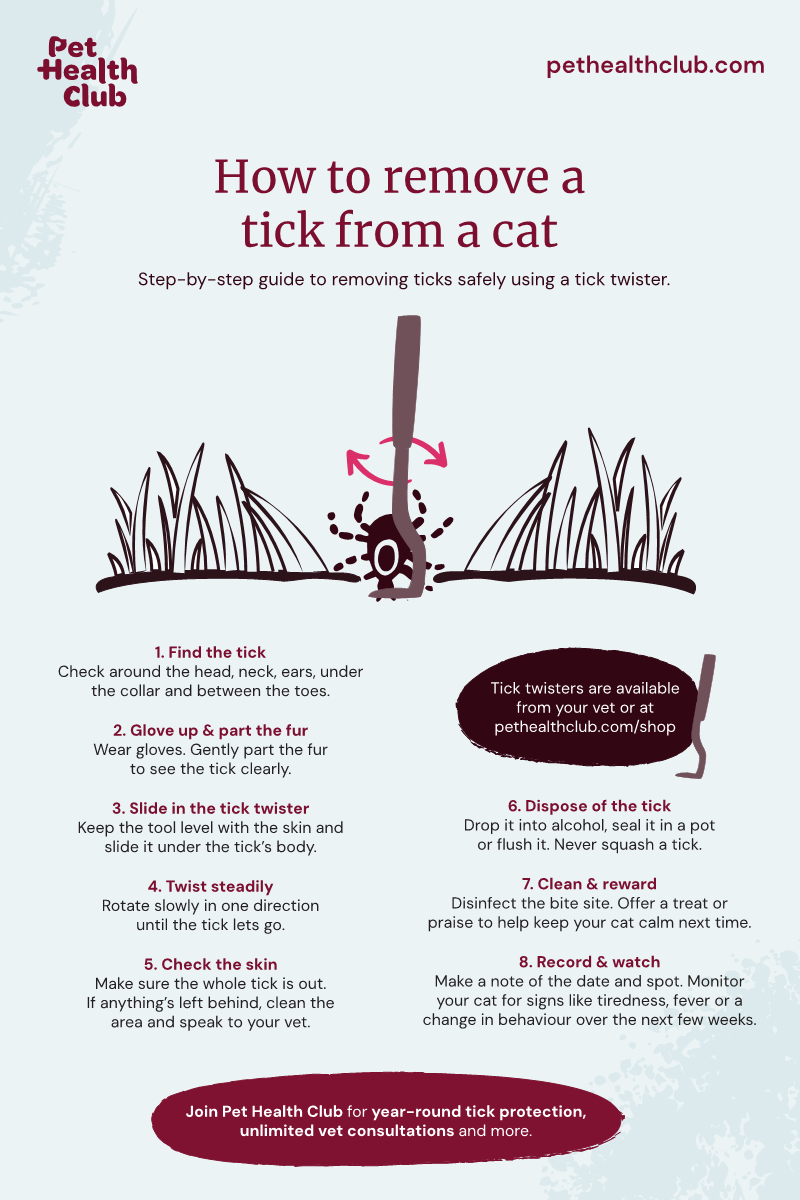
Keep your cat calm Ask someone to gently hold your cat or wrap them in a towel. Make sure they’re relaxed before you start. Feeding them some treats can help them remain calm and still.
Put on gloves This protects both you and your cat.
Find the tick Part the fur and check the area closely. A tick has a round body and legs near the head. Don’t confuse it with a nipple, skin tag, or scab.
Use the tick remover Slide the tool under the tick, as close to the skin as possible, with one ‘arm’ of the tool either side of the tick’s body. Twist slowly in one direction. Usually, a few turns are enough for the tick to let go. If using tweezers, grasp the tick’s body carefully and pull upwards away from the cat (don’t twist) with sustained pressure until the tick releases.
Check it’s all out Make sure the tick’s head hasn’t broken off. If you’re not sure or the area looks irritated, give your vet a call.
Dispose of the tick safely Drop it into the container with alcohol. Never crush it with your fingers.
Clean the area Gently wipe the bite with pet-safe antiseptic or mild soap and water.
Give your cat a treat Praise them – they’ve done well.
Read more: Vet's eight autumn tips for cat owners
Aftercare and what to look out for
Watch the bite site for a few days. A small bump is normal. But if it becomes swollen, red, or starts to ooze, speak to your vet.
Keep an eye on your cat. If they seem off-colour or are tired, not eating, or limping, it could be a sign of illness.
Prevention is better than cure
The best way to deal with ticks is to stop them before they bite. Regular tick treatments (included in Pet Health Club membership) are essential for keeping outdoor cats safe. Your vet can help you choose one that’s safe and effective for your cat. If your cat spends time outdoors, especially in grassy or wooded spots, it’s worth checking them over when they come inside. Keeping your garden tidy can also help as shorter grass and well-trimmed bushes give ticks fewer places to hide. And during peak tick season in spring and summer, you might want to limit your cat’s outdoor time if you live in an area where ticks are a known problem.
Want to know more about tick prevention and treatments?
Ticks might be unwelcome visitors, but with the right tools and a calm approach, they’re easy to deal with. Prompt removal helps protect your cat’s health, and your peace of mind. If you’re ever unsure, your local vet is there to help.
Use our Find a Vet tool to locate your nearest practice. And for year-round protection, join Pet Health Club, where you’ll get unlimited vet consultations and parasite treatments that cover ticks, all included in your plan.
Medically reviewed by Lizzie Youens, BSc(Hons) BVSc MRCVS
Published on 19/06/2025 • Reviewed on 19/06/2025