

Overview
Shorter days usually mean darker walks — and that can make things a little trickier. Slippery paths and poor visibility can put both you and your dog at risk, especially if your dog is young or easily distracted. The good news? A few simple habits and the right gear can help you both stay safe.
Are cars a big risk to dogs?
Younger dogs are most at risk when it comes to road accidents. A UK-wide study found dogs under three were nearly three times more likely to be hit by a vehicle than dogs over 14. Male dogs were also more likely to be involved. Sadly, nearly a quarter of dogs in these accidents don’t survive.
Around one in every 200 dogs is involved in a road traffic accident. Whether they’re off the lead, startled, or just curious, it only takes a second for things to go wrong.
What’s the safest type of lead for walking dogs?
A short lead — up to six feet long — helps you keep your dog close and in control. Near roads, it’s best to avoid retractable or extendable leads. These can give too much slack and the latch can break, making it harder to react quickly if your dog pulls or tries to dart into the road.
Make sure your dog’s harness or collar fits well and is in good condition. There’s a quick test to make sure the collar fits well: you should be able to slide two fingers between the collar and your dog’s neck, but not three. It’s also good to take a moment before every walk to check the clips and stitching — worn or broken gear can fail when you need it most.
Read more: How often should I walk my dog?
What other dog walking gear helps?
As daylight fades, visibility drops — so being seen becomes even more important. Reflective or LED collars, leads, and harnesses help drivers, cyclists, and others spot your dog from a distance. Reflective gear bounces light back towards its source, like headlights, giving people more time to see and react. LED collars go one step further, creating their own light — ideal in darker areas or where there are no streetlamps.
If your dog is small or has dark fur, this gear matters even more. They’re naturally harder to spot in low light, so anything that helps them stand out is worth it. It’s a good idea for you to wear light or reflective clothing too.
Carrying a torch or wearing a headlamp can help you see where you’re going — and help others see you and your dog. They’re especially handy for spotting ice, puddles, kerbs, or anything else that could trip you up.
How does dog road safety training work?
Your dog’s instincts don’t offer them much help with roads. However, with time and consistency, you can teach habits that help keep them safe.
How to get started with road safety training
Start with simple commands like ‘sit’, ‘wait’, ‘stop’, and ‘come’. These are the building blocks of road safety — and they can make all the difference near traffic. Begin somewhere quiet, where your dog can focus without too many distractions. Once they’ve got the hang of it, gradually build up to busier places — and later, to darker walks too. Use rewards like treats, toys, or praise to reinforce good behaviour. Avoid punishment. You want your dog to feel confident at the kerb — not anxious or unsure.
Make a habit of stopping at every kerb. Ask your dog to ‘sit’ or ‘wait’, and only cross when you say ‘walk’. Over time, this becomes second nature — helping your dog learn not to step into the road. An emergency ‘stop’ or ‘freeze’ command is another useful tool. Even on a lead, dogs can get startled and lunge. Having a cue that tells them to stop in their tracks gives you an extra layer of safety when things don’t go to plan.
The importance of recall training
It’s always best for your dog to have a strong recall. Dogs who do not reliably come back when called should always be kept on a lead — but even if you always keep your dog on a lead, they should still be recall-trained in case of an emergency. While dogs should always be on the lead near busy roads, accidents can happen — and a well-practised recall cue gives you the best chance to bring them back safely. Start in quiet places where your dog can focus, and build up to more distracting environments using a long line for safety.
Use the same cue word every time and reward them generously when they come back. Try not to use recall for things they won’t enjoy (like bath time) so they always associate it with something positive. That way, even when something exciting catches their eye, they’ll still want to come back to you.
Read more: Autumn hazards for dogs
What does a dog-proof garden look like?
Many accidents happen when dogs bolt from their own garden into the road. Securing your home is one of the best ways to reduce that risk.
Check the boundary: walk the fence line and look for gaps, loose panels, or low spots where your dog could slip through or dig under. Some dogs are more agile than you’d think — even jumping or climbing over. This is all the more important after there’s been stormy weather, which is often when fence panels come loose.
Secure gates and latches: gates are often the weak point. Keep them locked, and use a sturdy latch that closes on its own, positioned high enough so it’s out of reach.
Adapt to your dog’s habits: if your dog jumps, consider adding height. If they dig, bury mesh or use footers to block escape routes. The best setup is one that’s tailored to how your dog behaves.
Reduce temptation: if your garden backs onto a road, keep toys and treats well away from gates or fences. Some dogs dash out chasing smells, sounds, or passers-by.
Keep a close eye: especially in the dark or low light, don’t leave your dog outside unsupervised near roads. Even a quick slip can lead to danger.
Set clear expectations: if your dog roams freely indoors, they might expect the same freedom outside. Combine secure fencing with gentle training so they know the garden is a safe space — with limits.
What else can be a danger for cold weather walks?
Cold, dark evenings can bring extra hazards, like slippery pavements, wet leaves, and ice (including the even more dangerous hidden black ice). Even familiar routes can become risky, increasing the chance of slips or falls for both you and your dog.
Grit, salt, and de-icers are often used to keep paths safe for people, but they’re not so friendly to paws. These chemicals can cause irritation or soreness. After your walk, give your dog’s feet, legs and belly a quick wipe to remove any residue — and to stop them licking anything that could make them poorly.
Some dogs feel the cold more than others — especially small breeds, short-haired dogs, puppies, older dogs, or those with health conditions. A cosy coat, protective booties or a bit of paw balm can make chilly walks much more comfortable.
If the weather turns harsh, it’s okay to keep walks short. Try to avoid icy patches, poor lighting, or steep paths. And if it’s just too slippery to head out safely, indoor games and toys are a great way to keep them active at home.
What other things can you do to help?
Your dog depends on you to stay focused. Try to leave your phone and headphones behind, so you can keep an eye on what’s going on around you — especially near roads or busy paths. Even a moment’s distraction can make it harder to react quickly when something unexpected happens.
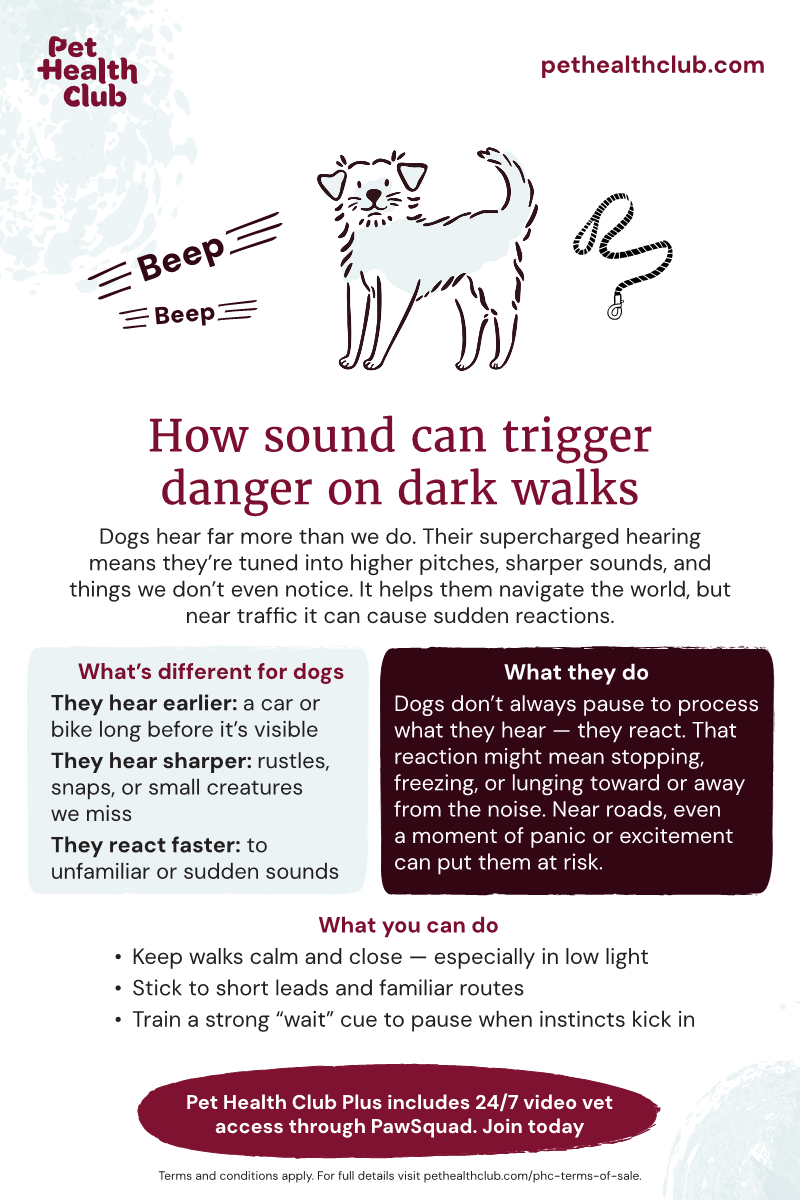
Dogs can be startled by loud noises, wildlife or passing cyclists. If you stay calm and alert, they’re more likely to stay calm too. Keep your dog close, especially in low light or where there’s more going on. When walking near traffic, it’s safest to have your dog on the side furthest from the road. That little bit of space can make a big difference.
Make sure your dog is microchipped and wears a clear ID tag. A light-up or reflective tag can help you find them quickly if they slip the lead. And don’t forget to keep your contact details up to date — it’s a small step that can make a big difference in an emergency.
If your dog is male and unneutered, or female and in heat, they may be more likely to roam or try to escape, so it’s especially important to keep them on the lead and close by. As part of your Pet Health Club membership, microchipping is included — and you’ll get up to 20% off neutering too.
Cold weather dog walking FAQs
Should I let my dog off the lead at night?
Not near roads. It’s harder to spot danger in the dark — and even the best-trained dogs can get spooked or wander off. Keeping them on the lead is the safest option.
How can I help my dog stay calm on dark walks?
Stick to a routine and choose familiar routes. Some dogs are more alert at night, so keeping things calm and predictable helps. Use treats and praise to reward calm behaviour — and steer clear of busy roads if your dog finds them overwhelming.
What should I carry on a night-time walk?
Bring the basics: a torch or headlamp, your phone, waste bags, treats, and ideally a small first aid kit for your dog. Reflective gear is a must. A whistle or squeaky toy can also help your dog find you in an emergency.
What if my dog slips their lead or harness at night?
Stay calm. Don’t chase — it might make them run further. Use a clear recall cue and try tempting them with a favourite treat or toy. Check nearby hiding spots, and use a torch or look for the glow of a light-up collar to help you spot them quickly.
How do I choose the best time to walk during darker months?
Try to walk in the early evening or morning when there’s still some light. Avoid very late walks where visibility and safety might be lower. It can help if your dog burns off some energy earlier in the day.
How can I protect my dog from cold or icy conditions?
A warm coat can help, especially for smaller or short-haired dogs. Use paw balm or booties to protect their feet from grit and salt. Keep walks shorter in extreme cold, and dry their paws when you get home.
Join the club today
Get regular health checks, vaccinations, and more, all included in your plan.

Medically reviewed by Rosie Bescoby, BSc (Hons), PGDipCABC
Published on 03/11/2025 • Reviewed on 03/11/2025