

Overview
Is your dog coughing or gagging? There could be a few reasons why. It might be a common infection like kennel cough, or an environmental factor like smoke, dust, sprays, or strong scents. But it could be something more serious, like heart disease or lungworm.
If your dog’s coughing a lot — especially if there’s blood or white foam — get in touch with your vet straight away. Regular check-ups and vaccinations can help prevent some of the causes.
Brief summary:
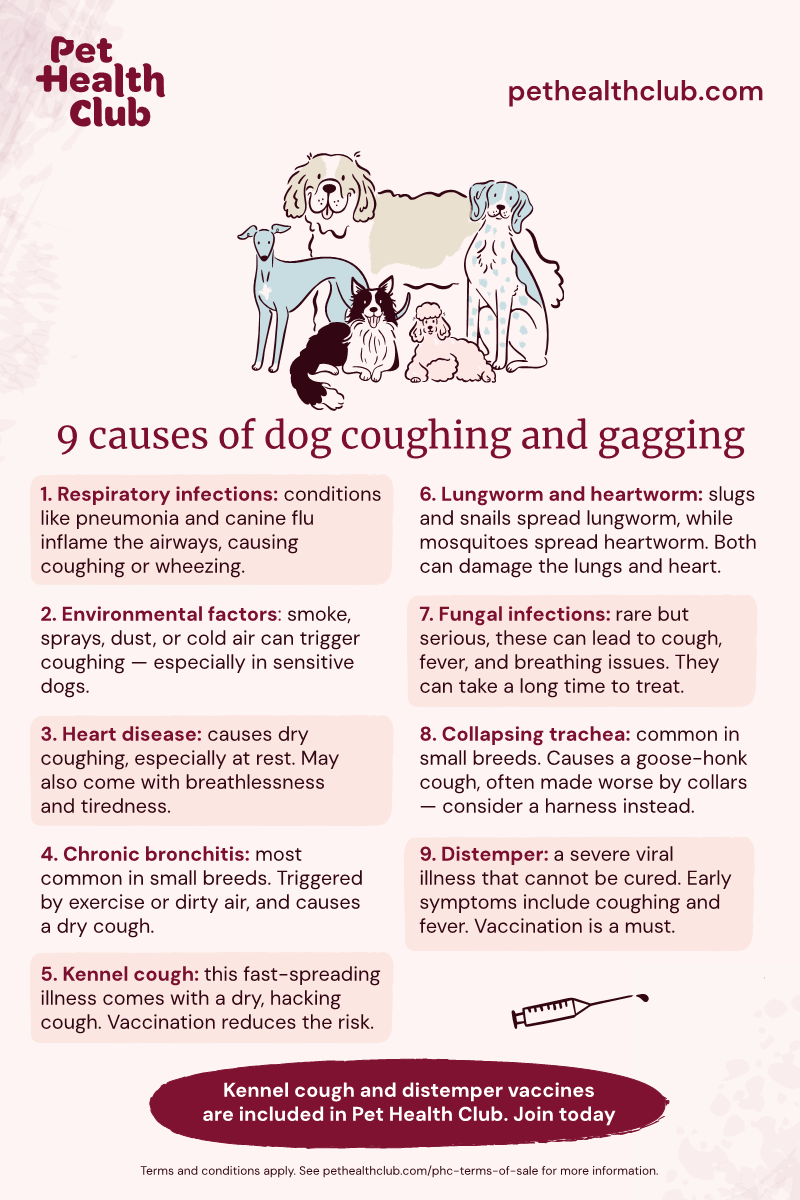
Health problems that cause coughing in dogs include kennel cough, other respiratory infections, heart disease, fungal infections, lungworm, heartworm, and distemper
If your dog’s cough is persistent, contact your vet
If your dog coughs up white foam it could be an emergency
Coughing up blood could be a sign of stomach trouble, or that your dog has eaten something poisonous
Environmental causes for dog coughing and gagging
Not all coughing is down to illness — sometimes it’s down to things in their environment. Smoke, cleaning sprays, perfumes, and dust can all irritate the throat, especially in dogs with sensitive airways or other health problems.
Common environmental irritants include:
Cigarette smoke
Air fresheners, aerosols, and household sprays
Dust, mould, and pollen
Cold air or sudden temperature changes
To help reduce coughing:
Avoid smoking indoors or near your dog
Use pet-safe cleaning products and avoid heavily scented sprays
Keep your home well ventilated and dust-free
Use a harness instead of a collar
These things don’t cause illness on their own, but they can make existing problems worse. Dogs with issues like the ones we’re going to discuss below are more likely to react. If your dog’s cough won’t go away, it’s best to check in with your vet.
Kennel cough
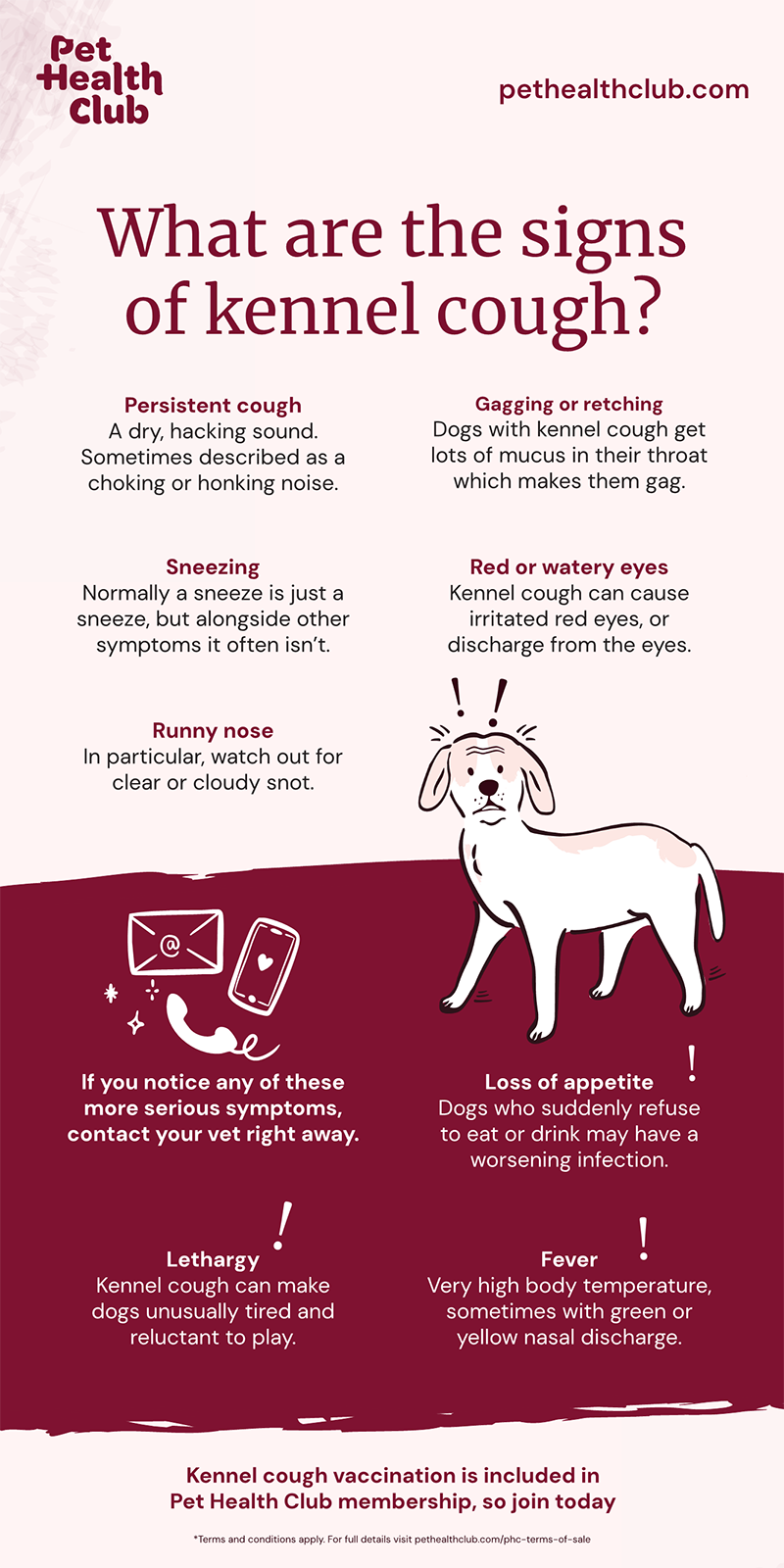
A common cause for dog coughing and gagging, the typical symptoms of kennel cough include a dry, hacking cough that sounds like they’ve got something stuck in their throat. Some dogs may also retch or bring up mucus. A fever, sneezing, a runny nose, or watery eyes are also possible, though most dogs otherwise appear healthy.
A highly contagious disease, kennel cough spreads through the air and on shared items like bowls, toys, and leads. It’s more common in crowded or stuffy places, like kennels or doggy day cares. If your dog picks it up, keep them away from others until they’ve fully recovered.
Kennel cough vaccinations are included in Pet Health Club membership. While it doesn’t give full protection, the vaccine reduces the risk of infection, helps make the illness less unpleasant if they do catch it, and many dog kennels won’t let your dog board unless they’ve had it.
Read more: Kennel cough in dogs
Respiratory infections and lung disease
Respiratory infections or long-term lung issues can cause coughing or gagging in dogs, or even wheezing and breathing problems. Infections like pneumonia, canine flu, and bronchitis can also lead to coughing, as they inflame the airways or lungs.
Pneumonia
Pneumonia in dogs happens when the lungs become inflamed, often from a viral, fungal, or bacterial infection. It can also be caused by food or vomit getting into the lungs — known as aspiration pneumonia. Signs include a wet cough, breathing problems, fever, tiredness, and a reduced appetite. It can be very serious and may need hospital care, including medication and breathing assistance.
Canine flu (influenza)
Canine flu is a viral infection that spreads easily between dogs, especially in kennels or day care. It can look like kennel cough, but it’s more likely to give your dog a runny nose, a high temperature, or to tire them out. Most dogs recover with rest, but it’s still worth a trip to the vet. Vaccination for canine flu is available, but as it isn’t a core vaccine it’s not included in your dog’s starter course or annual boosters. Your vet will recommend this vaccine depending on how likely your dog’s lifestyle is to put them in contact with the illness.
Chronic bronchitis
Chronic bronchitis is a long-term condition, often seen in older dogs. It causes a dry, ongoing cough that can get worse with excitement or exercise. It’s more common in small breeds and may be triggered by things like pollution, allergens, or weather changes. Treatment often includes anti-inflammatories, cough suppressants, and sometimes inhalers to ease irritation in the airways. Good dental care and keeping your dog a healthy weight also help prevent problems which can develop out of bronchitis.
Laryngitis
Laryngitis can cause a harsh, dry cough that may become softer and wetter over time. You might also notice your dog breathing noisily, seeming uncomfortable, swallowing frequently or barking differently than normal. It’s often brought on by barking, infections, or irritants. In many cases, rest and anti-inflammatories can help ease the symptoms.
Dog coughing and heart disease
Some heart conditions can cause dogs to cough. Common examples include mitral valve disease, dilated cardiomyopathy, and heart failure. These heart issues can cause the heart to enlarge or lead to fluid in the lungs, which puts pressure on the airways and can trigger a wet, soft, ongoing cough. Other signs might include tiredness, fast, heavy or laboured breathing, fainting, a swollen belly, or a blue-tinged tongue and gums. Coughing caused by heart disease is often worse when your dog is lying down or resting and is most commonly heard at night.
Heart disease can’t be cured, but it can often be managed long term with medication and dietary management. Dogs with heart problems usually need regular check-ups to adjust treatment and help them stay well.
Fungal infections and coughing in dogs
Fungal infections are a less common cause of coughing and gagging in dogs, but they can be serious. They often affect the lungs, and usually happen when dogs breathe in harmful fungi in soil or dust. Common types include aspergillosis, which often affects the nose and sinuses, and blastomycosis, which can spread to the lungs and other organs. Besides coughing, the symptoms vary but may include fever, nasal discharge, weight loss, and breathing problems.
Treatment often means long-term antifungal medication, sometimes for several months. In more serious cases, dogs may need hospital care and extra support to manage symptoms or other infections.
Lungworm as cause of dog coughing
Becoming more common in the UK, lungworm is another cause of coughing and gagging in dogs. Lungworm is a parasite that lives in a dog’s heart, lungs, and blood vessels, and it can cause serious illness by making it harder for blood to clot. Snails, slugs, and frogs often carry lungworm, so if they touch your dog’s bowls or toys in the garden — or if your dog eats any of them — there’s a risk of infection. Once inside, the larvae travel through the bloodstream to your dog’s heart and lungs.
Lungworm symptoms can vary, but may include breathing problems, nosebleeds, weight loss, tiredness, or even collapse. If it gets worse, it can cause seizures or sudden death. Left untreated, lungworm can be fatal — so acting quickly is vital. Regular worming — which is covered by Pet Health Club — is the best way to protect your dog.
Heartworm and coughing
Dog coughing and gagging can also be caused by heartworm, a parasite that lives in the heart, lungs, and blood vessels. If left untreated, it can lead to serious lung disease, heart failure, and damage to other organs. Thankfully, heartworm cannot pass directly between dogs, and is spread via a mosquito species. Heartworm is currently not a concern for dogs in the UK, but can be seen in dogs who are imported or who have travelled abroad.
If your dog’s at risk of mosquito bites, prevention is key. Monthly tablets or spot-on treatments can protect against heartworm and other parasites, and these are included in Pet Health Club membership. Preventive treatments are especially important for dogs who travel abroad or come from places where heartworm is more common.
Distemper and dog coughing
Canine distemper is a serious viral illness that affects a dog’s lungs, gut, and nervous system. It spreads through the air or contact with infected fluids and shared items like food bowls. A cough is often one of the first signs, along with nasal discharge, fever, tiredness, and loss of appetite. As it progresses, dogs may develop vomiting, diarrhoea, thickened footpads, twitching, seizures, or even paralysis.
Vaccination is the best way to protect your dog. The distemper vaccine is part of your dog’s starter vaccination course and regular boosters — and it’s included in Pet Health Club membership. There’s no cure once your dog has distemper, so treatment focuses on supportive care like fluids, anti-seizure meds, and measures to stop other infections.
Read more: Can dogs get colds?
Collapsing trachea in dogs
Collapsing trachea happens when the cartilage in the windpipe weakens, making the airway narrow or collapse during breathing. It’s more common in small breeds like Yorkshire Terriers, Chihuahuas, and Pomeranians, and often shows up in middle-aged or older dogs. The most recognisable sign is a dry, constant cough that sounds like a goose honk. It often gets worse with excitement, exercise, collar pressure, or hot weather. Some dogs might also cough after eating or drinking.
Treatment usually includes cough suppressants, anti-inflammatories, and medication to relax the airways (known as bronchodilators). Some dogs may also benefit from sedatives or small changes like using a harness, keeping a healthy weight, and avoiding household smoke or other irritants. In more serious cases, surgery might be suggested — but this is usually only for dogs with severe, ongoing symptoms. Even with treatment, most dogs will still cough a bit, but good care can make a big improvement to their quality of life.
Gastric dilatation and volvulus (GDV) in dogs
GDV is a very serious condition in dogs where the stomach fills with gas and then twists, causing obstruction of the gastrointestinal tract and pressure on the stomach. One early sign of GDV is a non-production gagging or retching, which can be confused with coughing. GDV is usually seen in large, deep-chested breeds and other symptoms include bloating, restlessness, and drooling. If you suspect your dog may have bloat, seek veterinary attention urgently.
Diagnosing coughing in dogs
With so many possible causes, how do vets work out the cause of dog coughing? Your vet will begin by asking about your dog’s medical history and doing a physical check-up. This includes listening to their chest, feeling their throat and glands, watching how they breathe, and asking about recent events — like time in kennels, travel abroad, or contact with other dogs.
These early clues help narrow down possible causes. By this point, your vet will usually have a good idea of what might be going on. Here are some of the most common next steps they might take to be sure:
Chest x-rays: x-rays show the size and shape of the heart and lungs, and help detect problems like fluid on the lungs, airway collapse, or lung infections. These can identify signs of pneumonia, heart disease, collapsing trachea, chronic bronchitis, or lungworm.
Blood tests: standard blood tests assess inflammation, immune response, and signs of infection. They can also show whether the problem is local to the lungs or part of a wider illness. These are great for spotting fungal infections, systemic illness, or long-term inflammation.
Heartworm test: this is a special blood test that checks for antigens from adult heartworms. It’s typically used on dogs that have travelled to areas where heartworm is found.
Fecal testing (Baermann test): this checks a fresh stool sample for lungworm larvae.
Echocardiogram (ultrasound): an ultrasound scan shows the structure and function of your dog’s heart. It can help diagnose heart disease and congestive heart failure.
Electrocardiogram (ECG): this test measures the electrical signals in the heart. It can detect heart rhythm problems and underlying heart disease.
Observed coughing or video: kennel cough is often diagnosed based on listening to the specific sound of your dog’s cough. If you told them earlier that your dog has been around others recently, plus the cough sounds right, this is usually enough for a diagnosis.
Bronchoscopy: this is where a small camera is passed into your dog’s windpipe under anaesthetic to view the airways and collect samples. It’s useful for detecting chronic bronchitis, tracheal collapse, airway tumours, or swallowed objects that may be causing irritation.
Lung wash (bronchoalveolar lavage): fluid is flushed into the lungs and then collected for analysis. It helps diagnose pneumonia, bronchitis, and fungal infections.
Transtracheal wash: similar to a lung wash but targeting the trachea (windpipe). It can reveal bacteria, fungi, or parasites in your dog’s upper airways.
Sputum analysis: if your dog coughs up mucus, this can be tested for infection or inflammation. It’s often used to help confirm fungal infections or chronic bronchitis.
Dog coughing and gagging FAQs
Why is my dog coughing up white foam?
White foam is often a cause for concern — while it might be saliva or caused by an empty stomach, it can also be a sign of something serious like bloat. It’s more likely to be serious if your dog is retching, has a swollen belly, or seems in pain. One-off episodes aren’t usually a worry, but if it happens more than once — or if your dog is displaying other symptoms — call your vet straight away.
Read more: Comprehensive dog vomit colour guide
Why is my dog coughing up blood?
Blood in your dog’s cough can be a sign of something serious — always speak to your vet straight away. Bright red blood can be a sign of damage to the airways due to severe inflammation or obstruction. This is a serious symptom and it’s best checked out by a vet.
My dog coughs when they’re excited. Is that normal?
Some dogs — especially small breeds — may cough when they’re excited or anxious, simply from breathing harder and narrowing of the airway. But if the cough is intense or doesn’t settle once they calm down, it could be a sign of a collapsing trachea. If you're unsure, it’s best to check with your vet.
Why is my dog coughing like something is stuck in his throat?
If your dog keeps coughing and gagging but nothing comes out, and they don’t seem to be choking, it is most likely kennel cough. But if you think your dog does have something stuck in their throat, get to a vet straight away. This is very urgent if they’re struggling to breathe, seem weak, or have blue gums. Don’t try to remove the object yourself if your dog is in distress, as it could make things worse.
If your dog is calm and the object is clearly visible, you can gently try to remove it with your fingers or tweezers — but never go poking if you can’t see it and be very careful not to push anything further into the airways. For small dogs, lifting them and tilting them downward might help dislodge the object. Even if you are able to get it out at home, always get your dog checked by a vet to rule out any internal damage.
Why might my dog be gagging?
Gagging often goes hand-in-hand with coughing and can be linked to conditions like kennel cough. But it might also mean there’s something stuck in your dog’s throat — which needs urgent vet care. If gagging is frequent or seems sudden and intense, get help straight away. Gagging and retching can also be signs of GDV (bloat), a serious condition which needs urgent treatment.
Respiratory infections like bronchitis or pneumonia can lead to gagging, often with wheezing or laboured breathing. In small breeds, a collapsing trachea is another common cause, usually brought on by excitement or pulling on the lead. The cough is often harsh and followed by gagging.
Frequent gagging can be linked to conditions like laryngeal paralysis or advanced heart disease, which may cause fluid to build up in the lungs. If your dog is gagging often, speak to your vet — they’ll help find the cause and recommend the right treatment. If it’s paired with breathing problems, vomiting or collapse, get emergency care straight away.
Need more info on dog coughing and gagging?
For more help and advice on your dog’s cough, have a chat with your local vet. Use our find a vet page to locate your nearest practice. And join Pet Health Club — membership includes protection against several of these causes of dog coughing, including parasites and preventable diseases.
Join the club today
Get regular health checks, vaccinations, and more, all included in your plan.

Medically reviewed by Lizzie Youens, BSc(Hons) BVSc MRCVS
Published on 22/06/2018 • Reviewed on 09/06/2025