

Overview
If your cat’s scratching more than usual, it could be a sign of feline dermatitis, often referred to as cat eczema. This common skin condition causes itching, redness and irritation. Skin issues like dermatitis are very common in cats (one in eight suffer from atopic dermatitis), and are often caused by allergies. The good news is that your cat can get relief with the right treatment.
What is eczema in cats?
It helps to understand that eczema is a general term, atopic dermatitis is a specific diagnosis for an allergic skin disease, and miliary dermatitis is the visible rash cats develop in response to skin irritation, often from fleas.
The catch-all term dermatitis simply means inflammation of the skin. In cats, it usually appears as red, itchy skin patches that may have bumps or scabs. Many owners call this cat eczema.
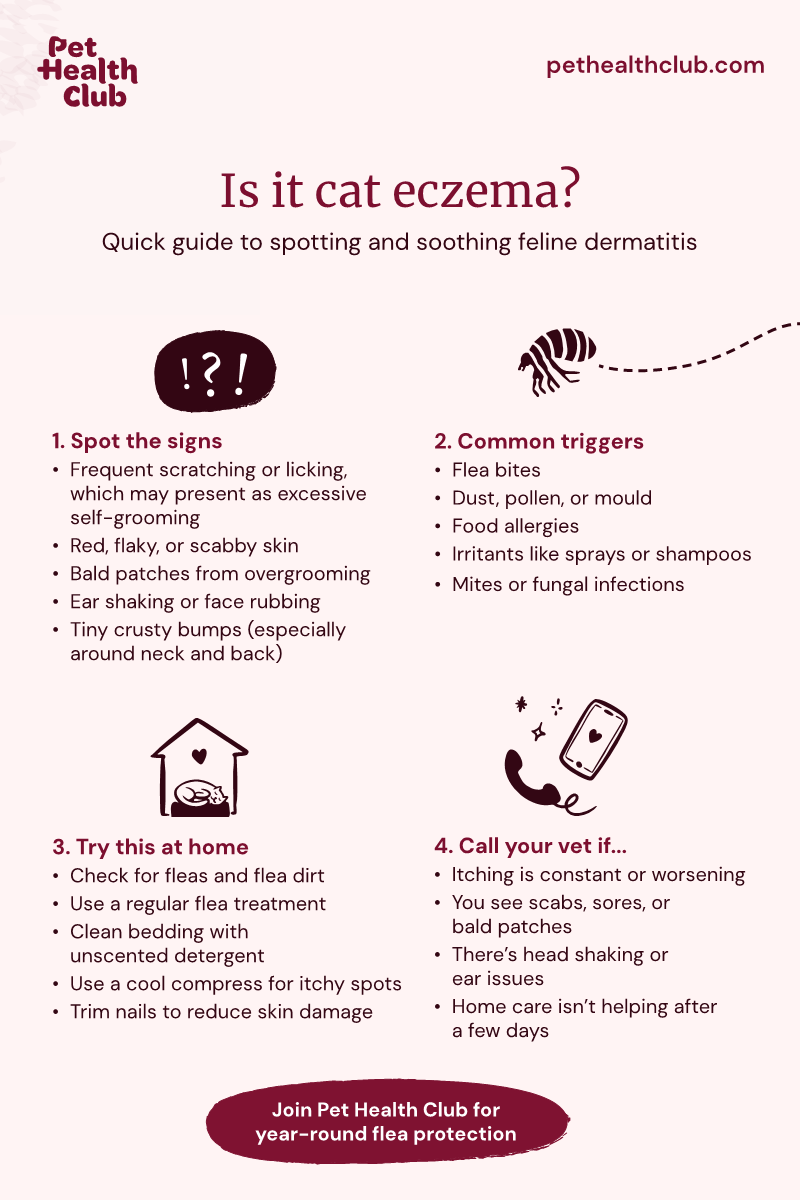
Several things can trigger dermatitis in cats:
Flea saliva, even a single flea bite, can cause intense itching and rash in allergic cats. Flea allergic dermatitis (FAD) is the most common cause of allergic skin disease in cats (and yes, indoor cats can get fleas too)
Environmental allergens like pollen, dust mites, or mould spores
Food allergies, often linked to certain proteins or ingredients
Contact irritants such as harsh shampoos or household chemicals
Parasites like mites or lice
Fungal infections like ringworm, which is contagious and can also spread to other animals or humans
One common form of allergic skin disease in cats is miliary dermatitis. This appears as numerous tiny, crusty bumps that feel like seeds under the coat. You might notice these small scabs along your cat's back, neck and tail base. While various allergens can cause miliary dermatitis, fleas are the most common culprit.
Symptoms of cat eczema
Cats are good at hiding discomfort, so look out for these signs of feline dermatitis:
Excessive scratching, licking, or grooming
Red bumps or rash on the skin
Dry, scaly or flaky patches
Itchiness around the head and face
Frequent head shaking or ear irritation
Thickened or darkened skin
Patches of hair loss
Small scabs or crusts (especially with miliary dermatitis)
If you part your cat's fur, you might see redness or scabby areas directly on the skin. To better understand cat eczema, check for signs of fleas like flea dirt (pepper-like specks in the fur), especially near the tail.
How to help your cat
Do check your cat's coat for fleas or flea dirt using a fine-tooth comb, especially near the tail base, and, if you find any evidence, start a vet-approved flea treatment right away.
Do use regular parasite prevention, such as that offered on Pet Health Club, as this is the best way to prevent dermatitis in cats related to fleas.
Do gently clean irritated areas with a mild, vet-recommended antiseptic or shampoo for cat eczema treatment.
Do trim your cat’s nails or use soft nail caps to minimise skin damage from scratching.
Do keep your cat’s bedding clean and washed in gentle, fragrance-free detergent.
Do keep track of when and where flare-ups happen to help identify triggers.
Don't use human creams or medications on your cat, as cats may lick these substances off, which can be harmful.
Don't bathe with harsh soaps unless recommended by your vet.
Don't ignore persistent itching: If your cat has been itching for more than a day or two and the skin looks sore, don't take a "wait and see" approach.
Don't change multiple things at once: If you suspect a food allergy, talk to your vet about a proper diet trial rather than randomly switching foods.
When to call the vet
Call your vet if your cat is scratching, grooming themselves more than you would expect, or seems uncomfortable. You should also seek help if skin lesions appear, particularly if there are signs of infection like pus, swelling or a foul odour from the skin. Areas of hair loss or patches or sore, red or raw skin that cover part of your cat's body warrant a vet visit, too.
Be alert for ear problems or repeated head shaking, as dermatitis often affects the ears as well. Watch out for other concerning symptoms like lethargy, loss of appetite or fever, which could indicate a more serious infection. Any skin issues in kittens or vulnerable cats should be checked straight away, as younger cats have less developed immune systems.
If you've tried basic care steps and there's no improvement after a few days, or if the condition is getting worse, professional help will be needed. Skin problems can have many causes, and getting the correct treatment early can save your cat from long-term discomfort.
What to expect at the vet
At your local practice, your vet or veterinary nurse may:
Ask about your cat’s medical history and current symptoms, and look closely at your cat's skin for clues about dermatitis.
Run diagnostic tests, such as a flea comb test, skin scraping, fungal culture, or allergy test.
Administer flea treatment as a precaution, especially for miliary dermatitis cat conditions.
Provide medication for itch and inflammation, including steroids, antihistamines or newer medications to give your cat immediate relief.
Treat any secondary infections with antibiotics or antifungal medication.
Discuss long-term allergy management strategies such as hypoallergenic diets and long-term flea control.
Provide appropriate medication if parasites like mites are found.
The goal is to stop the itch, heal the skin and prevent the problem from returning. Most cats with feline dermatitis see significant improvement within a week or two of proper treatment.
Cat eczema treatment
There’s no single test to diagnose dermatitis in cats, so vets rely on clinical signs, ruling out other causes and may perform some specific skin or blood tests. Treatment often involves ongoing care, like diet trials, flea control and prescription medication. While there’s no cure, options like immunotherapy or anti-itch injections can help. Managing it well means working closely with your vet to keep flare-ups under control.
Common questions about feline dermatitis
What's the difference between atopic dermatitis, miliary dermatitis and eczema in cats?
Eczema in cats (often just called cat eczema) is a non-medical, umbrella term owners use to describe any itchy, red, inflamed skin. It's not a precise diagnosis, but it usually refers to allergic skin reactions.
Atopic dermatitis is a chronic allergic condition caused by environmental triggers like pollen, dust mites, or mould. It's similar to hay fever in humans, except it shows up as skin problems in cats. Cats with atopy often lick, scratch, or develop rashes around the face, ears, belly, or feet.
Miliary dermatitis refers to a specific skin reaction pattern that looks and feels like tiny, crusty scabs, especially around the neck, back, or tail base. It's a symptom, not a cause. The most common cause is flea allergy, though food or other allergies can trigger it too.
What does cat eczema look like?
Cat eczema usually appears as red, irritated patches of skin, often with hair loss in that area. You might notice small red bumps or pimples that can form crusts or scabs where your cat has been scratching. The affected skin can look flaky or dry, and in long-standing cases, it may become thickened. Many cats get eczema around the head, neck and back.
Can I treat my cat's eczema at home?
For mild cases, you can start by checking for fleas and using a vet-approved flea treatment if needed. Gently clean the irritated skin with a cat-safe product, and ensure your cat is on regular flea prevention. A cool compress can provide short-term relief for itchy spots. However, effective cat eczema treatment usually requires guidance from a vet. Avoid using any human medicines on your cat's skin. Supplements containing essential fatty acids may help cats with chronic skin problems, but speak to your vet for their recommendations on a suitable product.
Is feline dermatitis contagious?
It depends on the cause. Allergic dermatitis (from fleas, food, pollen, etc.) is not contagious, another cat won't catch an allergy from your cat. However, certain conditions like ringworm (a fungal infection) or mite infestations can spread between cats and even to humans. Your vet will advise if the specific cause is contagious.
Can indoor cats get flea-related dermatitis?
Yes, even indoor-only cats can get fleas. Fleas can come in on your clothing or other pets. Because cats are such good groomers, you might not see adult fleas as your cat may ingest them while grooming. Sometimes the only sign of fleas is the skin reaction that results from flea bites. It only takes one or two flea bites for an allergic cat to develop a rash.
Can kittens get dermatitis?
Very young cats are prone to specific skin problems like ringworm, parasites or flea infestations. The approach is similar to adult cats, but with extra caution since kittens have sensitive systems. Many medications used for adult cats might not be safe for very young kittens, so always get professional veterinary guidance.
What the research says
One study by Bajwa (2018) found that feline atopic dermatitis affects around 12.5% of cats, making it the second most common allergy after fleas. It’s triggered by environmental allergens like pollen or dust mites and often leads to itching, overgrooming or skin lesions. Most cats show signs before age three, though some are affected later. The study concluded that long-term management such as diet trials, medication, and allergen immunotherapy, are effective in up to 78% of cases.
The Banfield State of Pet Health Report (2018) reported a 67% increase in flea allergy dermatitis in cats cases across the US over the 10 years to 2017, highlighting a growing need for consistent parasite control across the pet population.
Keeping your cat's skin healthy
Pet Health Club members enjoy peace of mind with routine flea treatments, health checks, and expert advice included in their plan. These preventative measures are especially important for cats prone to feline dermatitis or miliary dermatitis. Find your nearest practice offering Pet Health Club with our find a vet tool today.
Don't wait until an itch becomes a sore. Speak to your vet about the best cat eczema treatment and ways to protect your cat's skin health all year round.
Join the club today
Get regular health checks, vaccinations, and more, all included in your plan.

Show references
Bajwa, J. (2018) ‘Atopic dermatitis in cats’, The Canadian Veterinary Journal, 59(3), pp. 311–313.
Banfield Pet Hospital (2018) State of Pet Health Report. Available at: https://www.banfield.com/state-of-pet-health (Accessed: 10 April 2025).
Carrasco, I., Lemarie, S., Armando, F. and Ferrer, L. (2022) ‘Oclacitinib for control of feline allergic dermatitis: a prospective, randomised, placebo-controlled study’, Journal of Feline Medicine and Surgery, 24(8), pp. 775–782.
VCA Animal Hospitals (no date) ‘Miliary dermatitis in cats’. Available at: https://vcahospitals.com/know-your-pet/miliary-dermatitis-in-cats (Accessed: 10 April 2025).
Medically reviewed by Lizzie Youens, BSc(Hons) BVSc MRCVS
Published on 28/08/2018 • Reviewed on 29/04/2025