

Overview
If your vet’s asked you for a urine sample, don’t worry, it’s easier than it sounds. With a clean tray, some special litter and a pipette or syringe, most cat owners can collect one at home.
It might take patience, especially with outdoor cats, but this simple sample can help your vet spot issues early and keep your cat feeling their best. Take the sample to your vet as soon as you can, or store it in the fridge if there’s a delay.
Why do vets need a urine sample from cats?
Urine tests can tell your vet a lot, giving information on urinary health conditions from bladder infections and kidney disease to stress cystitis and diabetes. It’s an important part of a preventative healthcare routine, helping spot health problems early, sometimes before there are any obvious symptoms.
It’s also useful for monitoring ongoing conditions or checking how well a treatment is working. Pet Health Club members get a urine test included every year.
Urinalysis, as it’s called, can be used to diagnose, or raise suspicion of, a range of conditions, including:
Kidney function
Stress cystitis
Kidney infections
Bladder stones
Kidney stones
What to use to get a urine sample from a cat
Here’s what you need when getting a urine sample from cats:
A litter tray
Non-absorbent litter
A syringe or eye dropper/pipette
A sample pot (a small, clean tupperware is best, or clean jam jars or spice jars work well, but they must be well cleaned as any residual sugar will affect the test readings)
A pen for labelling your sample
A fridge if you're not taking it directly to your vet
Pet Health Club members receive a cat urine sample kit for free as part of their membership. This kit includes specialist cat litter for urine samples, a pipette and a sample pot.
How does a vet get a urine sample from a cat?
How to get a urine sample from a cat
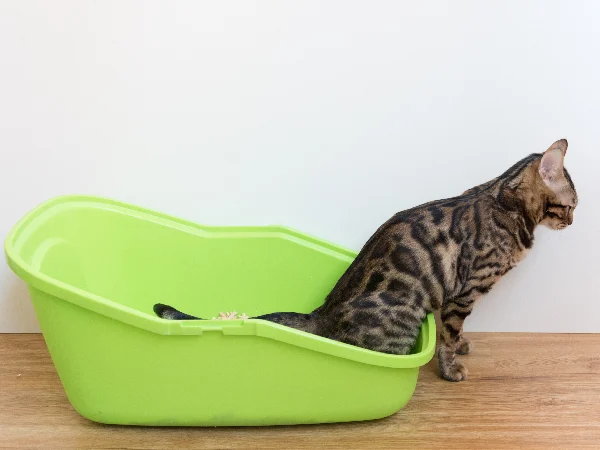
Collecting a sample from your indoor cat is fairly simple. Steps you should take are:
Clean your cat's litter tray and disinfect it. This will help get a usable sample
Fill it with non-absorbent litter (your vets should be able to provide this or signpost you to where you can get some)
Place the tray in its usual place
Watch your cat and get ready for when they head to their tray
If they have had a poo, then remove it and any litter surrounding it to stop contamination
After your cat urinates, gently tilt the tray to collect the urine in one corner for easier collection
Pipette or syringe the urine out of the tray. It's best to wear gloves here, but if you don't have any, then wash your hands before and after
Put the sample in your sample pot and label it with your name, your cat's name and the time and date it was collected
If you can't get it to your vet immediately, then pop it in the fridge
Remember, the quicker the sample can be taken to the vet, the sooner it can be tested. This will ensure more accurate results. If the sample is more than 24 hours old, it's advisable to collect a new one for accurate results.
If you have more than one cat, you might want to confine the cat whose sample you need and tray to one room until you have a sample, to avoid confusion.

Read more: The importance of routine check-ups for cats
What can a vet tell from my cat's urine sample?
Vets can discover a lot from a urine sample from cats. As well as the conditions listed above, urinalysis may give clues towards the following conditions:
Stress cystitis in cats
Also known as feline idiopathic cystitis, this is the most common cause of bladder inflammation among cats and is usually triggered by stress from moving home, changes to routine, having new pets in the house or conflicts with other cats. Other factors that may bring it on are a lack of stimulation and activity and a poor diet. Some cats may also have a genetic predisposition to stress-related urinary issues.
While the exact causes of stress cystitis in cats are not fully understood, it results in inflammation of the bladder wall. There is no specific test for this condition in cats, but a urine sample can help towards a diagnosis.
Urinary tract infection
Urinary tract infections (UTIs) are common in older cats. They are caused by an infection in the urinary tract. Your cat's urine sample will show bacteria and white blood cells if they have a UTI. Therefore, it will be one of the first things the vet will look for, if only to rule it out.
Urinary crystals
Urinary crystals can cause discomfort and may lead to more serious issues if not addressed. They can lead to UTIs, and in severe cases, the crystals clump together and cause stones, making it very difficult for your cat to go to the toilet. In some cases, they can be dissolved with a change in food or antibiotics. Otherwise, surgery will be needed to remove them.

Read more: Male genital health problems in cats
Kidney disease
The kidneys help concentrate the urine. However, diluted urine can signal the kidneys aren't quite working as well as they should. This is why it is best to take your urine sample in the morning when it is meant to be most concentrated. If your cat’s urine test shows dilute urine, blood tests may be recommended to check kidney function.
Diabetes
Feline diabetes can be diagnosed through the amount of glucose (sugar) in your cat's urine. The urine test may also show ketones, another sign your cat may be diabetic. A blood test may also be required to confirm whether your cat is diabetic.
Read more: What's the best diet for cats?
How do vets interpret cat urine test results?
Vets check a cat's urine using a test called urinalysis. It has three steps. First, they look at the urine's colour and clarity. Dark urine might mean your cat needs more water, while cloudy urine can suggest an infection. Next, they use a special strip that changes colour when dipped in the urine. This can show if there's sugar, which could mean diabetes, or blood, hinting at an infection. It also tests for white blood cells, protein and other components in urine. Finally, they may examine a small urine sample under a microscope. This can reveal cells, bacteria, or tiny crystals. Bacteria can indicate an infection, and crystals could be a sign of bladder stones. Through these steps, vets can figure out if your cat has a health issue and what it might be.
Cat urine sample FAQs
How do I get a urine sample from an outdoor cat?
If you have an outdoor cat that doesn't use a litter tray, you may need to put them under house arrest for a few days to collect their sample. Apply the same method, but keep an eye out for any accidents outside the tray.
How does a vet get a urine sample from a cat?
If you can't get a urine sample from your cat, call your vet to discuss your options. Vets commonly use two methods to collect urine: cystocentesis and catheterisation.
What is cystocentesis?
This involves using a needle to get a urine sample directly from your cat's bladder. While this may be slightly uncomfortable for your cat, it does mean the sample isn't contaminated because it's taken straight from the bladder. Sometimes sedation is required for this procedure.
What is catheterisation?
Catheterisation is when a small tube is inserted up the urethra (the tube that carries urine from the bladder out of the body) and into the bladder. It's a good choice for cats, especially male ones, having trouble peeing. However, there's a slight risk of introducing bacteria from the urethra into the bladder during the procedure. Your cat will need sedation for this procedure.
What is the best time to get a urine sample from cats?
Ideally, try to collect your cat's first wee of the day, as it's the most concentrated and easiest to examine. But remember, cats, particularly indoor ones, can use their litter tray at any hour. So, swap the litter when you can swiftly secure the sample afterwards. Choose a time that minimises the duration between collection and delivery to the vet.
How long is a cat urine sample good for?
Ideally, you'd hand over the fresh sample to your vet straight after your cat pees. But that's often not possible. Do try to get the sample to your vet within an hour.
Do cat urine samples need to be refrigerated?
If you can't get your sample to your vet within an hour, store it in a clearly labelled, secure container in the fridge. Ensure the sample reaches your vet on the same day it was collected for the most accurate diagnosis.
What does it mean if there’s blood in cat urine?
Blood in your cat’s urine may result from various conditions, including urinary tract infections, cystitis, urinary stones, trauma, or, in rare cases, cancer. Blood in the urine, known as haematuria, is usually a symptom of a condition that requires urgent attention so seek advice from your vet straight away.
Need more advice?
If you're a Pet Health Club member, you're entitled to one free urine test each year as part of your plan. It's a simple way to check for early signs of health issues. Just ask your vet for a sample kit and they’ll guide you through what to do.
Use our Find a Vet page to locate your nearest Pet Health Club practice.
Join the club today
Get regular health checks, vaccinations, and more, all included in your plan.

Medically reviewed by Lizzie Youens, BSc(Hons) BVSc MRCVS
Published on 08/10/2018 • Reviewed on 05/01/2026