

Overview
If your cat gets stung by a bee or wasp, try to stay calm and move them somewhere quiet and safe. Most stings are mild and can be managed at home with an ice pack wrapped up in a flannel, and a bit of supervision. But if the sting is near the mouth, they’ve been stung several times, or they’ve had a bad reaction to being stung before, it’s best to contact your vet straight away.
This guide covers the signs you’ll notice if your cat’s been stung by a bee or a wasp, when to get urgent help, and other vet advice for stung cats.
Brief summary
Bee and wasp stings usually cause mild swelling and irritation
Paws, faces, and mouths are the most common areas to be stung
Serious reactions can include vomiting, breathing trouble, or collapsing
Credit cards are great for pushing out stingers — tweezers aren’t
Always speak to your vet before giving your cat medication
Why would a bee or wasp sting my cat?
Cats can’t resist chasing flying insects — especially in spring and summer when bees and wasps are everywhere. It’s completely natural, taps into their hunting instincts, and helps keep them active and engaged.
To your cat, buzzing bees and wasps are something to play with and chase — but to the insect, your cat is a threat. Most stings happen when cats get too close or try to catch them. It’s nearly always the cat that makes the first move as bees and wasps don’t sting to be aggressive. A sting is their last resort.
Most common places for your cat to be stung by bees or wasps
Stings to the paw, face or mouth are the most common. That’s because these are usually the first parts of your cat to come into contact with the insect — but why is that the case?
Paw
Cats often pounce on insects or try to trap them under a paw, especially on windowsills or in the garden. Your cat might also use their paw to bat at a slow-moving bee — only for the bee to sting in self-defence. If your cat is stung on the paw, you might notice your licking it, or even limping from the discomfort.
Face
Cats are naturally curious and lead with their nose when exploring. That makes their face — particularly around the eyes, nose and chin — a common target. Your cat might get stung poking their head into a flower bed or shrub right where a bee is feeding. Facial stings often result in swelling and redness, and they may look quite dramatic.
Mouth
Sometimes, a cat will go one step further and try to catch the insect in their mouth. They’re quick to clamp down on prey — but with bees or wasps, that speed can backfire. Being stung in the mouth is most risky, as swelling in the mouth or throat can affect your cat’s breathing. If your cat suddenly starts drooling or pawing at its mouth, a sting inside the mouth could be the cause.
Signs your cat has been stung by bees or wasps
Cats often hide it when they’re in pain, so how do you know if your cat’s been stung? Signs of a sting can be easy to miss — especially in very fluffy or long-haired cats — but here’s what to look out for:
Swelling or redness in one spot: often on a paw, face or around the mouth, and usually soon after the sting
Licking, nibbling, or scratching at the same area: your cat might be trying to soothe the discomfort
Limping or avoiding walking: if they’ve been stung on a paw, they might limp or shake their leg
Yowling or sudden vocal sounds: a sting can come as a shock, so your cat might meow, hiss, or growl more than usual
Drooling or pawing at the mouth: this could mean they’ve been stung on the lips, tongue, or inside their mouth, which can be more serious
Vomiting or breathing difficulties (call your vet straight away): these could be signs of a serious allergic reaction
In some cases, a sting can trigger a more severe response, known as anaphylactic shock. We’ll go through the signs to watch for later in the guide.

What happens when my cat gets stung?
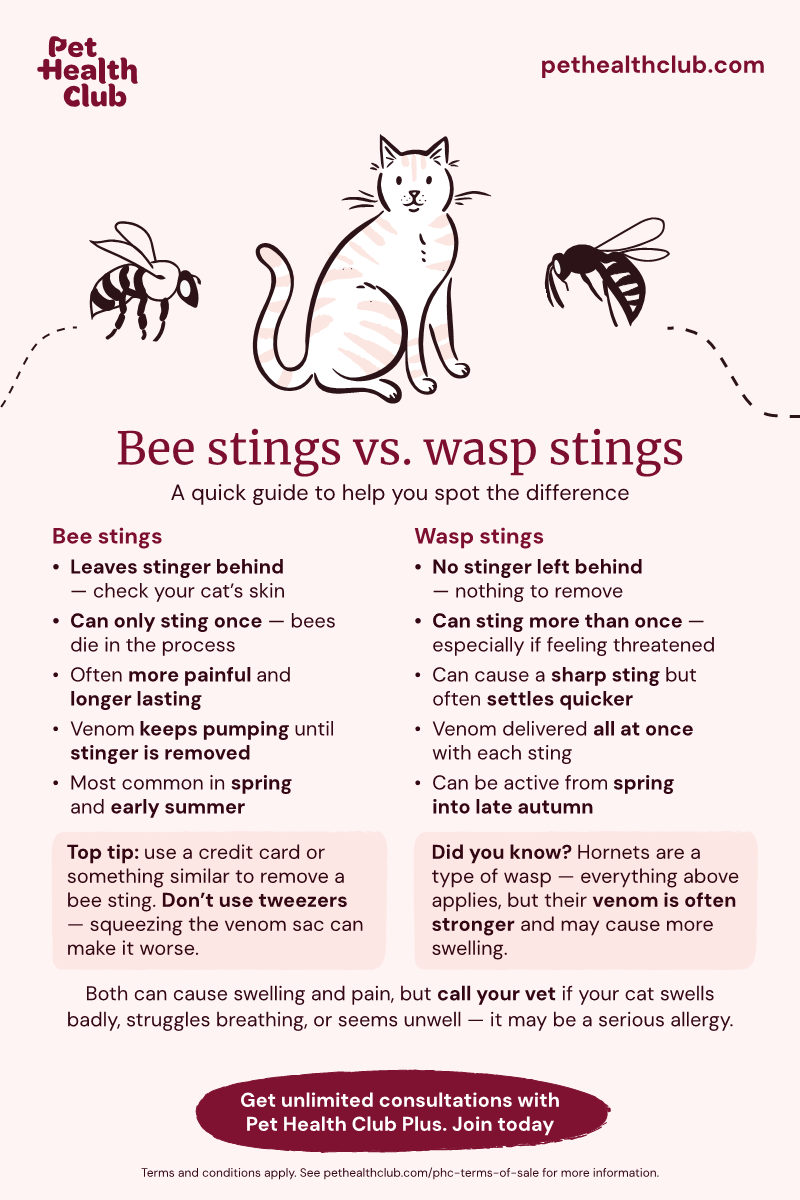
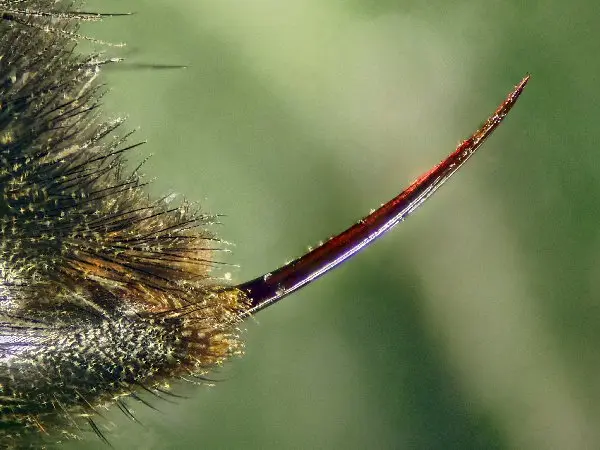
When a bee stings your cat, it leaves behind a tiny barbed stinger that gets lodged in the skin. Leaving this barb behind is fatal for the bee, which is why bees only sting as a last resort. Within the barb is a venom sac, which will pump venom into the area until the stinger is removed. The venom (known as apitoxin) breaks down red blood cells, stimulates pain receptors, and triggers inflammation. There are a few substances that make up the venom, and one of the main ones is histamine. This widens nearby blood vessels, which is what causes the swelling and redness you’ll often see around the sting.
Wasp stings are a little different from bee stings. Wasps don’t leave their stinger behind, which means they live on to sting again another day. That doesn’t mean a single wasp will sting your cat more than once in the same encounter — this isn’t impossible, but it is rare. Not leaving a barb behind also means that wasp stings are typically not as painful as bee stings, and that your cat’s reaction may not last as long. However, similar to bees, wasp venom does also contain histamines though, so you can expect to see swelling and irritation.
Read more: Keeping your cat cool over summer
How dangerous are bee and wasp stings to cats?
In most cases, a bee or wasp sting causes local irritation — redness, swelling and discomfort that usually settles within 24 to 48 hours. The swelling can appear quite dramatic, but usually resolves fairly quickly. Most cats aren’t allergic to insect venom and recover well with simple care at home.
The risk of a serious reaction is higher if your cat disturbs a wasp nest or hive and gets stung several times in a short space of time. Always keep a close eye on them after any sting, and call your vet if you’re at all concerned. Even if your cat has been stung before without any problems, future stings can still cause a reaction — especially if they’re stung more than once, or on the face, mouth or throat, where swelling could block their airway.
In some cats, a sting can trigger a serious allergic reaction called anaphylactic shock. This is a medical emergency. Symptoms often start within minutes, but in some cases, they can take a few hours to appear.
Signs of an allergic reaction to bee or wasp stings
An allergic reaction to a bee or wasp sting can cause anaphylactic shock — a serious and potentially life-threatening emergency. Here are some of the signs to watch for:
Vomiting or diarrhoea: a sudden upset tummy can be a sign of a wider reaction
Severe swelling around the face or neck: swelling near the throat can make it hard to breathe. It often starts at the sting site but can spread quickly
Wheezing or difficulty breathing: cats don’t normally breathe through their mouths, so open-mouth breathing or panting is a red flag — get help straight away
Pale or blue gums: this can mean there’s not enough oxygen in the blood — a possible sign of shock
Collapse or seizures: your cat might stumble, seem weak or unresponsive, or show signs like shaking or twitching
If your cat shows any of these signs, call your vet immediately — they’ll need urgent treatment.
What to do if your cat is stung
Stay calm and move your cat somewhere safe
If your cat has been stung, start by staying calm. Gently move them to a quiet, enclosed space. This helps keep them calm too — and gives you a safe place to check them over. If your cat is agitated, but is breathing fine and showing no signs of a bad reaction to the sting, it’s perfectly fine to monitor them just by keeping a close eye on them rather than a physical check-over - whatever will best keep your cat calm and you safe.
Removing a bee stinger from your cat
If you can see a stinger, try to remove it by gently scraping sideways with a credit card or something similar. Avoid using tweezers or your fingers — squeezing the venom sac could release more venom into the skin. Always keep yourself safe - your cat may be agitated and uncomfortable, so it may be best to get someone to hold them gently but firmly for you whilst you remove the sting.
Bee or wasp sting first aid
Once the stinger is out, rinse the area with cool water to help soothe the skin. You can then apply an ice pack wrapped in a tea towel or soft cloth — don’t apply it directly to your cat without wrapping it up first. Hold it gently against the sting for a few minutes — if your cat will let you. If they’re stressed, wriggly, or simply don’t like the cold, it’s fine to skip this part and just keep an eye on them.
Keep your cat indoors and settled for the rest of the day
Offer fresh water and soft food — especially if the sting is near their mouth and eating seems uncomfortable. Keep an eye on them for at least 24 hours, as allergic reactions can take time to show. If you notice anything unusual or worrying, call your vet straight away.
When to take your cat to the vet for a bee or wasp sting
Most stings are mild and settle with home care — but some situations need urgent vet attention. If you’re not sure whether to call the vet, use this quick checklist. If any of the following apply, it’s safest to get your cat checked:
Your cat is having trouble breathing (this may appear as panting (open-mouth breathing), noisy breathing (wheezing), or breathing which involves a lot of movement from their chest or tummy (respiratory effort)
They’re vomiting or they have diarrhoea
They collapse, or seem weak or disoriented
Their gums turn pale or blue
They are swelling up around the face, mouth, or throat
They were stung multiple times or in a sensitive area
24 hours have passed without any sign of improvement
Even if symptoms seem mild, always call your vet for advice if your cat was stung inside their mouth or throat — or if you’re not sure what kind of insect was involved.
How do vets treat bee or wasp stings?
If your cat is having a mild reaction, your vet may prescribe medication such as antihistamines or anti-inflammatories to help reduce swelling and ease any discomfort. In more serious cases, they might also give pain relief to help your cat feel better.
In an emergency, your vet may give adrenaline (also known as epinephrine) to reverse the effects of anaphylactic shock. They might also use intravenous fluids to help stabilise blood pressure, and oxygen to support breathing. In some cases, your cat may need to stay at the clinic for monitoring. In cases of anaphylactic shock, fast treatment can be life-saving.
Difference between wasp and bee stings
Bees have barbed stingers that stay stuck in the skin, which means they keep releasing venom until the stinger is removed. This often makes bee stings more painful and longer lasting than wasp stings. After stinging, the bee will die — the barbed stinger tears away from its body when it flies off.
Wasps, by contrast, have smooth stingers. They don’t leave them behind and can sting more than once, especially if they feel threatened or are swatted at. Each sting still injects venom, but the reaction may be shorter-lived if your cat isn’t stung again.
In practical terms, bee stings need the stinger to be removed as soon as possible. Wasp stings don’t leave a stinger, but both types of sting can benefit from gently cooling the area.
Some owners like to try home remedies — such as a bicarbonate of soda paste for bee stings or a dab of vinegar for wasp stings. Bee stings are slightly acidic, so the alkalinity of bicarbonate of soda can help balance things out. Wasp stings are slightly alkaline, so vinegar — being mildly acidic — can have the same effect. These remedies aren’t essential for recovery, but they might help soothe the irritation.
Common questions about cats stung by bees or wasps
Can cats take human antihistamines?
Not without your vet’s advice. Many human medications can be harmful to cats — especially those that contain alcohol, decongestants, or other additives. Your vet can recommend a pet-safe antihistamine and the right dose for your cat. Once approved, it’s a good idea to keep this medication in your pet’s first aid kit.
How long does a bee sting last?
Mild symptoms usually settle within 24 to 48 hours. Swelling often peaks on the first day, then starts to go down. If the swelling or pain hasn’t improved after 24 hours — or if your cat seems uncomfortable or unwell — it’s best to check in with your vet for advice.
Is there any way to prevent cats being stung by bees or wasps?
While you can’t remove the risk completely, there are some simple steps you can take to help prevent stings:
Keep outdoor food and bins covered, as these can attract wasps and bees
Check your garden for nests or hives — especially in sheds, trees or quiet corners
Avoid planting bee-attracting flowers where your cat likes to sunbathe
Keep your cat indoors during peak insect times (usually around midday in warm weather). This can also keep your cat safe from heat stroke too
It’s also worth talking to your vet about an emergency plan if your cat has reacted badly to stings before.
What happens if a cat eats a bee or wasp?
Swallowing a bee or wasp is unlikely to cause harm on its own — the main concern is if your cat gets stung inside the mouth or throat. This can lead to swelling that makes it hard to breathe. If your cat starts drooling, pawing at their mouth or seems to have trouble swallowing after catching an insect, call your vet straight away.
What about hornet stings in cats?
Hornets are actually a type of wasp, so their stings work the same way — they don’t leave a stinger behind and can sting more than once. Hornets often have very strong venom compared to other wasps, so their stings may be more painful and cause more swelling. Otherwise, the symptoms and treatment are the same. Keep a close eye on your cat, and speak to your vet if you’re at all concerned.
Need advice on bee or wasp stings?
For more expert advice on bee and wasp stings — tailored to your cat and their specific medical history — get in touch with your local vet.
Find your nearest vet using our find a vet page.
Visit your local vet
Find your nearest practice and register your pet today.

Medically reviewed by Lizzie Youens, BSc(Hons) BVSc MRCVS
Published on 24/05/2023 • Reviewed on 30/04/2025