

Overview
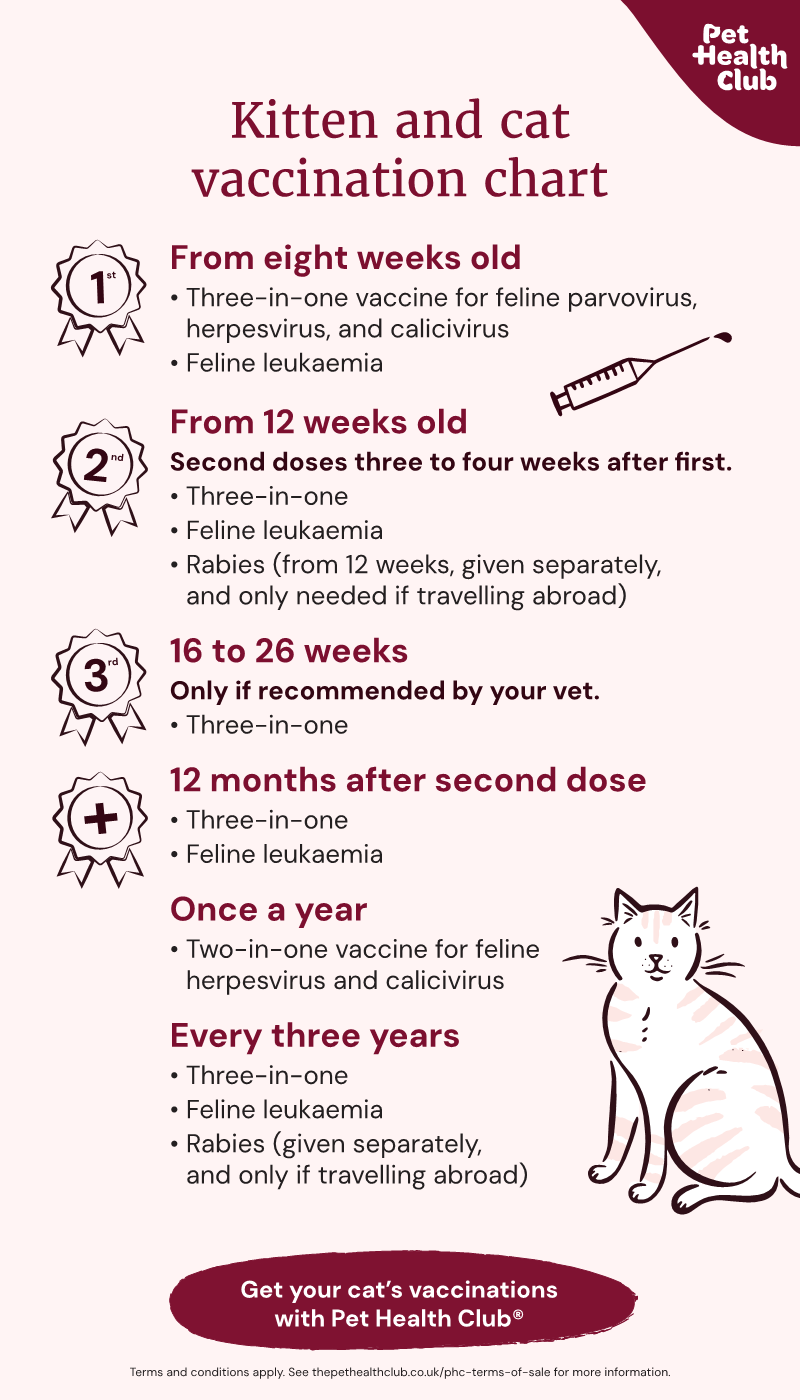
To safeguard their health, kittens should receive a series of vaccinations against major infectious diseases. Starting at eight to nine weeks old, they should receive a primary vaccination course, consisting of two injections three to four weeks apart. This protects against cat flu (feline herpesvirus and feline calicivirus), feline infectious enteritis, and feline leukaemia virus. Vaccinations are vital even in the UK, where these diseases are rare, largely thanks to widespread vaccination. After the initial course, kittens require annual boosters to maintain their immunity.
Brief summary
Kittens require a primary vaccination course starting at 8-9 weeks old, with two injections given 3-4 weeks apart, followed by annual boosters
Kitten vaccinations protect against feline herpesvirus and calicivirus, feline infectious enteritis (feline parvovirus), and feline leukaemia virus.
Even indoor cats need vaccinations to safeguard against these diseases
The Pet Health Club offers a cost-effective way to manage cat vaccination expenses, along with other preventative healthcare benefits
Do kittens need vaccines?
They certainly do. There may be some buzz around anti-vaccination in the media at the moment, but any vet or veterinary professional will insist that vaccinations are an absolute necessity when it comes to keeping your kitten in good health.
Your kitten will need a primary vaccination course when they’re young, followed by annual boosters to help maintain their level of protection throughout their life.
When do kittens need their vaccines?
Your kitten’s primary vaccination course should begin when they’re 8-9 weeks old. The course is made up of two separate injections, and they’re administered three to four weeks apart. So your kitten will get their first injection at eight to nine weeks of age, and then their second at 11 to 12 weeks — their primary course will then be completed.
Depending on how old your kitten is when you first bring them home, they may have had their first injection already. A reliable breeder will be able to advise further on this.
Read more: Cat flu symptoms, treatment, and prevention
Which vaccines do kittens need?
When you bring your kitten to the vets for their vaccines, they’ll be treated against:
Feline herpesvirus and feline calicivirus — the diseases that most often lead to cat flu. Annual vaccination will protect your cat from flu and work to reduce the severity of their symptoms, although it's important to be aware that because there are so many strains of Cat Flu, it’s impossible to prevent it entirely.
Feline infectious enteritis — also known as feline parvovirus or panleukopenia, this is a highly contagious disease that’s often fatal to infected cats. Vaccinations against feline infectious enteritis are very effective, and all cats and kittens should be vaccinated at least every 3 years.
Feline leukaemia virus — an untreatable virus that affects the immune system, leading to weight loss, lethargy, fever, diarrhoea and repeated respiratory tract infections.
Chlamydia felis — once known as Chlamydophila felis, is a frequent cause of conjunctivitis in cats. Cats can be vaccinated to help reduce the symptoms of this infection, but the vaccine doesn't stop them from getting or spreading it. If a cat gets Chlamydia, it's important to keep them separated from other cats to prevent spreading.
You may have heard that these conditions are rare in the UK. They’re rare because of vaccination. Vaccination may not have a 100% success rate, but it’ll drastically improve your cat’s chances of avoiding a nasty disease or infection, that’s why it’s recommended for all kittens, or adult cats who’ve fallen behind with their protection.

Read more: Feline herpesvirus causes, symptoms and prevention
How much are cat vaccinations?
As with most things, costs can vary across practices for several reasons. According to Compare the Market, a primary vaccination course (1st and 2nd vaccinations) costs between £75 to £120, boosters around £50 to £55, and rabies vaccines (only required if travelling with your cat) cost £60 to £80.
Pet healthcare plans make it easier to pay for and receive preventative healthcare, such as vaccinations, neutering and flea and worming that your kitten needs to stay happy and healthy. Pet Health Club is the UK's leading pet healthcare plan, designed to give you the peace of mind that your kitten will receive vaccinations, boosters, and other vet-prescribed preventative healthcare. All core vaccines and boosters are included in Pet Health Club membership and (alongside flea and worm treatments and microchipping) are a part of the Kitten Starter Package which new puppies get when signing up.
What are the main cat vaccinations side effects?
Vaccines play an important role in protecting your cat's health by training their immune system to fight infections. In a study involving nearly half a million vaccinated cats, only a small fraction, about 0.5%, experienced adverse reactions to a vaccine.
While these reactions can be unpredictable, they don't necessarily indicate a problem with the vaccine or its administration, but rather an unusual immune response in some cats. Here is a table listing some of the more common, as well as very rare, cat vaccinations side effects.
Side effect | Description | Frequency |
|---|---|---|
Discomfort at injection site | Pain or soreness where the vaccine was given. | Common |
Lethargy | Decreased energy levels or reluctance to play for a few days. | Common |
Mild fever | Slight increase in body temperature. | Common |
Swelling at injection site | Mild warmth or swelling where the vaccine was administered. | Common |
Reduced appetite | Eating less than usual. | Common |
Twitching | Involuntary muscle movements. | Rare |
Itchy skin | Indicative of an allergic reaction. | Rare |
Limping | Difficulty walking or favoring a limb, possibly related to pain at the injection site. | Rare |
Lump at injection site | This may be a normal inflammatory response but should be monitored by your vet. | Rare |
Facial swelling | Swelling of the face, which can be a sign of an allergic reaction. | Rare but serious |
Difficulty breathing | Struggling to breathe, indicating a possible severe allergic reaction. | Rare but serious |
Hives | Skin eruptions or welts, often linked to allergies. | Rare but serious |
Vomiting and diarrhoea | Gastrointestinal symptoms which can indicate a severe reaction. | Rare but serious |
Collapse | Sudden loss of strength leading to falling. | Rare but serious |
Feline injection-site sarcomas | Rare type of cancer that can form under the skin at the injection site. | Very rare but serious |
How often do kittens need vaccines?
Once they’ve had their primary vaccination course, your cat will need booster vaccinations every year. Not all diseases need vaccinating that often, but some do. If there’s been an outbreak of a particular disease in your area, your cat may need an extra booster.
Don’t worry too much about which exact vaccine your kitten needs and when — your vet will keep you updated. All you need to do is turn up to their appointments. After your kitten's starter vaccine course is completed (this should be at around four or five months of age) it will need a little time to take effect — immunity normally takes around four weeks to build up. before your kitten goes outdoors for the first time.
How old does a kitten have to be to get a rabies vaccine?
Thankfully, rabies isn’t a problem in the UK so your kitten will only need a rabies vaccination if you plan to take them abroad - this is a key part in the process of applying for a pet passport.
Kittens can be vaccinated against rabies from 12 weeks of age.
Find out more about travelling with your cat or about how the rules for travelling to Europe.
What if my cat misses a vaccination?
It’s important to keep up with your cat’s vaccinations to make sure they stay protected. But if you do miss a vaccine, don’t worry. Your vet will be able to guide you through the next steps.
If your cat is a few months late for their booster, one appointment is often enough to bring them back up to date. But if it’s been more than three to six months since their last vaccine, your vet may recommend restarting the course with two doses to give their immunity a proper boost.
If your kitten hasn’t finished their first course of vaccines, or there’s been a long gap between the first and second dose, your vet might also suggest starting again — just to be sure they’re properly covered.
In any case, your vet will be able to let you know how to get your cat back on track to being fully protected from the dangerous diseases vaccines help prevent.
What about indoor cats — do they need vaccinations too?
If your cat is an indoor cat (i.e. they don’t leave the house at all), they’ll still need a primary vaccine course — including protection against feline herpesvirus, calicivirus (cat flu), feline enteritis, and feline leukaemia. A booster is needed one year later. After that, your cat will still need yearly booster visits to stay protected — but the vaccines they receive may vary depending on their needs and lifestyle. Your vet will be able to talk through exactly what your cat is being protected against when you book the appointment.
It’s important to make sure that your indoor cat doesn’t slip outside by accident. Likewise, if you plan to allow any other cats into your house, you’ll need to make sure they’re fully protected — just in case. Chat to your vet for more info on keeping your indoor cat protected.
Similarly, indoor cats are still at risk of fleas, as well as other parasites. It's best to be proactive about your kitten's healthcare even if you won't be letting them outside.
Need more info?
For more advice on kitten vaccinations and keeping your cat protected against illness and infection, have a chat with your local vet.
Find your nearest vet using our find a vet page.
Join the club today
Get regular health checks, vaccinations, and more, all included in your plan.

Medically reviewed by Natasha Demir, MRCVS Cert AVP, Dave Tweedle, BVetMed MRCVS
Published on 16/09/2020 • Reviewed on 04/11/2024