
Overview
If you’ve been wondering why does my cat keep sneezing, it might be more than just the odd tickle. A sneeze now and then is usually nothing to worry about — but if it happens a lot, it could be a sign of something else. Common triggers include things like dust, cleaning sprays, and air fresheners, but sneezing can also be linked to more serious causes, like infections or dental issues.
Studies suggest kittens, older cats, and those who’ve been through stressful changes — like moving house or staying in a shelter — may be more prone to repeated sneezing. Whether that describes your cat or not, you should still speak to your vet if their sneezing doesn’t settle.
What are the common causes of cat sneezing?
Sneezes happen from time to time, and usually are nothing to worry about. But if you’re asking yourself why is my cat sneezing a lot, one of these may be the cause:
Everyday irritants: cigarette smoke, cleaning sprays, scented candles, mould, and even dusty litter can all tickle your cat’s nose. Try to spot any patterns. Does the sneezing start after cleaning, or is it worse near the litter tray?
Nose tickles: a single sneeze here and there could simply be triggered by dust, fur, or pollen.
Viral infections: cat flu, often caused by feline herpesvirus or calicivirus, is a common reason. It spreads easily between cats (but not to people), and stress can cause flare-ups — especially with herpesvirus.
Bacterial infections: these often follow a viral infection. You might notice thicker nasal discharge, more sneezing, and general discomfort.
Fungal or parasitic infections: these are less common, but still possible. Some fungi, like Cryptococcus, can affect the nose and sinuses and cause repeated sneezing.
Foreign bodies: a blade of grass stuck in the upper respiratory tract is a common trigger for sneezing and/or gagging in cats.
Allergies: sneezing can be a sign of an allergic response, especially if it occurs seasonally.
Is my cat sneezing a symptom of something serious?
An occasional sneeze from a cat isn’t something to be concerned about. But if the sneezing is repeated frequently, or isn’t the only symptom your cat has, it’s worth paying closer attention. Other warning signs include:
Nasal or eye discharge, especially if it’s thick, yellow- or green-coloured, or bloody
Coughing, wheezing or breathing with an open mouth
Changes in appetite, or if they stop eating altogether
Lethargy, weight loss, or a raised temperature
Bad breath, drooling, or signs of dental pain
Pawing at their face or nose
These symptoms could point to something more serious, like an infection, dental problem, or even a blockage in the nose. If your cat sneezes blood or is struggling to breathe, call your vet straight away.
Can cat sneezing be caused by dental issues?
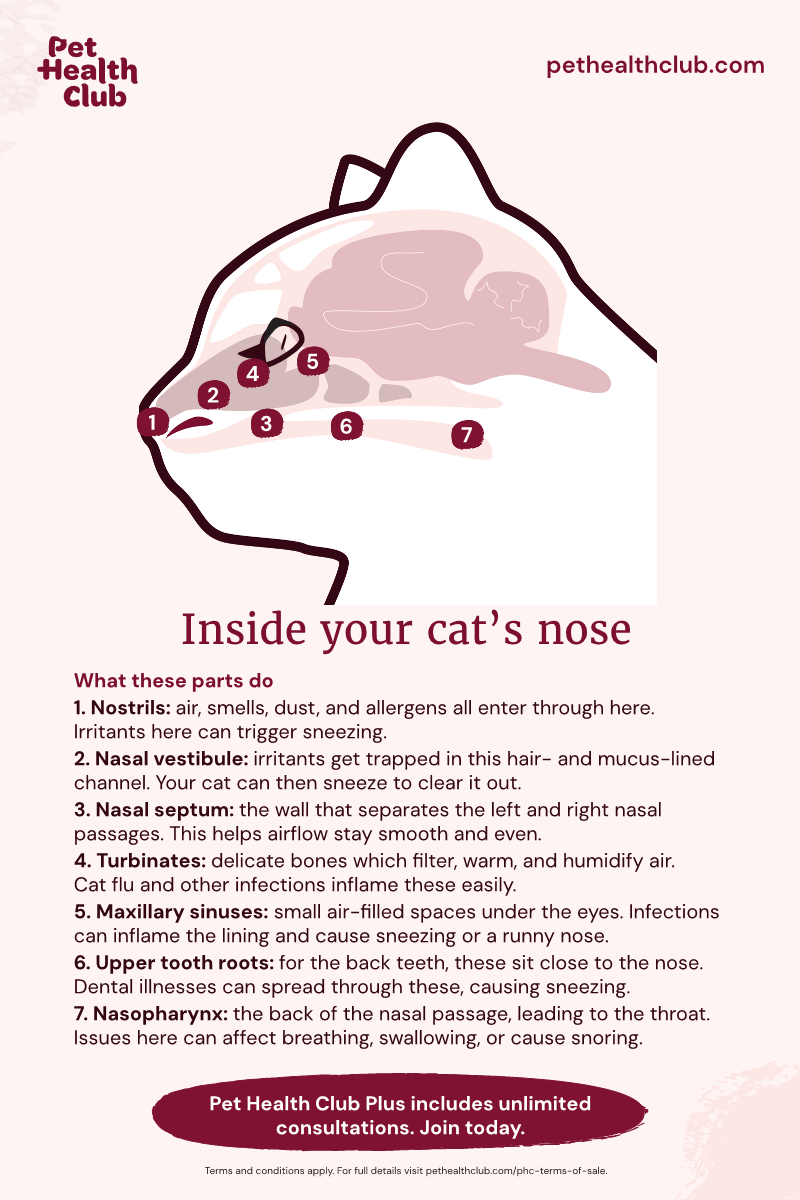
Dental problems are a surprisingly common reason behind cat sneezing. That’s because the roots of their upper teeth come very close to their nasal passages. If one of those roots gets infected, it can spread into the sinuses and cause inflammation, a lot of sneezing, and nasal discharge — sometimes just from one nostril.
Other signs to look out for include bad breath, drooling, eating less, blood in their saliva, pawing at the mouth, or chewing on one side. These issues can be painful and may lead to further problems if left untreated. So if your cat is sneezing and also seems to have a sore mouth, it’s worth having your vet give their teeth and gums a check.
What nasal issues can cause cat sneezing?
Nasal issues can also be a reason for your cat sneezing a lot. One common cause is something small — even just a blade of grass or a seed — getting stuck up the nose while enjoying a good sniff out and about. This can lead to sudden, forceful sneezing, sometimes with a bloody nose or pawing at the face. These foreign objects usually need to be removed by a vet, often under sedation.
Other possible causes include:
Nasal polyps: these non-cancerous growths are more common in younger cats. They can lead to sneezing, a runny nose, snoring, or noisy breathing.
Nasal tumours: these can be benign or cancerous, and are more likely in older cats. Look out for signs like ongoing sneezing, discharge, facial swelling, and bad breath.
To get a clearer picture, your vet may recommend X-rays, a CT scan, or using a small camera to look inside your cat’s nose. If your cat keeps sneezing and there’s no clear reason, these tests can help get to the bottom of it.
Read more: Cat flu
Could a fungal infection make my cat sneeze a lot?
Fungal infections aren’t very common, but they can sometimes be behind cat sneezing. The most likely cause is Cryptococcus, a yeast-like fungus found in soil or bird droppings. Cats with weaker immune systems or those that spend lots of time outdoors are more at risk.
Symptoms might include long-lasting sneezing, a runny nose, facial swelling, trouble breathing, or changes in behaviour or balance if the infection reaches the brain. You may also spot signs like weight loss or a general dip in their usual energy.
To confirm a fungal infection your vet may recommend a mix of tests, like blood work, X-rays, a CT scan, or using a swab to test the mucus in your cat’s nose. These help identify the infection and rule out anything else.
Treatment can take time, often involving long courses of antifungal medicine taken by mouth or placed directly into the nose. In some cases, surgery might be needed to remove a fungal growth. The good news is that, with early diagnosis and steady care, many cats recover well.
How is the cause of cat sneezing diagnosed and treated?
If your cat’s sneezing becomes frequent, persistent, or comes with other symptoms, your vet will start with a full check-up. They’ll perform a full examination, including looking at your cat’s nose, eyes, mouth, and throat to spot any signs of infection, irritation, or something that shouldn’t be there, listening to their chest, and taking their temperature. You’ll likely be asked about their recent health, lifestyle, and whether they’ve mixed with other cats.
If you’re able to film your cat during an episode of sneezing, this can also be handy for diagnosis. Seeing a clip can help your vet figure out what’s going on more quickly.
If the cause isn’t immediately clear, your vet may suggest some extra tests:
Blood tests: to check for signs of infection, inflammation, or other underlying issues
Swabs: taken from the nose, eyes, or mouth to test for viruses and bacteria
Imaging: X-rays or CT scans are useful for seeing hidden problems such as tooth root infections, foreign objects or growths
Rhinoscopy: this is where a small camera is gently passed into the nose under anaesthetic. This can help your vet spot what’s going on, take a sample (biopsy), or even remove a blockage
Once they know what’s causing the sneezing, your vet will talk you through the best way forward. Treatment could involve medication, dental work, surgery, or simple supportive care like fluids or steam therapy to help them breathe more easily.
In many cases, your cat may not need treatment. Your vet may recommend just a bit of extra care to help them feel more comfortable. Using a humidifier, gently wiping their face, and keeping them indoors for a few days can make a big difference for a cat sneezing a lot.
How can I care for my sneezing cat at home?
If your cat’s sneezing is mild and they seem otherwise well, there are a few simple ways you can help them feel more comfortable at home:
Gently wipe away any discharge from their nose or eyes using a soft, damp cloth
Try a humidifier or let them sit in a steamy bathroom to help clear their nose
Avoid strong smells like air fresheners, scented candles, and cleaning sprays
Switch to an unscented, low-dust litter to reduce irritation
Keep their bedding and bowls clean to cut down on dust and allergens
Make sure they’re drinking plenty of fresh water to keep their nose moist
Try raising their food and water bowls slightly if a blocked nose is making it hard to eat
It’s also important to keep their vaccinations up to date. Regular boosters help protect against viruses like feline herpesvirus and calicivirus, two common causes of sneezing in cats. Vaccinations for both these viruses and more are included in Pet Health Club membership, so join today to keep things simple.

Read more: Allergies in cats
Cat sneezing FAQs
Is cat sneezing contagious to humans?
Most of the time, no. Conditions like cat flu are common in cats but don’t spread to people. Only a few rare infections can pass from cats to humans.
Should I worry if my cat only sneezes once in a while?
Probably not. The odd sneeze is normal. Just keep an eye on things — if anything changes or other symptoms appear, check in with your vet.
Can allergies cause sneezing in cats?
They can, but it’s less common than in people. Things like pollen, mould, or dust mites can still act as triggers for some cats.
What if my cat sneezes blood?
Sneezing blood isn’t something to ignore. It could mean there’s a foreign object, tumour, or inflammation in the nose. Call your vet as soon as you can.
Why does my cat keep sneezing but seems fine otherwise?
Sneezing with no other signs might be due to dust, cleaning sprays, or other irritants. If it carries on for a few days or happens often, it’s worth a vet visit to be sure.
Can kittens get colds that make them sneeze?
Yes. Kittens are especially prone to upper respiratory infections. Sneezing, runny eyes or nose, and a reduced appetite are common signs — and they should be seen by a vet promptly.
Is sneezing more serious in elderly cats?
It can be. Older cats are more likely to have underlying health issues like dental disease, tumours, or a weaker immune system. If sneezing becomes frequent, it’s best to have them checked by a vet.
Can I use human medicines like antihistamines for my sneezing cat?
No — never give human medicine to cats without checking with your vet. Some treatments that are safe for people can be harmful or even dangerous to pets.
Do cat colds go away on their own?
Milder viral infections can sometimes clear with rest and good care at home. But if your cat’s symptoms don’t improve or they go off their food, it’s time to speak to your vet.
Can stress make my cat sneeze more?
Yes. Stress can trigger flare-ups in cats with feline herpesvirus, leading to sneezing and watery eyes. Helping your cat feel calm and safe can make a real difference.
What do the studies say?
Research shows that sneezing is one of the most common signs of upper respiratory infections in cats — especially in kittens under 12 months and older cats over 11. Cats living in calm, low-stress homes were less likely to show symptoms, while those in shelters were more at risk the longer they stayed.
Sneezing can sometimes point to something more serious. A 2020 case report described a cat with long-term sneezing and nosebleeds who later developed vision problems. The cause was a rare bacterial infection (severe chronic rhinosinusitis), which improved with the right treatment. It's always worth getting persistent symptoms checked out, as this case shows.
A 2012 study showed how many different things can make a cat sneeze — viruses, bacteria, fungi, parasites, allergies, foreign objects, and even growths or injuries. It also explained the difference between a regular sneeze and a reverse sneeze, which can sound more like a snort or choking. The same researchers followed this up in a 2013 study where they found that when sneezing is caused by long-term conditions like chronic rhinitis or nasal tumours, it can’t always be fully cured. But regular care (such as medication, nasal flushes, or surgery) can still make a big difference to your cat’s comfort.
Need more info on cat sneezing?
For more help and advice on your cat's sneezing, have a chat with your local vet. Use our find a vet page to locate your nearest practice. And join Pet Health Club — membership includes protection against several of these causes of cat sneezing, including vaccination for preventable diseases, and discounts on dental treatments.
Join the club today
Get regular health checks, vaccinations, and more, all included in your plan.

Medically reviewed by Lizzie Youens, BSc(Hons) BVSc MRCVS
Published on 27/08/2025 • Reviewed on 27/08/2025