
Overview
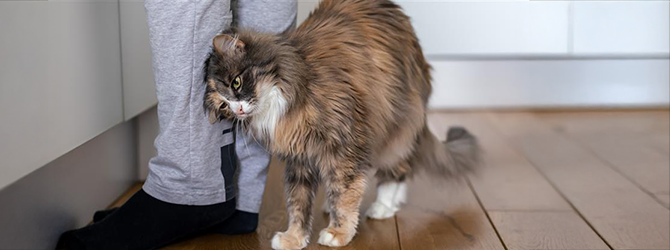
Cats rub their faces on people, furniture, and other pets to leave their scent, feel secure, and build social bonds. This gentle behaviour is called bunting — and it’s completely normal. But head pressing is different. This is when a cat firmly presses their head against walls, floors, or other solid objects — and it’s often a sign of something serious, like brain disease, liver problems, or even poisoning. Bunting is soft, brief, and usually happens while your cat is moving about. Head pressing is firm, repetitive, and tends to happen when a cat is still or seems disoriented.
Why does my cat rub against me?
Cats rub either for instinctual reasons, or because they’re trying to tell you something. Here’s what they might be saying:
Saying hello: if your cat greets you at the door by brushing against your legs or gently headbutting you, it’s their way of saying they’re happy to see you.
Marking you with their scent: cats have scent glands on their cheeks, chin, and tail that leave behind their scent using pheromones (chemical messages). It helps them feel secure — and shows they feel safe with you.
Showing affection: when your cat rubs against you, it’s a sure sign of love and trust. They’re releasing feline facial pheromones, otherwise known as ‘happy’ pheromones. Cats often nudge people, other cats, or even objects they feel comfortable with — it’s their way of marking their world as safe and familiar.
Seeking attention: sometimes, a rub is your cat’s way of saying they want something — whether that’s food, playtime, or just a cuddle. And if it works, they’ll soon make a habit of it.
Indicating readiness to mate: don’t worry — your cat’s not getting any funny ideas. When an unneutered female is in season, she’ll rub her scent on everything she can, hoping to attract a mate. You might also notice more tail-lifting and vocalising at this time.
Why do cats mark things with their scent?
Cats always have a reason for what they do — and rubbing serves some important purposes:
Creating a group scent: in homes with more than one cat, you might notice them rubbing against each other. This releases pheromones, which help to establish a group bond and sense of familiarity between cats. It helps create a shared scent that brings comfort and helps them feel like part of the same group.
Gathering information: smell is a big part of how cats understand the world. By rubbing against new people or objects, they pick up useful information about their surroundings and leave their own messages in return.
Time-stamping: cats are clever. When they sniff another cat’s scent mark, they can tell how fresh it is. It helps them decide where to explore — and whether they’re likely to bump into another cat.
Cats also rub differently depending on the situation:
Object height: the height of what they’re rubbing against often decides which part of their face they use. They might use their chin for lower objects or their forehead for taller ones. They also release pheromone scents through their pawpads when they scratch at objects.
Gender differences: male cats tend to nudge or headbutt more than females — but like people, every cat has their own personality.
And if your cat rubs against you then gives a little nip, it’s usually down to overexcitement or being a bit overstimulated. Try not to be cross — they likely didn’t mean any harm.

Read more: Causes of feline hair loss
What's the difference between bunting and head pressing?
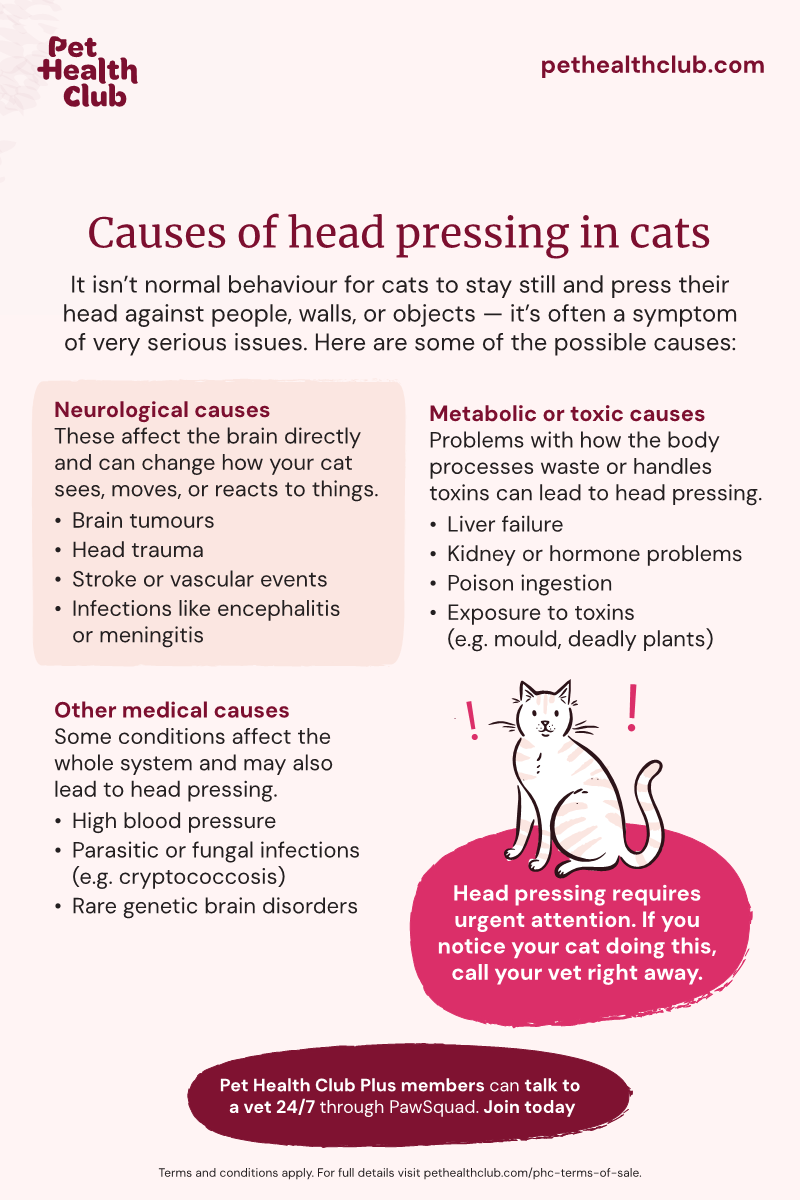
While rubbing and headbutting (bunting) is a normal way cats show affection, head pressing can be a sign something’s wrong. Knowing the difference could be life-saving:
Bunting:
Gentle and often paired with purring, meowing, or other signs your cat is feeling happy.
Includes rubbing against you, furniture, or other pets.
Usually done while your cat is moving about.
A way of showing trust, affection, or marking their space.
Your cat will be responsive if you talk to them or pet them.
Head pressing:
A forceful, prolonged, or repetitive pressing of the head against walls, furniture, or other solid objects.
Often happens while your cat is sitting or lying still.
May happen at the same time as other worrying signs, like circling, pacing, or changes in their behaviour.
Your cat may seem difficult to distract or hard to get their attention.
How is head pressing diagnosed?
If your cat is head pressing, your vet will carry out a full physical and neurological check to help find the cause. This may include:
Eye examination: a careful look at the back of your cat’s eyes (called a fundic exam) can reveal signs of inflammation, infection, or problems with the brain. Most of the time, this can be done without sedation using a small handheld torch (this is called an ophthalmoscope).
Blood and urine tests: these help check for toxins, issues with the liver, or problems with how your cat’s body is working.
Blood pressure check: high blood pressure can sometimes be linked to head pressing.
Advanced imaging: scans such as CTs or MRIs can give a detailed picture of the brain and help find things like tumours or structural problems.
Your vet will also ask you about what you’ve seen at home. It can be useful to have a video of your cat’s head pressing behaviour for your vet to see, if possible. They’ll want to know when the head pressing started, how often it happens, and if you’ve noticed other changes — like your cat seeming unsteady, having vision problems, or sores from repeated pacing.
Read more: Poisonous plants for cats
How is cat head pressing treated?
The right treatment depends on what’s causing your cat’s head pressing — but acting quickly is vital. The causes of head pressing and often serious, and your cat may need extensive treatment. Your vet might recommend:
Medication: this could include antibiotics, anti-inflammatories, or medicine to help manage underlying issues like liver problems.
Surgery: sometimes surgery is needed to treat things like brain tumours or other structural problems.
In more serious cases, your cat may need fluids, extra nutrition, or a stay in the hospital to help them recover.
What happens next will depend on the cause. Some problems, like infections or poisoning, can often be treated successfully — especially if caught early. Other conditions, like brain tumours or strokes, can be harder to manage and may come with a more guarded outlook.
Your cat will usually need ongoing care — such as check-ups, follow-up tests, and neurological exams — to monitor their recovery.
How should I respond to bunting?
Bunting is a behaviour you can enjoy and embrace. Here’s how to respond:
Acknowledge their greeting: gently pet your cat or say hello. They appreciate it more than you know.
Let them mark you: cats use rubbing to renew their scent on you, especially after you’ve been out. It helps them feel secure and keeps your shared group scent strong.
Recognise their affection: bunting is a clear sign of love and trust. You can strengthen your bond by responding with gentle fuss, talking softly, or offering a treat.
Know they might want something: sometimes, a rub is your cat’s way of asking for food, attention, or play. It’s fine to respond — just try not to over-reward with treats.
Provide enrichment: toys, scratching posts, and play can keep your cat mentally stimulated and reduce attention-seeking.
Bunting is perfectly normal and usually a healthy sign. But if your cat suddenly starts rubbing more than usual — or seems rough or pushy with it — it’s worth paying attention, especially if it’s new behaviour. Sometimes, excessive rubbing can be a sign of things like allergies, fleas (and yes, even indoor cats can get fleas), or even a neurological problem. If you’re unsure, have a chat with your vet.
And if a cat you don’t know rubs against you, it’s best not to assume they want a fuss. Cats sometimes rub against people to gather information — not always because they’re after attention. Let them take the lead and look for other signs they’re happy to be stroked.
Cat head rubbing or pressing FAQs
Is it normal for cats to rub their faces on furniture or walls?
Yes, this is perfectly normal. Cats have scent glands on their cheeks, chin, and head. By rubbing these areas on furniture, walls, or people, they leave their scent behind — it helps them feel secure and marks their territory.
Why does my cat rub against me and then bite me?
This is often a sign of overexcitement or overstimulation. Some cats get carried away when showing affection or seeking attention. The bite is usually gentle but can still be surprising. Redirect rough behaviour to an appropriate toy or chew.
Should I worry if my cat is rubbing themselves more than usual?
If the rubbing is new, excessive, or paired with other signs like scratching, hair loss, or behaviour changes, it’s worth speaking to your vet. It could indicate medical issues like allergies, fleas, or neurological concerns.
Can rubbing be a sign my cat is ready to mate?
Yes. Female cats who aren't neutered may rub against you or objects more when they're in heat. You might also notice them being more vocal or lifting their tail.
Can head pressing come and go, or is it constant?
Head pressing may not be constant at first — it can start intermittently and become more frequent as the underlying condition worsens. Even occasional head pressing is considered abnormal and should be investigated by your vet.
Is head pressing painful for cats?
The act of head pressing itself isn’t thought to be painful, but the condition causing it often is, and it can be a sign of severe pain. Your cat may be confused, disoriented, or experiencing discomfort from swelling, pressure, or problems with their brain.
What does the research say?
A 2025 study found that when cats sniff something new, the side of their face they use to rub it can tell you something. Some cats, especially those who are more impulsive, tend to rub the side of their face that’s opposite to where the object is. So if the object’s on the left, they’ll rub with the right side of their face (and vice versa). This behaviour is known as contralateral rubbing. Cats with a close bond to their owner are also more likely to show this rubbing behaviour after picking up their owner’s scent.
A 2016 study showed that by rubbing their face on things, cats feel safer and more at home. When cats rub their cheeks or forehead on people, furniture, or objects, they leave behind tiny scent marks called pheromones. These chemical signals help reduce stress, mark familiar spaces, and strengthen social bonds. If these scent marks are removed — for example, by over-cleaning — it can leave your cat feeling a bit unsettled. That’s why products like Feliway, which mimic these natural scents, can help ease stress — especially in multi-cat homes or during big changes like moving house.
The research also makes it clear that head pressing is never normal. There aren’t many studies focused just on head pressing itself, but it often shows up as a symptom in research into more serious health problems. It’s been linked to conditions like brain tumours, infections, liver disease, and illnesses that affect how the brain controls behaviour and vision. In rare cases, fungal infections — like cryptococcosis — can cause inflammation in the brain and lead to neurological signs, including head pressing.
Need advice on your cat's behaviour?
For more expert advice on cat rubbing, head pressing, or anything else, get in touch with your local vet.
Find your nearest vet using our find a vet page.
Join the club today
Get regular health checks, vaccinations, and more, all included in your plan.

Medically reviewed by Lizzie Youens, BSc(Hons) BVSc MRCVS
Published on 28/07/2025 • Reviewed on 28/07/2025