
Overview
Cat fleas are tiny, dark brown or black, about one to two millimetres long, and with a ‘flat’ shape which helps them slip easily through fur. They don’t have wings, but their strong back legs mean they can jump surprisingly far. On cats, they’re often found around the neck, back or base of the tail, where grooming is harder.
You might also notice signs such as flea dirt (which looks like black pepper and turns red when wet) or small white eggs in bedding and carpets. While fleas are most active on pets, most of the problem lies in the home — especially in soft furnishings where eggs and larvae grow.
What do cat fleas look like?
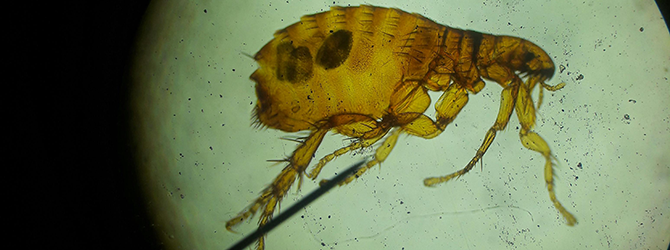
Cat fleas are tiny, wingless insects around one to two millimetres long. They’re dark brown or reddish-black, with oval bodies that are flattened from side to side — a shape that helps them slide easily through your cat’s fur and stay close to the skin.
One of their most noticeable features is their strong back legs. These are long and springy, allowing fleas to jump up to 100 times their body length. This makes it easy for them to leap onto passing animals, including your cat, and spread through homes quickly. Fleas also have short antennae and sharp, needle-like mouthparts for feeding on blood. Their bodies are hard and slightly shiny, which is why it’s usually not effective to try crushing them.
Sometimes, rather than asking “what do cat fleas look like?”, it’s better to ask “what other ways of spotting cat fleas are there?”. Here’s the main two:
Flea dirt: tiny black specks, a bit like ground pepper. These may appear on your cat or on your furniture. If you place them on damp tissue, they turn red — it’s digested blood.
Flea eggs: small, white and oval, like grains of salt. These are harder to spot and often fall into bedding or carpets.
What are the symptoms of cat fleas?
Even if you don’t see fleas, your cat may show the signs.
Frequent scratching, licking, or biting
Overgrooming or hair loss, especially around the tail base or back legs
Scabs or red, irritated skin
Flea dirt in their coat or bedding
Tiny red bites or rashes on the skin
Cats with lighter coats or shorter fur may show these signs more clearly. You might also notice head-shaking or scratching around the ears and neck, where fleas often gather.
Some cats groom so thoroughly that they remove most of the fleas themselves. In these cases, changes in behaviour may be the first clues — things like restlessness, clinginess, or sudden irritability. A behaviour called barbering — where a cat chews or nibbles its own fur — can also point to flea irritation.
Due to their smaller blood volume and lower resilience, fleas on kittens and older cats bring a risk of anaemia. This comes with its own signs, like pale gums, tiredness, or a clear drop in energy. This can be very serious — if you spot any symptoms of anaemia it’s wise to see your vet as soon as possible.
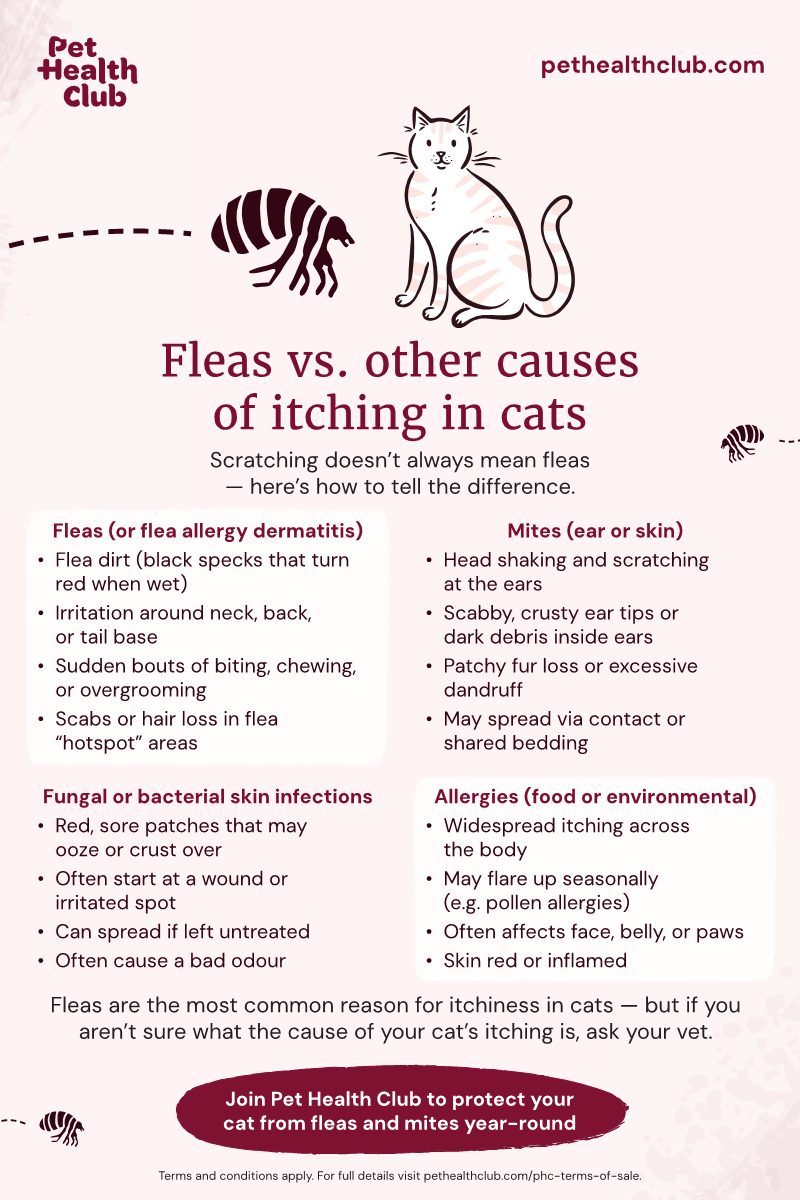
Read more: Mange in cats
How do I check my cat for fleas?
Fleas tend to take shelter on warm spots on your cat’s body, often where grooming is tricky. Check around the neck, armpits, groin, and base of the tail. Part the fur and look closely at the skin for tiny, fast-moving dark brown or black insects. These are the areas where you’re most likely to spot them.
A flea comb with fine teeth can also help. Run it through the fur, especially along the spine and hind legs, then wipe the comb onto a damp white tissue or kitchen paper. If you see black specks that turn reddish-brown, that’s flea dirt — one of the clearest signs of an infestation. This method is particularly useful for cats with darker coats, where fleas themselves can be harder to spot.
When combing your cat for fleas, keep a bowl of soapy water nearby. Drop any fleas you find into it. Fleas float on normal water — meaning they can jump back out — in soapy water, they sink.
Read more: Can indoor cats get fleas?
What are the health risks of cat fleas?
Flea bites can cause more than itching. Here’s what to watch for:
Flea allergy dermatitis (FAD): an allergic reaction to flea saliva, often seen as extreme itchiness and red, sore skin with small bumps or scabs — usually on the lower back, tail base, thighs, and neck. In severe cases, cats may overgroom and lose hair in patches.
Tapeworms: fleas can carry tapeworm, and then cats can swallow infected fleas while grooming. This may lead to your cat having tapeworms, which aren’t always visible — but you might spot tiny white segments, like grains of rice, near the anus, in their poo, or around their bedding. Pet Health Club membership comes in handy here, as it includes both flea and worm treatment tailored to your cat.
Anaemia: a risk for kittens and older cats, when fleas take enough blood to lower red cell levels. Signs include pale gums, weakness, and a dull coat. In severe cases, anaemia can be life-threatening.
Skin infections: open sores or raw patches from scratching can become infected, sometimes oozing or crusting over. These should always be checked by a vet.
Behavioural changes: flea discomfort can make cats restless, withdrawn, or more irritable than usual.
Knowing what cat fleas look like is one step — but it’s just as important to recognise the health issues they can cause.

Read more: Mange in cats
How are cat fleas treated?
Vet-prescribed cat flea treatment is best for getting rid of fleas reliably. There are three main types:
Topical treatments: applied to the skin at the back of the neck. They may leave a small greasy patch at first but absorb quickly. Within hours, you may notice dead fleas in your cat’s coat or bedding.
Oral tablets: work through the bloodstream, killing fleas after they bite. They don’t leave a visible mark, but you may still spot dead fleas in the environment soon after dosing.
Flea collars: provide long-term protection. Vet-recommended collars are usually thicker, grey or white, and release a low dose of active ingredient across the skin and coat. This is different from cheaper collars, which only affect fleas near the neck.
Always treat every pet in the household, not just the one with symptoms, as fleas move easily between animals. And never use dog flea products on cats — some ingredients, like permethrin, are toxic to them. Packaging can look similar, so always double-check the label. If you’re unsure, your vet can advise on the safest and most effective option.
How can I prevent my cat and home getting fleas?
Flea treatments deal with the adult fleas on your cat, but most of a flea’s life isn’t spent on your pet — it’s spent in your home. Adult fleas lay eggs in your cat’s fur, which drop into carpets, bedding, and furniture. These eggs hatch into larvae, which hide in soft furnishings and dark corners before developing into pupae. Pupae can stay dormant for weeks or even months before hatching into adult fleas, ready to start the cycle again.
How to keep your home flea-free:
Treat all pets regularly with vet-approved flea products — not just the one showing signs.
Vacuum often, especially in corners, along skirting boards, and under furniture, to remove eggs, larvae, and pupae. Empty the vacuum straight away.
Wash pet bedding at 60°C. The high temperature kills fleas at every stage, from eggs to adults.
Use a household flea spray on carpets, sofas, and skirting boards. Vet-recommended sprays can treat and help prevent infestations.
FAQs about cat fleas
How long do flea bites last on cats?
Flea bites can itch for 24 to 48 hours, but the skin may take up to a week to heal. If your cat keeps scratching the same spot, the skin can break and become infected, which takes longer to clear. Your vet may suggest a soothing treatment to ease irritation.
Can cat fleas live on humans?
No — fleas can’t live for long on people, but they may jump on and bite, often around the ankles. This can lead to sore, itchy skin. Humans can also carry fleas or eggs indoors on clothing or shoes, which is one way indoor cats and other pets can get fleas.
Can cat fleas live on dogs and rabbits?
Yes. The cat flea (Ctenocephalides felis) is the most common flea on cats, but it can also live on dogs and rabbits. Despite the name, cat fleas don’t just target cats — and can cause the same issues in other pets, including itching, flea allergy dermatitis, and even tapeworms. This is why it’s important to treat every pet in the household, not just your cat.
Can I use home remedies to treat cat fleas?
Natural remedies like essential oils may sound appealing, but many are ineffective, and some are even toxic to cats. Even products labelled as ‘natural’ or ‘chemical-free’ can be unsafe. Always check with your vet before trying any non-prescribed treatment.
What if my flea treatment isn’t working?
First, use a vet-approved product — ideally one prescribed by your vet — and apply it correctly and consistently. Most flea treatments don’t kill every stage of the flea life cycle. Eggs and larvae are often unaffected, which means they can grow into adults after your pet’s last dose. If you keep up regular treatments, new adult fleas will be killed before they can lay more eggs. Missing a dose gives the cycle a chance to start again.
Treat every pet in the household, not just the one with signs, and remember that fleas also live in carpets and furnishings. To fully clear an infestation, you need to treat both your cat and your home.
How do I know if cat flea treatment is working?
You may see fleas becoming sluggish or dying within a few hours of applying treatment. Some cats may seem itchier at first as fleas react to the product. Dead fleas may also appear in bedding or your cat’s coat.
How often should I treat my cat for fleas?
Regular flea treatment is usually recommended all year round — even in winter. This may be monthly or every few months, depending on the product used. Fleas can survive indoors thanks to central heating, and missing a dose gives them the chance to come back. However, flea treatments can have an impact on the environment. If your cat lives entirely indoors and has never had flea problems, it’s worth speaking with your vet about whether fewer doses might be right for them.
Can my cat get fleas again after treatment?
Yes. Fleas can come back if your home isn’t treated thoroughly, or if other pets are still carrying them. Eggs and larvae can survive in the environment for weeks, even after the adults are gone.
Is it safe to treat a kitten for fleas?
Kittens do get fleas, and can be at extra risk of problems caused by fleas. However, you should speak to your vet before treating a young kitten. Some products are safe for kittens from eight weeks old, or once they reach a certain weight. Your vet will be able to help you get your kitten the right treatment.
Are there any studies into cat fleas?
Cat fleas are the most widespread external parasite affecting cats worldwide. In the UK, a large 2018 survey found infestation rates of around 28% in the general cat population, with some clinic-based studies reporting over 70%. Fleas are linked to about half of all feline skin problems, most often allergic reactions to flea saliva. More recently, a 2020 study found only 23% of cats were up to date with flea treatments.
Another study stressed the need for long-lasting protection to break the flea life cycle, rather than relying only on quick-kill products. It also warned about the dangers of misuse — especially applying dog treatments to cats, which can cause severe toxic reactions. The same researcher’s more recent work showed how new treatments like fluralaner have transformed flea control: a single 12-week dose was found to achieve nearly 100% flea reduction. He also found that new-generation flea collars can provide up to eight months of protection, as long as every pet in the household is treated on time.
A 2025 Brazilian study found that modern topical treatments, such as fipronil-based spot-ons, can be highly effective in both laboratory and real-world settings. Many owners prefer these products because they’re simple to apply and less stressful for cats. However, an earlier 2021 study found newer, longer-lasting options (such as fluralaner) to have much better results. This wasn’t due to how effective either treatment is at getting rid of fleas, but because owners were less likely to miss doses when using the longer-lasting products.
Lastly, a recent study from Bangladesh found that cat fleas can infest many animals — including dogs, sheep, and goats. In one case, fleas also jumped on a woman and caused flea-bite dermatitis. Flea saliva can trigger allergic reactions in both pets and people, and fleas are also known to carry bacteria that cause illnesses such as flea-borne spotted fever, which is a type of typhus. Overall, flea-related diseases were behind roughly half of all skin problems treated by the vets who took part in the study.
Need more info?
For advice on flea prevention and treatment for cats, have a chat with your local vet. Locate your nearest vet using our find a vet page. And remember, parasite prevention tailored to your cat — including for fleas — is included in Pet Health Club membership. Join today.
Join the club today
Get regular health checks, vaccinations, and more, all included in your plan.

Medically reviewed by Lizzie Youens, BSc(Hons) BVSc MRCVS
Published on 13/10/2025 • Reviewed on 13/10/2025