

Overview
Puppies might spend most of their time indoors, but still it's easy for them to catch fleas — they can sneak in on shoes, clothing, other pets or even visitors. Once inside, they settle into soft spots like carpets and sofas, waiting for their chance to jump on your puppy. While fleas are a pain for any dog, puppies are more vulnerable. Their small size means even a few bites can lead to bigger problems, like sore, itchy skin, tapeworms, or even anaemia.
Some flea treatments aren’t recommended for puppies, so knowing what to use (and when) makes a big difference. In this guide, we’ll walk you through how to spot the signs of fleas, pick a treatment that’s safe for your puppy, and keep your home protected too.
Risks of fleas in puppies
Fleas don’t just make your puppy itchy — they can also lead to more serious health issues, especially in very young or small-breed pups:
Anaemia: fleas feed on blood, and small puppies don’t have much to spare. A heavy flea burden can cause anaemia, with symptoms including weakness, lethargy, or pale gums.
Flea allergy dermatitis: some puppies are allergic to flea bites. In sensitive puppies, just a single bite can lead to intense itching, sore skin and red, inflamed patches that may get infected.
Tapeworms: puppies can swallow fleas while grooming — and adult fleas can carry immature tapeworms. This means fleas can lead to your puppy getting worms.
Bacterial infections: flea bites can break the skin, giving bacteria a way in. This can cause problems like skin infections.
Puppies are more at risk than adult dogs because their immune systems are still developing. That’s why it’s so important to spot the signs early and get on top of fleas quickly.
How do you know if your puppy has fleas?
If you notice any of these signs, it could mean your puppy has fleas:
Frequent scratching: especially around the neck, base of the tail, belly, or on the inner side of their thighs
Red, sore skin or bald spots: often caused by trying to scratch or bite the fleas
Flea dirt in their coat: these are tiny black specks which a fine-toothed flea comb will pick up
Chewing or licking one area over and over: often a sign they’re trying to relieve the itch
If you spot flea dirt when combing your puppy’s fur, try dabbing them onto damp cotton wool or tissue. If they leave a red stain, it’s probably flea dirt. This quick test can be really helpful, especially if your puppy has dark fur making the fleas themselves harder to see.
Fleas often bite in spots your puppy can’t easily reach. When you’re checking for signs, take a close look at the back of their neck, base of the tail, under their legs and around their belly. If your puppy has a flea allergy, you might also see scabs or thinning fur in these areas. It’s also a good idea to check your puppy’s bedding or their favourite places to nap. You might spot flea dirt there — or even the fleas themselves.
If you’re not sure whether it’s fleas or something else, your vet can help work out what’s going on and recommend the right treatment.
Read more: Surprising facts about fleas
Flea treatment safety for puppies
Most flea treatments are only safe once your puppy is at least six to eight weeks old and weighs around two to three pounds (over 1kg), depending on the product. If you have a very young or small puppy (under 8 weeks and/or under 1kg) with fleas, remove as many as you can with a bath and a flea comb, and discuss a suitable treatment plan with your vet.
Where you can, go with flea treatments recommended by your vet. They’re usually safer and work better for your puppy’s age and size than shop-bought ones. If you do pick something off the shelf, make sure it’s made for dogs — and double-check the age and weight guidance before you use it.
If your puppy is still nursing, it’s important to treat their mum too. Just make sure the product you use is safe for lactating dogs — some ingredients can pass through her milk and might harm the puppies.
Important reminders:
Avoid products with permethrin, pyrethrins, or essential oils — even small amounts can be harmful to puppies
Some flea treatments can cause mild side effects — like drooling, sickness, skin irritation, or tiredness. These usually pass quickly, but speak to your vet if they stick around
Skip herbal or ‘natural’ remedies — there’s little evidence they work, and some can actually be harmful to dogs
Some flea treatments may not be suitable for puppies prone to seizures — if your puppy has a history of seizures, speak to your vet before using any flea product
Join Pet Health Club
Members of Pet Health Club get flea treatments included. Your vet will be able to give your puppy flea treatments tailored to their specific needs, making the whole process stress-free. And it covers more than just fleas — the Puppy Starter Package which new puppies get when signing up also includes treatment for worms, ticks, and mites, as well as their starter vaccination course and microchipping.
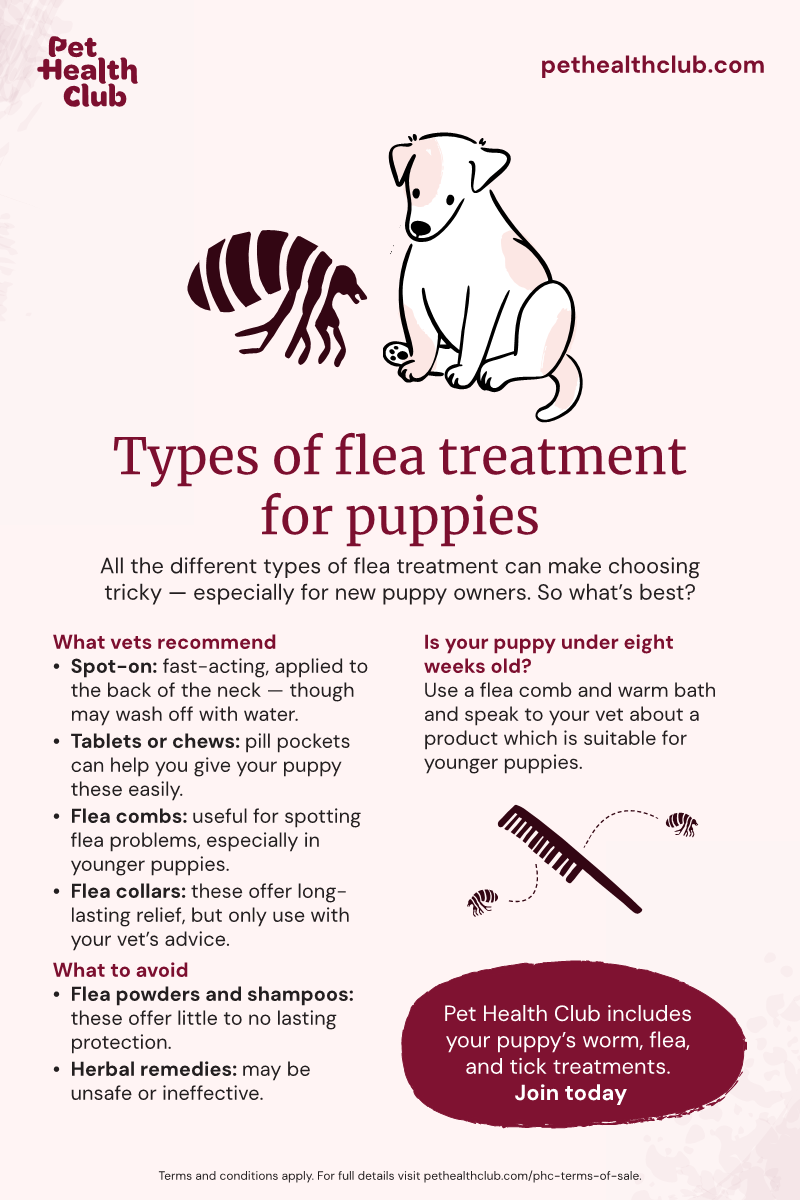
Types of flea treatment for puppies
Flea treatments come in a few forms — and some are more effective than others. Here’s a quick guide to the options vets usually recommend, along with the ones they’d suggest steering clear of.
Vet-approved treatments:
Spot-on treatments: these are applied to the skin, usually at the back of the neck. Some kill adult fleas, some stop eggs from hatching, and some do both. Spot-ons work quickly and are effective, but may be less suitable for puppies who swim or get frequent baths.
Tablets or chews: these work through your puppy’s bloodstream, making it harmful to any biting fleas. Some start working in as little as 30 minutes.
Flea combs: not a treatment on their own, but a helpful tool for spotting and removing fleas. They’re especially useful for very young puppies.
High-quality flea collars: some collars can offer up to 8 months of protection. They’re only suitable from 7 weeks of age and should be used on your vet’s advice.
Vets recommend avoiding:
Flea powders: these only kill adult fleas and don’t affect eggs or larvae, so they won’t stop the flea cycle. They don’t offer lasting protection.
Flea shampoos: these work while your puppy’s in the bath, but they don’t keep working afterwards. Many aren’t safe for puppies under 12 weeks.
Herbal and ‘natural’ remedies: often not effective, and some may include ingredients like tea tree oil that can be harmful to dogs.
For puppies under 8 weeks, the safest approach is regular flea combing and the occasional warm bath and a vet-approved product that’s safe for young puppies. Your vet can help you find the right treatment for your puppy’s age, size and lifestyle.
Read more: Surprising facts about fleas
How to give your puppy flea treatment
Spot-on treatments are one of the most common and effective ways to protect puppies from fleas. Applying the treatment right makes it more likely it’ll work — and it’s easier than you might think.
1. Pick the right moment
Choose a time when your puppy is calm and relaxed — after a nap or meal usually works well. Having a favourite toy or a few treats nearby can help keep them settled and make the experience more positive.
2. Apply the treatment
Find a well-lit spot and, if needed, gently wrap your puppy in a towel to help keep them still. Part the fur at the back of your puppy’s neck or between their shoulder blades — these are spots where your puppy can’t lick. Place the treatment nozzle directly on the skin and squeeze out all the liquid in a short line down the back of the neck, making sure it doesn’t run off.
3. Clean up and keep an eye out
Wash your hands as soon as you’ve applied the treatment. Try not to touch the area until it’s completely dry — this can take up to 24 hours. If you have more than one pet, keep an eye on them afterwards or keep them apart. You don’t want them licking the treatment off one another. Avoid bathing your puppy or letting them get wet for at least 48 hours, as water might wash some of the treatment away before it is absorbed into your puppy’s system.
Extra tips:
Always use the full dose — splitting it between spots can make the treatment less effective
If your puppy’s a bit wriggly, it can help to have someone gently hold them while you apply the treatment
If it’s your first time or you’re unsure, your vet or a nurse at your local practice will be happy to show you how
Preventing puppy fleas
Regular flea treatments and a clean home are the best ways to stay ahead of fleas – and ticks too.
Treat all pets in the home
Every dog, cat, and rabbit in your household should be treated regularly with a product that’s right for their species. If one pet picks up fleas, they can quickly spread to the others. Treating all your pets every month — including when it’s cold — is the best way to keep your puppy protected.
Clean your home regularly
Only around 5% of fleas live on your puppy — the rest are in your home. One female flea can lay up to 50 eggs a day, often hidden in carpets, bedding and furniture. To help beat fleas:
Wash pet bedding at 60°C once a week
Vacuum carpets, soft furnishings, and skirting boards regularly — and empty the bag or canister straight away
Use a vet-approved household flea spray that tackles all flea life stages — always follow the label and keep pets out of the room until it’s safe
Ask your vet for help
If fleas are proving hard to shift, your vet can offer tailored advice.
For long-term peace of mind, Pet Health Club includes regular flea and worm treatment, routine vaccinations, and year-round support to help keep your puppy healthy. Use our Find a Vet tool to locate your nearest Pet Health Club practice.
Join the club today
Get regular health checks, vaccinations, and more, all included in your plan.

Medically reviewed by Lizzie Youens, BSc(Hons) BVSc MRCVS
Published on 15/05/2025 • Reviewed on 15/05/2025