

Overview
Toilet training your puppy usually takes four to six months, but some dogs might need a full year. Every dog is different — smaller breeds, for instance, might need the extra time because of their tiny bladders. But with a consistent routine, lots of praise, and handy tools like training pads or crates, any puppy will quickly be picking up good habits.
The keys to toilet training is to recognise when your puppy needs the loo, to stick to a routine, to avoid punishing them for accidents, and to manage night time needs. Puppies learn best when training is simple, rewarding, and stress-free. In this guide, we’ll cover everything you need for success.
Supplies for puppy toilet training
Before you begin, make sure you’ve got everything you need to make toilet training as smooth and stress-free as possible:
Leash and collar: For guiding your puppy to their toilet spot.
Crate or puppy pen: Puppies don’t like to go to the loo too close to where they sleep, so one of these will encourage bladder control and prevent accidents when you can’t supervise.
Training pads: Handy for apartment living or when accidents are unavoidable.
Treats: Perfect for rewarding successful toilet trips straight away.
Enzymatic cleaner: A must-have for cleaning up accidents and getting rid of lingering smells.
How to toilet train your puppy: the key steps
Toilet training your puppy mostly comes down to one simple thing — regularly taking them outside to go to the toilet. The key is doing this consistently and in the right way. Follow these steps, and you’ll help your puppy build good habits from the start.
Set up a routine
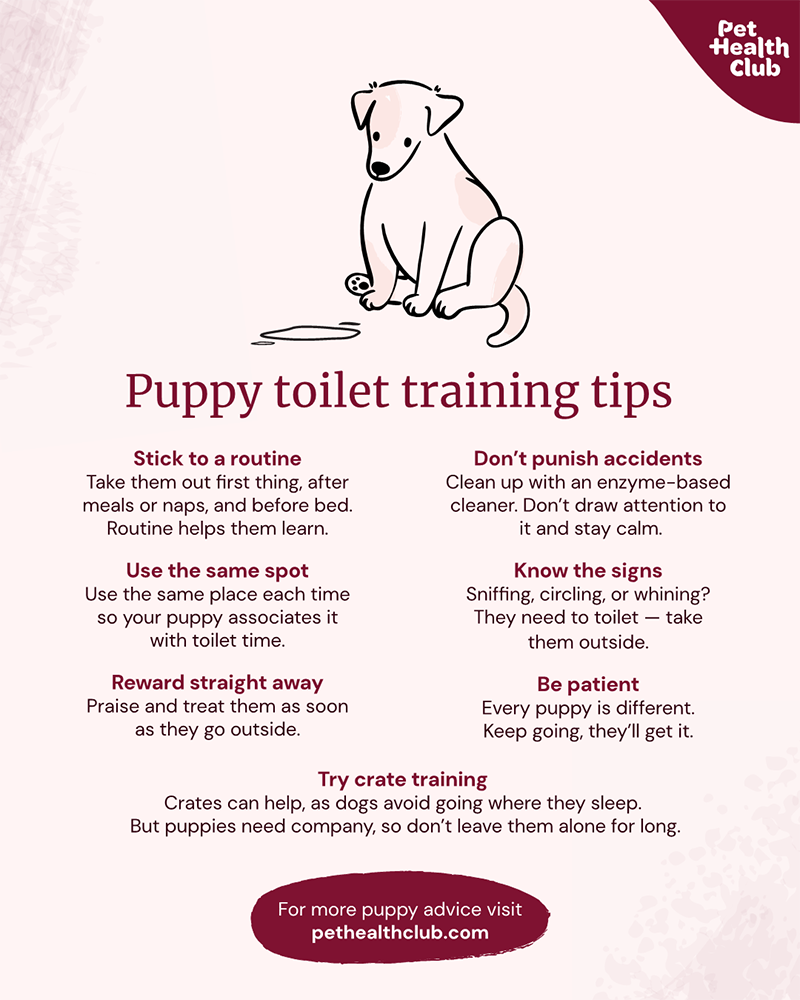
This is really important for toilet training. Take your puppy out at regular times, like first thing after they wake up, after meals, during playtime, and before bed. Puppies do well when their day is structured. A clear routine and plenty of opportunities to toilet in the correct place will help them understand what’s expected, making accidents less likely. Taking your puppy for short, stress-free trips outdoors at predictable times will also pay off when they are ready to start going for walks — they'll have had a gentle introduction to the great outdoors.
Teach your puppy where the toilet is
Taking your puppy to the same spot each time helps them associate that place with going to the loo. They’ll get to know that those surroundings and smells mean it’s time to go. If you can, pick a space away from their play area to avoid any confusion.
Give your puppy time
Puppies need a chance to sniff and explore before they feel ready to go. Avoid rushing them — stand quietly and let them take their time. If they don’t go within a few minutes, bring them back inside and try again after 10–15 minutes.
Reward success
Timing is everything. Praise your puppy and give them a small treat immediately after they’ve done their business in the right spot. This positive reinforcement helps them link the action to the reward, encouraging them to repeat the behaviour. Don’t be afraid to be extravagant with your praise – it can help to really drive home the message.
Supervise your puppy
Keep a close eye on your puppy, especially in the early days of training. By watching them, you’ll pick up the signs that mean they need to go, and you’ll be able to get them outside quickly when it’s time. If you can’t supervise, use a crate or pen to manage their space and reduce the chance of accidents.
Use a toilet-time phrase
You can create a signal your dog will understand if you say ‘go potty,’ or something similar, every time you take your puppy out. Over time, this will make it easier to prompt them to go, even in new or unfamiliar places.
By sticking to these steps, you’ll help your puppy quickly learn what they need to do, where they need to do it, and at what times.
Learning your puppy’s toilet signals
It’s important to keep an eye out for signs that your puppy needs to go. While every puppy is different and has their own unique habits, some common cues to look for include:
Sniffing the floor
Circling or pacing
Heading towards doors or certain corners
When you spot these cues, act quickly to guide them to their toilet spot. This helps prevent accidents and builds good habits.
How often should my puppy have toilet breaks?
Young puppies grow fast, but their bladders are still small at this stage. This means they can’t hold it in for very long. Frequent toilet breaks are essential in the early weeks to help them succeed. Here’s what to keep in mind about toilet trip timings:
Take puppies under 12 weeks old out every 1–2 hours
Puppies under this age need regular trips outside to prevent accidents. Set a timer or keep a schedule to help you stay consistent.
After key activities
Always take your puppy out right after waking up, eating, drinking, or playing. These moments naturally trigger their need to go, so timing is everything.
Extend breaks as they grow
As your puppy gets older, their bladder control improves. Gradually increase the time between toilet trips by 15–30 minutes, and watch how they handle it. By around six months, many puppies can manage 4–6 hours during the day
Extra care for small breeds
Toy and small breeds often need more frequent trips because they have even tinier bladders and faster metabolisms. Stick to shorter intervals at first, but with patience, they’ll adjust to longer gaps.
Frequent toilet breaks aren’t just about avoiding accidents — they’re a great way to teach your puppy what to do. Every successful trip builds their confidence, strengthens your bond, and makes the training process smoother for both of you.
Being consistent with toilet training your puppy
Consistency is the secret to successful toilet training. Stick to these essentials:
A regular schedule: Take your puppy out at the same times each day to build a routine.
Clear commands: Use phrases like “go potty” or a cue word such as “hurry” or “busy” to help them link the words to the action.
Positive reinforcement: Reward them every time they get it right to create a strong, positive association.
Handling puppy toilet training accidents
Accidents are a normal part of toilet training and can be easily managed. Clean up any mess right away using an enzymatic cleaner to eliminate odours and avoid repeat accidents. Avoid scolding your puppy — punishments can lead to fear and confusion, which may slow their progress.
If an accident happens, stay calm, clean up thoroughly, and gently remind your puppy of their toilet spot by taking them there. Remember, accidents aren’t about being naughty — it’s simply part of the learning process.
Puppy toilet training aids
Using puppy pads
Puppy pads can be a great option in apartments or during bad weather when getting outside is tricky. Place the pad in a consistent, easy-to-access spot so your puppy can associate it with toileting. Over time, slowly move the pad closer to the door and eventually outside to help them transition to a permanent toilet routine. Just be careful not to rely on pads too much, as this can make it harder for your puppy to understand where it’s okay to toilet.
Teach your puppy to use bells
Training your puppy to use bells is a fun and practical way for them to signal when they need to go outside. Hang a bell at their nose level by the door and gently guide them to nudge it with their nose or paw before each toilet trip. Reward them every time they ring the bell to reinforce the behaviour. With patience and consistency, your puppy will learn to use the bell to let you know when it’s time for a toilet break, building independence and clear communication.
These tools are most effective when paired with outdoor training, helping your puppy understand that the ultimate goal is to go outside. Used correctly, they reduce accidents and make the training process smoother and more interactive.
Toilet training in a flat
Living in a flat may mean adapting your training approach:
Use puppy pads or litter trays indoors if outdoor access is limited.
Set up a toilet area on a balcony or nearby outdoor spot, if you can.
Take frequent breaks to reinforce the habit and maintain consistency.
If outdoor access isn’t possible, litter trays can be an effective indoor solution. Using the same rewards and consistency principles, your puppy can learn to use them reliably. Using a dirt litter tray also helps them learn to toilet outside when they have the opportunity. In a flat, it’s especially important to watch for your puppy’s toilet signals and act quickly to prevent accidents.
Night time toilet training
Toilet training at night takes a little extra planning and patience. Here’s how to make nighttime easier for you and your puppy:
Pre-bedtime routine: Limit food a couple of hours before bed, and take your puppy out to the toilet just before settling down. A bit of gentle play or a short walk can encourage them to go.
Midnight breaks: For the first few weeks, set an alarm for a night time trip. Carry your puppy to their toilet spot to keep them focused, and reward them quietly once they’re done.
Stay calm and quiet: Keep night time trips relaxed and to the point. Avoid playing or chatting too much, so your puppy doesn’t mistake it for playtime.
Toy and small breeds may need more frequent nighttime toilet breaks because of their smaller bladders. As your puppy grows and develops better control, you can gradually reduce these outings.
By staying consistent and patient, you’ll help your puppy learn to stay clean and dry through the night, making it a stress-free experience for both of you.
Using a crate for toilet training
A crate can be a great tool for toilet training, as puppies naturally avoid going where they sleep. That makes having a crate extra useful for night time training, too. To make the most of crate training:
Choose the right size: The crate should be big enough to let your puppy turn around and stretch out comfortably, but not so large that they can create a separate toilet area.
Make it a positive space: Introduce the crate gradually and ensure it’s comfortable and inviting.
Crate training is especially helpful at night or when you can’t supervise your puppy directly. Always keep the crate a safe and positive place—never use it as punishment.
Puppy toilet training regression
When your puppy takes a step back with potty training, don’t worry. It’s more common than you might think - especially in the adolescent period when your puppy might be pushing boundaries. Start by revisiting the basics: take them outside regularly, especially after meals, naps, or playtime, and give lots of praise and treats when they get it right. Being consistent really will help your puppy, so stick to regular feeding times to help predict when they’ll need to go.
If accidents happen, clean the area with your enzymatic cleaner. This will mean there won’t be any lingering smells that might confuse them. Sometimes regression can signal stress or even a health issue, so if things don’t improve or your puppy seems out of sorts, it’s best to check in with your vet. With a bit of patience and care, they’ll get back on track.
‘Fear phases’ and toilet training
Around eight weeks old, puppies often go through a ‘fear phase.’ During this they may be wary of unfamiliar places, including their toilet spot. This is a normal stage of development and usually passes within a few weeks. To help them feel secure, choose a quiet, stress-free area close to home for their toilet trips. Extra reassurance and a calm routine can go a long way in building their confidence during this time.
Need expert advice on toilet training a puppy or dog?
For expert advice on house training your puppy or dog, get in touch with your local vet.
Find your nearest vet using our Find a Vet page.
Medically reviewed by Lizzie Youens, BSc(Hons) BVSc MRCVS
Published on 15/04/2025 • Reviewed on 15/04/2025