

Overview
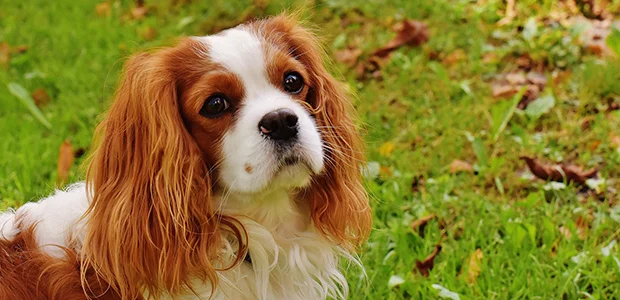
The Cavalier King Charles Spaniel is the very definition of ‘lapdog’. They adore their families and happily follow them everywhere. If you’re seeking a low-maintenance dog that loves people of all shapes and sizes, a Cavalier may just be the breed for you.
Place of origin: The UK (named after King Charles II, who loved toy spaniels)
Cavalier King Charles Spaniel life expectancy: nine to 14 years
How big do Cavalier King Charles Spaniels get? 30 to 33cm
How heavy are Cavalier King Charles Spaniels? six to eight kilograms
Colour: black and tan, tri-colour, ruby, blenheim
How much exercise does a Cavalier King Charles Spaniel need?
Cavalier King Charles Spaniels are real lapdogs. One decent walk a day should do them just fine. They’re not overly active dogs – often they’ll adapt their activity level to that of their owners.
Easily distracted and famously lacking in street smarts, it’s a good idea to keep your Cavalier King Charles Spaniel on the lead when you’re walking through populated/urban areas. Bear in mind that Cavaliers are sensitive to hot weather; during the summer or on hotter days, aim to walk them during the cooler times of day and avoid the midday sun.
Please note: A dog’s exercise, training/stimulation and grooming requirements can depend on several factors such as age and health. The same goes for ongoing costs of ownership. For advice on one specific dog, we always advise chatting with a vet.
Grooming: do Cavalier King Charles Spaniels shed?
The Cavalier is easy to maintain. A quick brushing 3-4 times a week should keep their silky medium-length coat in good condition. Their coats require regular trimming between the toes but apart from that, no trimming is necessary! Likewise, you’ll only need to bathe your Cavalier under extreme circumstances.
Complete their grooming routine with regular tooth brushing, nail clips and ear checks.
Cavalier King Charles Spaniel temperament, socialising and ideal home environment
Generally, Cavaliers are less about the ‘where’ and all about the ‘who’. So long as they’re surrounded by loving company, they’d be happy living anywhere. If you’re looking for a pooch who’ll play an active role in your family, a Cavalier King Charles Spaniel could be the perfect companion. They’re easy going and have enough love for children and other pets too.
If your house is empty for large parts of the day however, a Cavalier, as a dog that thrives in company, may not be the breed most suited.
Cost of owning a Cavalier King Charles Spaniel
When you’re considering the lifetime cost of owning a dog, remember to take into account:
Canine food and diet
Veterinary care
Pet insurance
Regular grooming costs
Preventative healthcare (the Cavalier King Charles Spaniel is at a higher risk of gingivitis, and related dental issues, than most other breeds)
As a rough guide, allow between £80 and £90 a month to cover the ongoing costs of owning a Cavalier King Charles Spaniel. Our vets have drawn up this handy guide to save dog owners money.
Need more info?
For more info on finding the best dog breed for you and your lifestyle, have a chat with your vet.
Find your nearest vet using our Find a Vet page.
Training: how to train a Cavalier King Charles Spaniel
Cavalier King Charles Spaniels tend to be relaxed, easy-going dogs. They’re typically easy to train and won’t require the high stimulation of other breeds – they’re as happy to sleep on the couch as they are to walk around the park, it all depends on what their owners are up to.
As with most breeds, set about training your Cavalier when they’re young and always use positive reinforcement.
Join the club today
Get regular health checks, vaccinations, and more, all included in your plan.

Published on 14/10/2019 • Reviewed on 31/10/2023