

Overview
Neutering can help rabbits live healthier, easier lives. It prevents pregnancy in rabbits (and any unwanted litters), reduces the risk of serious illness, and makes everyday care simpler. Spaying protects female rabbits from uterine cancer, a common and often hidden disease that becomes more likely with age. For male rabbits, neutering leads to calmer behaviour and better weight gain, likely due to lower testosterone and improved digestion.
Neutering also curbs hormone-driven behaviours like spraying, mounting, and fighting — making rabbits easier to bond and more relaxed to live with. It’s one of the most effective steps you can take to support your rabbit’s long-term wellbeing.
What are the benefits of neutering rabbits?
Rabbit neutering brings real health and behavioural benefits that can help your rabbit live a happier life. Here’s how:
Protects their health: spaying completely removes the risk of uterine cancer — a condition that affects up to 80% of unneutered females. It also helps prevent serious conditions like pyometra (a womb infection) and mammary tumours. In males, neutering means no risk of testicular cancer at all.
Improves behaviour: neutered rabbits are often calmer, easier to handle, and less likely to spray urine or show dominant behaviours like mounting or fighting. Females tend to be less moody and more settled, and many owners say their rabbits seem more affectionate after neutering.
Helps with toilet training: neutered rabbits are usually more reliable with their toilet habits. That can make rabbit litter training easier, indoor living cleaner, and make things less stressful for everyone.
Makes bonding easier: neutering can help rabbits get along better — whether they’re living in pairs or in same-sex groups. It lowers the risk of hormone-fuelled aggression and can give bonding attempts a better chance of success.
A longer, healthier life: neutering removes the risk of reproductive cancers and reduces hormone-related disorders — both of which can lead to a longer life and better wellbeing. Neutered rabbits are also less likely to get hurt in fights, and many enjoy a calmer, more settled life.
Better for rabbit welfare: neutering helps prevent surprise litters, especially in pairs mistakenly thought to be the same sex. It also reduces pressure on rescue centres and supports the wider rabbit community.
Changes take time: behavioural improvements don’t always happen overnight. It can take a few weeks for hormones to settle, so a little patience goes a long way. But in the end, most owners find the change is well worth it.
When should I neuter my rabbit?
Most male rabbits can be castrated from around 12 weeks old, once their testicles have descended. For female rabbits, spaying usually happens from five months — although with larger breeds, your vet might suggest waiting a little longer. Your vet may also advise waiting until your rabbit reaches about 1kg before surgery to make anaesthesia safer.
If your rabbit is older or has health issues like obesity, dental problems, or breathing trouble, your vet will check whether surgery is still the safest option. Many older rabbits can be neutered without problems — but a full health check is essential.
Timing matters — if you’re new to rabbit care, booking an early chat with your vet can help make sure the timing is right. Neutering early can stop behaviours like spraying or fighting before they become routine. But if it’s done too soon, it may carry other risks. That’s why a pre-neuter check is a good idea — your vet can look at your rabbit’s size, health, and development and recommend the right time for them.
What happens during the neutering procedure?
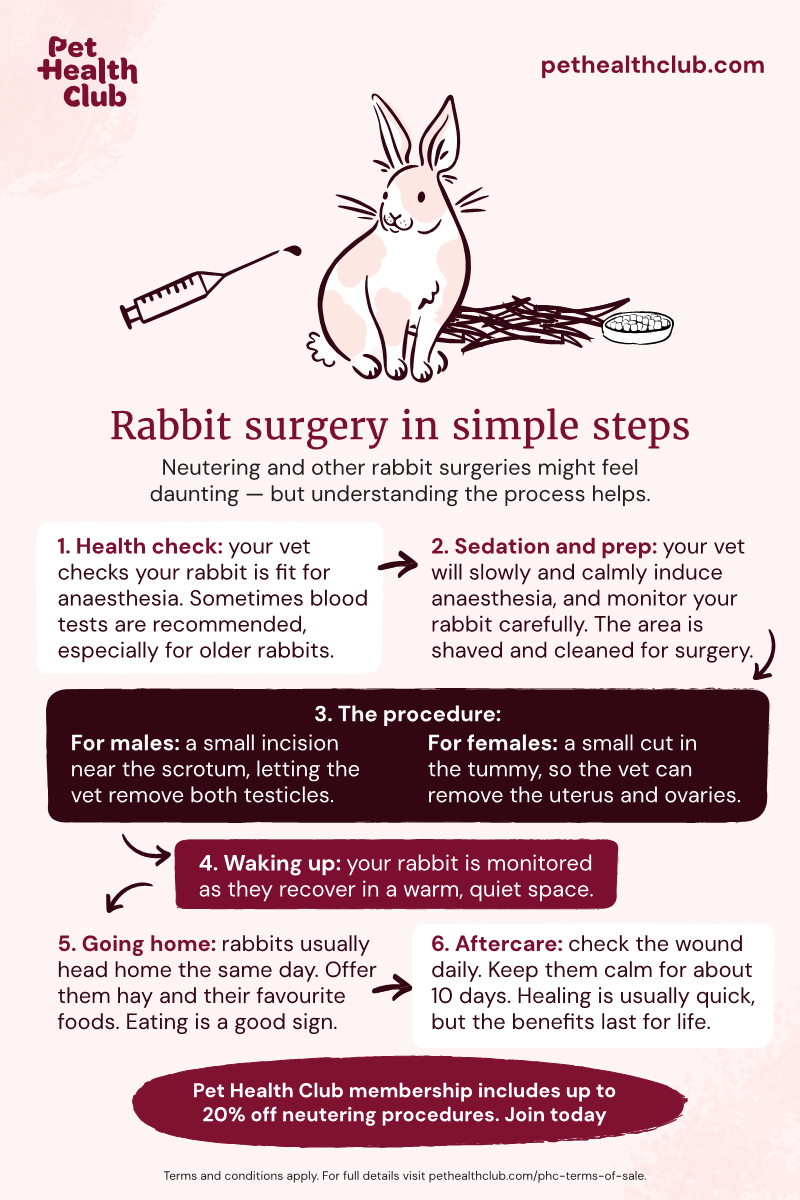
Rabbit neutering operations are slightly different for males and females, but in both cases, gentle handling and close monitoring are essential.
What does rabbit neutering surgery involve?
For male rabbits, the vet makes small incisions near the scrotum to remove the testicles. These are carefully closed to avoid complications like hernias, which rabbits can be prone to. In female rabbits, the surgery is a little more complex and involves removing the uterus and ovaries through a small incision in the tummy. Rabbits have two uterine horns, so it’s important to remove both along with the ovaries to help prevent future problems.
During the operation, the team keeps a close eye on your rabbit’s breathing, heart rate and temperature to make sure they stay safe and comfortable. Because rabbits are a bit more sensitive under anaesthetic, experienced vets often use injectable sedation and intubation instead of a face mask — which can be more reassuring for your rabbit too.
Most vets now use dissolvable stitches under the skin, which lowers the risk of your rabbit chewing at the wound. Sometimes they’ll also use skin glue or buried sutures to help the area heal neatly. For female rabbits, the tummy may be gently flushed with sterile saline during surgery to reduce the chance of internal scarring.
Read more: Routine health checks for rabbits
How long does rabbit neutering take?
The operation usually takes between 30 and 60 minutes, depending on whether your rabbit is male or female and how complex the procedure is. Afterwards, your rabbit will rest in a warm, quiet space while the team keeps an eye on them. Many rabbits head home the same day, but some may stay overnight — especially females or those who need extra pain relief or support with feeding.
How can I prepare my rabbits for surgery?
Getting everything ready in advance can help your rabbit feel calmer — and make recovery easier too.
Stick to their usual routine: keep feeding, handling, and cleaning habits the same in the days before surgery. Familiar routines help reduce stress.
Feed as normal before the operation: rabbits should never be fasted. They need to keep eating to stay healthy, so offer hay, pellets and greens as usual.
Pack their favourite foods: bring a few familiar snacks — especially hay and herbs — to encourage eating after the operation.
Use a safe, cosy carrier: line their carrier with a clean towel (not hay or straw), and avoid bedding that might stick to the wound. Make sure it’s secure and well-ventilated.
Ask about bonded companions: some clinics let bonded rabbits stay together before and after surgery, which can help both feel more at ease.
Share any health details: tell your vet about any ongoing conditions or recent behaviour changes, and bring any medication your rabbit’s on. It’s also a good time to check pick-up times and what to expect.
Create a calm recovery space: before the day, set up a warm, quiet area at home with soft bedding, easy access to water, food, and a litter tray. Remove anything sharp or rough that might get in the way.
What should I expect after rabbit neutering?
Knowing what to expect after surgery can help your rabbit recover comfortably — and give you peace of mind too.
Recovery time: most rabbits are up and moving within a few hours. Full recovery takes about seven to 10 days, though internal healing can take a little longer. Your vet may ask to see your rabbit again to check the wound is healing well.
Pain relief: pain management is essential. Your vet will prescribe something like meloxicam (an anti-inflammatory) and let you know how long to give it. Never give your rabbit human medicines — they can be dangerous.
Looking after the wound: check the area once a day for swelling, redness, heat or discharge. Use soft bedding and avoid straw or wood shavings that might irritate the site. If anything looks sore or open, call your vet.
Eating and digestion: encourage your rabbit to eat as soon as they’re awake. Offer hay, leafy greens and their favourite treats. If they’re not eating after around 12 hours, it’s important to contact your vet — it could be a sign of gut stasis, which needs urgent care.
Droppings and toileting: keep an eye on their droppings. They may change slightly in size or shape at first, but they shouldn’t stop altogether. No droppings or very small ones can be a sign of digestive trouble.
Behaviour and rest: your rabbit might be quieter than usual to start with. Let them rest in a warm, quiet spot, and try to limit jumping or fast movements for about a week. A smaller pen or enclosure can help keep them calm.
If they have a bonded friend: check with your vet about when it’s safe to reunite them. Sometimes, keeping them close but separate — where they can see or smell each other — helps with recovery without disturbing the wound.
Watch for signs of discomfort: things like a hunched posture, teeth grinding, hiding, or not moving much may mean your rabbit’s in pain. If you notice anything unusual, get in touch with your vet.
A little extra care goes a long way — and your rabbit will be back to their usual self before you know it.
It’s also helpful to know that male rabbits can stay fertile for up to six weeks after they’ve been neutered, so it’s best to keep them apart from unneutered females during that time. Females, on the other hand, can’t get pregnant once they’ve been spayed.

Read more: How to litter train your rabbits
How much does rabbit neutering cost?
The cost of neutering your rabbit can vary depending on their sex, health, your vet’s approach, and where you live. As a general guide:
Castrating a male rabbit: £165 to £189
Spaying a female rabbit: £200 to £235
Spays are usually more expensive than castrations because they’re a longer and more complex operation. The cost often includes a follow-up check to make sure your rabbit is healing well. If your rabbit is older, larger, or needs extra support with anaesthesia, this may increase the cost slightly. If you’re a Pet Health Club member, you can save up to 20% on neutering — another way we help make good pet care more affordable.
When comparing quotes, it’s a good idea to ask exactly what’s included. Many clinics offer a package price that covers:
A pre-op health check
General anaesthesia
The surgery itself
Pain relief for a few days afterwards
Follow-up checks
Extra medication if needed — such as gut support
Things like blood tests, vaccinations, or microchipping are usually added on separately.
If cost is a concern, it’s worth asking your vet or local rescue centre if there are any low-cost neutering schemes available — some charities and practices offer help for owners on lower incomes. While neutering might feel like a big cost upfront, it’s a long-term investment in your rabbit’s health. Preventing problems like cancer and hormone-fuelled behaviour now can save a lot more — in stress and vet bills — later on.
FAQs about rabbit neutering
Can my rabbit have a litter before being neutered?
They can, but there’s no known benefit to letting rabbits have a litter before neutering. In fact, it can increase the risk of health problems and unwanted behaviours.
Is rabbit neutering painful?
The surgery is done under anaesthetic, and your vet will provide pain relief to keep your rabbit comfortable as they recover. Most bounce back quickly with the right care.
Can older rabbits be neutered?
Yes — many older rabbits can still be safely neutered. Your vet will check their overall health first and talk through any added risks.
How soon can I bond neutered rabbits?
Give them a few days to recover first. For males, wait up to six weeks after surgery to be sure they’re no longer fertile before letting them in with an unneutered female.
Will neutering change my rabbit’s personality?
It may reduce hormone-driven behaviours like spraying or mounting, but your rabbit’s personality will stay the same. In fact, many owners say their rabbits become calmer and more affectionate afterwards.
Is rabbit neutering completely safe?
No operation is entirely risk-free, and rabbits have anaesthesia-related complications more often than cats and dogs. However, neutering is a common and low-risk procedure — especially with a vet who has experience with rabbits. Your vet will explain what to expect and how they manage any risks.
When can my rabbit go back to their normal housing after surgery?
Usually after seven to 10 days, once they’re moving around comfortably, eating well, and the wound has healed. Until then, keep them somewhere quiet, clean and easy to rest in.
Will rabbit neutering stop all hormonal behaviours?
It often reduces or stops hormone-driven behaviours, but habits learned early can sometimes stick around. Give your rabbit a few weeks to settle — most become calmer with time.
Does rabbit neutering prevent all types of cancer?
Neutering protects against womb, ovary and testicular cancers, but like all animals, rabbits can still develop other types of cancer as they get older.
Do rabbits need blood tests before being neutered?
Not always. But if your rabbit is older or has health concerns, your vet might suggest blood tests to make sure it’s safe to go ahead.
Can a neutered male rabbit still get a female pregnant?
Yes — but only for a short time. Male rabbits can stay fertile for up to six weeks after surgery, so keep them apart from unneutered females during that period.
What signs after surgery mean I should call the vet?
If your rabbit stops eating, seems very quiet, sits hunched, grinds their teeth, or if the wound looks swollen or has discharge, call your vet straight away.
What do the studies say about rabbit neutering?
Scientific studies support what many vets already advise: neutering is a safe and beneficial procedure for rabbits.
A 2017 Scottish study looked at 71 rabbits who had neutering surgery and found that the procedure is generally safe when modern care protocols are followed. Around a quarter of rabbits (25.7%) had minor complications, such as slight bleeding, temporary drops in body temperature, or a short spell of reduced appetite — most of which cleared up within a couple of days. Sadly, one rabbit died during anaesthetic induction, which is a known but rare risk.
A large survey of rabbits in England adds further support for neutering, highlighting a possible link between hormone-driven muscle development and dental disease in male rabbits. In their large-scale study, overgrown molars — the second most common disorder recorded — affected 9.5% of males compared to 5.5% of females. The researchers suggest that this difference may be due to male hormones influencing jaw muscle development. Earlier studies show that neutering male rabbits before six months of age can prevent these changes — and in turn, may reduce the risk of dental problems later in life.
A recent study into Nigerian farm rabbits looked at the effects of castration. It found that neutered rabbits gained more weight, even though they ate less food each day (70g vs. 82g). The researchers suggested this could be because neutered rabbits make better use of the food they eat — possibly digesting and absorbing nutrients more efficiently. They also found that neutered rabbits had much lower levels of testosterone — less than half the amount seen in unneutered males. This was linked to calmer behaviour and less aggression, as well as changes in how the body stores energy, which may explain the improved weight gain.
Need more info?
To find out more about rabbit neutering, spays or castrations, have a chat with your vet. Find your nearest vet using our Find a Vet page.
Join the club today
Get regular health checks, vaccinations, and more, all included in your plan.

Medically reviewed by Lizzie Youens, BSc(Hons) BVSc MRCVS
Published on 06/03/2019 • Reviewed on 06/08/2026