

Overview
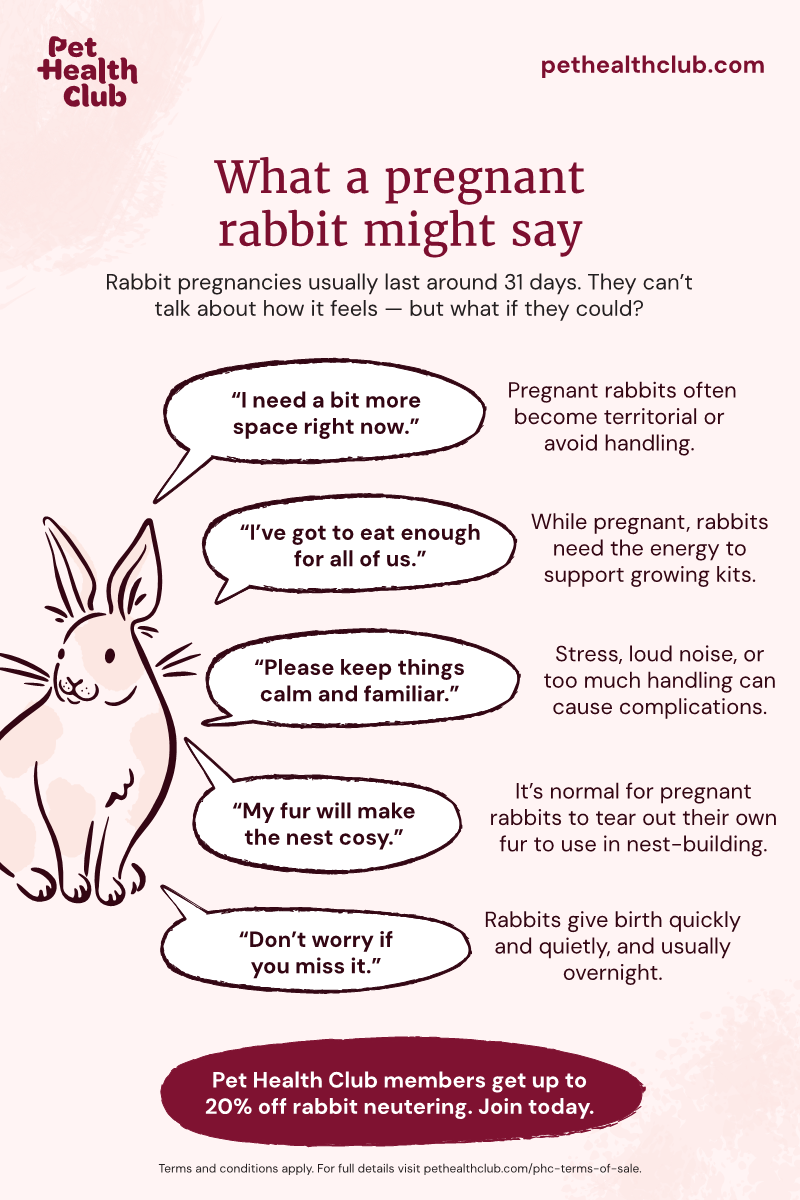
Rabbit pregnancies can be fast, frequent, and can be hard to spot. Most last around 28 to 33 days, and a female rabbit can get pregnant again just hours after giving birth. If she’s unneutered and has spent time with an unneutered male, pregnancy is highly likely — especially if you’ve noticed her nesting, pulling fur, or becoming more territorial.
How can I tell if my rabbit is pregnant?
If your rabbit is pregnant, they might:
Build a nest from hay or straw a few days before giving birth
Pull fur from her body to keep her kits warm
Become more territorial or withdrawn
Avoid being handled, even if she’s usually calm
Eat more and develop a slightly rounded belly
These signs usually appear in the final week of pregnancy, though you might spot subtle changes earlier (like grumpiness or urine-marking items in her hutch). In some cases, your vet can gently check for pregnancy from around 10 to 12 days after mating.
Because rabbits naturally hide signs of vulnerability, pregnancy can be hard to spot. Many owners only realise what’s happening when the kits arrive. If you’re unsure, your vet can confirm and help you prepare.
Read more: Routine health checks for rabbits
How long are rabbits pregnant?
A rabbit gestation period usually lasts around 31 to 33 days. If you know the mating date and there’s no sign of birth by day 32, contact your vet. They may suggest a check-up or, in some cases, help start labour. Pregnancies can run longer when there are fewer kits, but it’s still best to get advice if kindling hasn’t happened by day 32.
Most pet rabbits can get pregnant from just three to four months old (but giant breeds can take around six to nine months to reach sexual maturity). Many owners don’t realise that rabbits are induced ovulators. This means they don’t have a menstrual cycle like humans, where there are only a few days a month during which they can become pregnant. Instead, mating itself causes ovulation, so there’s always a chance of pregnancy when male and female rabbits are together.
Rabbits will attempt to mate around 14 out of every 16 days, and they can become pregnant again within just an hour or two after giving birth. That’s why it’s so important to talk to your vet about neutering your rabbits early.
How do I care for my pregnant rabbit?
Pregnant rabbits don’t need a big change to their routine, but a few simple tweaks can help them stay comfortable and well:
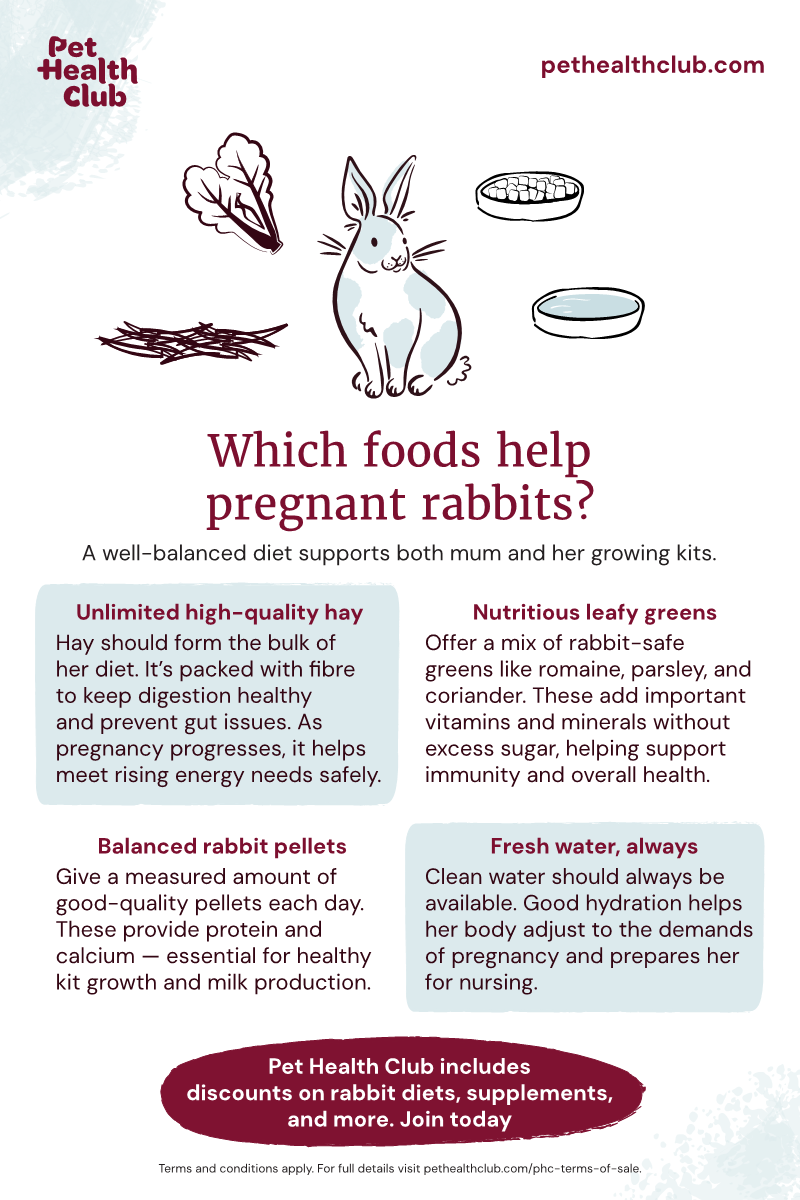
Give unlimited hay (alfalfa is great during pregnancy), fresh greens, and clean water
Keep things calm and quiet — away from other pets and loud noises
Avoid too much handling, especially later in pregnancy
Make sure she has space to move around without stress
Add a hideaway so she can retreat if she needs a break
Place a nest box around day 28 in a quiet corner, lined with soft hay or straw. Most rabbits give birth at home, overnight, in a quiet, safe space they know. There's no need to move her unless something seems wrong — being in her own enclosure helps her stay calm and nest naturally. Avoid lifting or turning her in the later stages. And never try to check for kits unless you're trained — done wrong, it can cause harm.
Read more: The best diets for rabbits
How long does rabbit labour last?
Labour (also called kindling) usually happens at night and lasts just 15 to 30 minutes. Most does give birth in their nest without help, delivering five to eight kits that are hairless and blind.
Kindling tends to be quiet, and many owners only realise it’s happened when they check in the morning. Unless you spot signs of distress, it’s best not to disturb her or interfere, as this can stress the doe or cause her to reject the kits. If you happen to be present for the kindling, stay very quiet and still and avoid handling the doe or kits unless absolutely necessary. Watch out for signs of trouble, such as prolonged straining, crying out, or no kits arriving after signs of labour. If you’re worried, contact your vet straight away.
How do I care for rabbit kits after birth?
After kindling:
Try not to disturb the nest unless you need to
Do not contain the doe and kits to a small area. In normal rabbit behaviour, the doe will leave her kits for significant periods of the day, only returning to feed them, and will become agitated and stressed if she does not have the space or opportunity to do this
Kits are fed once or twice a day, usually at dawn and dusk — this is normal
Look for round bellies, warm bodies and quiet behaviour—signs they’ve fed well
If a kit falls out, warm your hands and gently return it after rubbing your hands in the nesting material or on the mother to transfer scent
Avoid handling kits unless absolutely necessary — wait until around 10 days, when their eyes open
Keep early handling short and gentle, always transferring scent first
Keep the area quiet and dry to help the mother feel safe and reduce stress
You might see the doe licking her kits or eating the placenta — this is normal and helps stimulate the kits and keep things clean. Kits start nibbling hay from two to three weeks and can slowly be introduced to pellets and greens from around five weeks. Add new foods one at a time to avoid upsetting their digestion.
How do I wean and separate young rabbits?
Weaning starts around four to five weeks, and most kits are ready to leave their mum by six to eight weeks. At this stage:
They should be feeding confidently on hay, pellets, and greens
Males and females must be separated to prevent early breeding — males can be fertile from 10 weeks, and females can often become pregnant from 12 weeks
Determining the sex of a young rabbit can be tricky, so ask your vet to confirm between four and eight weeks
Even siblings will mate, so early and accurate separation is essential. Once separated, keep rabbits in same-sex pairs or groups until they’re old enough to be neutered. Rabbits are social animals, and being alone can affect their wellbeing. Gentle handling from a young age helps kits grow into confident, friendly adults who enjoy being around people.
How can I prevent further litters?
Rabbits can mate again within hours of giving birth, so it’s vital to:
Separate males and females straight after kindling (even if they’re siblings or bonded), although make sure they can still see and smell each other if they are bonded to prevent distress
Neuter both rabbits as soon as your vet says it’s safe
Female rabbits ovulate when they mate, so pregnancy is highly likely if a male is nearby — even briefly. Physical separation needs to be total. Rabbits can mate through mesh or low barriers, so use separate enclosures until both are neutered and your vet confirms it’s safe to reunite them.
Males can be neutered from around 10 weeks, females from about four months — this depends on size and development. It’s important to know that males may stay fertile for up to six weeks after neutering, so take care during this time. If you’ve separated a bonded pair, keep them close enough to see and smell each other to help preserve their bond. Your vet can guide you on safely reuniting them once neutering is done.
Do rabbits get false pregnancies?
A false pregnancy (or phantom pregnancy) is when a rabbit shows signs of being pregnant without carrying any kits. It’s common in unneutered females and can be confusing to spot. Hormonal changes often trigger it — usually after mounting (even between two females) or during times of stress. Signs are similar to a real pregnancy and may include:
Nest building with hay or straw
Pulling fur to line the nest
Mood changes (like becoming withdrawn or aggressive)
Enlarged nipples
A bigger appetite
Because the signs mimic true pregnancy, it can be hard to tell the difference without a vet’s help. One clue is timing — false pregnancies usually pass on their own in 16 to 18 days, while a typical rabbit gestation period lasts from 28 to 33 days.
They’re not usually harmful, but repeated episodes can be stressful and might point to a hormonal imbalance. If your rabbit often shows these behaviours but never gives birth, check in with your vet. Neutering is the best way to prevent false pregnancies — and it helps protect against more serious issues like uterine cancer.
Is breeding pet rabbits ethical?
The UK is facing a rabbit welfare crisis. Rescues are full, often due to accidental litters or mistakes made when determining the sex of a rabbit. Just one pair of rabbits can produce dozens of kits in a year — and many are left without proper homes. Choosing to adopt, not breed, eases the pressure on overwhelmed rescues — and gives rabbits already in care a fresh start in a loving home.
Breeding also puts mums at risk. Repeated pregnancies can lead to malnourishment, infections, stillbirths, and other complications — especially in very young or older rabbits. Neutering is a kinder, safer choice. It prevents unwanted litters, reduces hormonal behaviours, and lets rabbits live happily in same-sex or mixed-sex pairs.
Even if you find homes for one litter, it gets harder with each one. Many people adopt rabbits on impulse, then realise they can’t meet their needs — adding to the growing number of neglected or abandoned pets.
Are there any studies into rabbit pregnancies?
Research helps us better understand rabbit pregnancy and the risks that can come with it.
Energy needs, litter sizes, and mortality rates
A 2020 study in Italy found that during her pregnancy, your rabbit’s energy needs rise to support the growing kits. These needs are often met by eating more and using stored fat. The study also looked at false pregnancies, which typically resolved on their own within 18 to 20 days. In New Zealand White rabbits, the average litter size was 7.4 kits — but not all survived. The researchers noted an 11% birth-related mortality rate of kits and a 13% loss rate before weaning.
Nutrition matters during rabbit pregnancy
A 2025 study from Spain looked at a condition called intrauterine growth restriction (IUGR). This is where kits don’t grow as expected in the womb. This was often linked to poor nutrition or problems with the placenta. When mothers had less food, kits were born smaller — 77g compared to 88g in healthy litters. The effects showed up late in pregnancy, usually around day 26 or 27.
The study also showed that ultrasound scans during pregnancy were safe and could help spot or manage growth problems. Interestingly, the rabbit placenta shares key features with the human one, making rabbits useful for this type of research.
Stress-induced complications, and ectopic pregnancies
A 2023 review of rabbit pregnancy complications found that litter size varied by breed — small rabbits often had four to five kits, while larger breeds had eight to 12. Interestingly, the review suggests that fertility appears to peak with a rabbit’s fourth litter before gradually declining. It also suggests that stress (caused by things like loud noise, rough handling, or temperatures over 25°C) can lead to complications or cause aggression in the mother.
One of the studies covered found that as many as 5% of rabbit pregnancies may be ectopic — where kits develop outside the uterus and can’t be delivered naturally. Ectopic pregnancies rarely result in live births and can sometimes put the mother’s life at risk. If caught early, a caesarean might help, but they’re often found too late.
Need more advice on rabbit pregnancy?
For expert advice on rabbit pregnancy, and what to expect when your rabbit’s expecting, get in touch with your local vet. And remember, Pet Health Club members get up to 20% off neutering procedures.
Find your nearest vet using our Find a Vet page.
Join the club today
Get regular health checks, vaccinations, and more, all included in your plan.

Medically reviewed by Lizzie Youens, BSc(Hons) BVSc MRCVS
Published on 19/01/2026 • Reviewed on 19/01/2026