
Overview
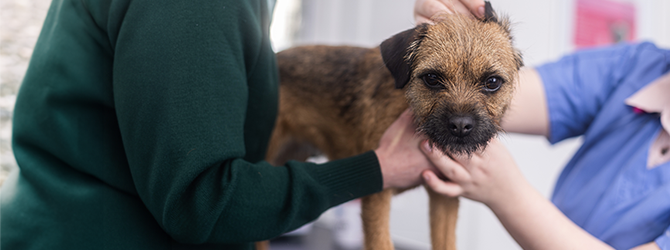
Your dog’s ears aren’t just for hearing — they’re also important for balance and communication. Some dogs are prone to waxy discharge in their ears, especially breeds with pendulous (long and floppy) ears or very hairy ear canals. For these dogs, regular cleaning can keep their ears working as they should, making infections, irritation, and discomfort less likely. Up to 20% of dogs experience ear infections — but regular ear cleaning can help protect them.
What do I need to clean my dog’s ears?
To give your dog’s ears a proper clean without stressing them out, you’ll need the following:
Dog-safe ear cleaner: Choose a vet-approved ear cleaning solution made just for dogs, like the VetSoothe Clear Plus Ear Cleaner. Steer clear of household products like hydrogen peroxide, alcohol, or olive oil. Trying to clean your dog’s ears without solution can harm them.
Cotton balls or gauze: They’re gentle and perfect for wiping away dirt and wax. Avoid cotton buds — they can push dirt further into the ear or even hurt the ear drum.
An old towel: Your dog will probably want a good shake after the cleaning, so a towel will help keep things tidy.
Treats: Rewarding your dog during the process will keep things positive. This makes ear cleaning much easier next time.
Read more: How to spot unhealthy dog nails
Is cleaning my dog's ears always a good idea?
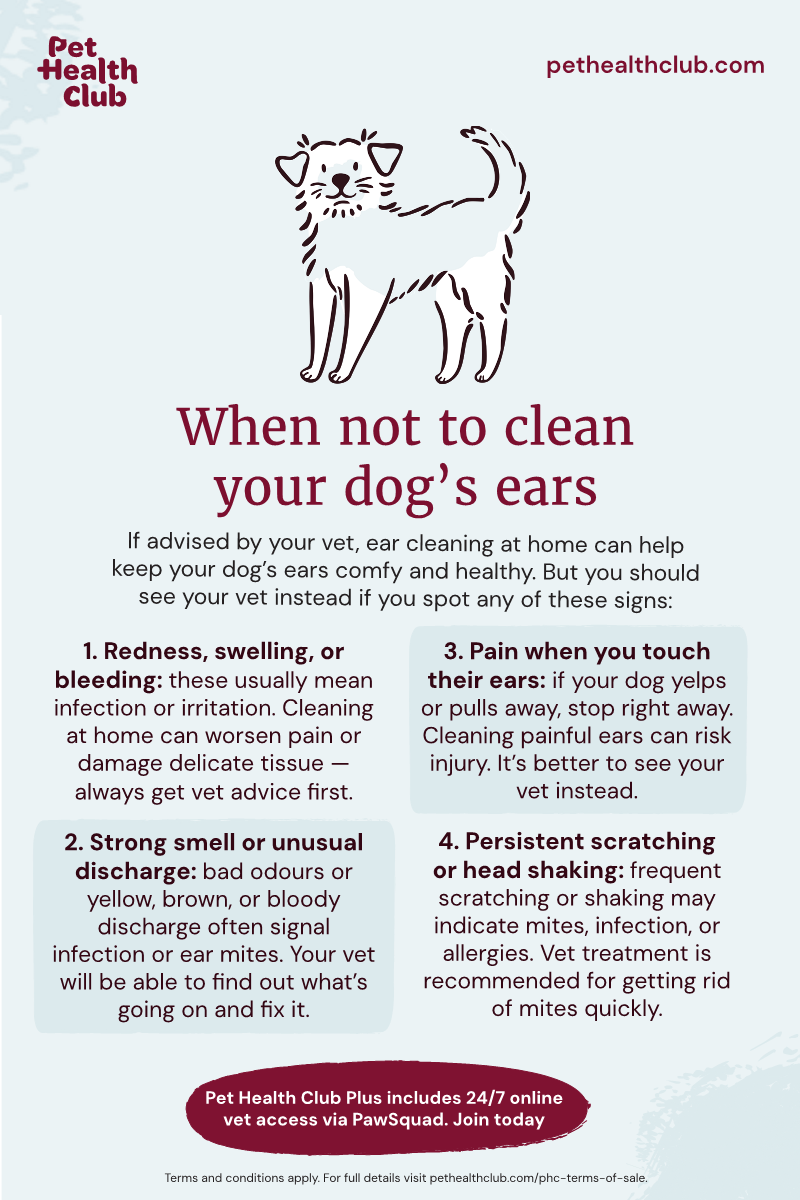
Before cleaning your dog’s ears, it’s a good idea to check with your vet first. Some ear conditions, like infections or ear mites, require treatment beyond cleaning. If you’ve noticed they have been scratching their ears persistently, or signs of redness, swelling, discharge, or foul odours, your dog may have an infection or irritation that your vet should be told about. In particular, dark brown or black wax build-up is common in dogs with ear mites.
Read more: What do dog mites look like?
Step-by-step guide: cleaning your dog's ears
Pick a time when your dog is calm: stay relaxed — your dog will pick up on your mood. Gather your supplies (the ear cleaner, cotton pads, towel, and treats). If someone else they trust can join you as well, it can help reassure them.
Warm the ear cleaner: warm the ear cleaner to room temperature before applying. Cold liquid can surprise your dog, while a warm solution keeps them more comfortable during the cleaning.
Wash your hands: once the cleaner is warmed up, give your hands a good wash. This will help keep their ears free from infections during the process.
Prepare your supplies and space: set up in a quiet area with minimal distractions. Make sure you have everything you need within easy reach.
Examine the ear: gently lift their ear flap. This is the moment to check for redness, swelling, or any unusual smells. If you notice anything concerning, like these signs of infection, stop and consult your vet before cleaning.
Apply the ear cleaner: if you have a helper, ask them to gently hold your dog still and reassure them. Hold the ear flap upright and carefully squeeze a small amount of ear cleaner into the ear canal. Point the nozzle downwards and inwards, but don’t insert the nozzle too far — just enough to pour the solution accurately and safely. You don’t need to use a lot of cleaner — a few drops are enough.
Massage the ear base: massage the base of the ear gently for about 20 to 30 seconds. This helps loosen wax, dirt, and any other debris inside the ear. You may hear a squelching sound - this is perfectly normal.
Let your dog shake: let your dog shake their head to help remove loosened debris from their ear. Have your towel ready. You might need to wipe away a few gross things that come flying out.
Clean the outer ear: use a cotton ball or gauze to wipe away any remaining debris from the ear flap and the entrance of the ear canal. Avoid going too deep.
Reward your dog: wash your hands again and give your dog a treat after finishing the first ear. Now that they know there’s treats involved, your dog will likely stay well-behaved for the rest of the cleaning.
Do the other ear: follow the steps one more time for your dog’s other ear.
If you're using medicated ear drops too, don’t apply them at the same time — wait 30 to 60 minutes after cleaning. This gives the cleaner time to work and helps the drops absorb properly without causing irritation.
What are ear mites, and how do I protect my dog from them?
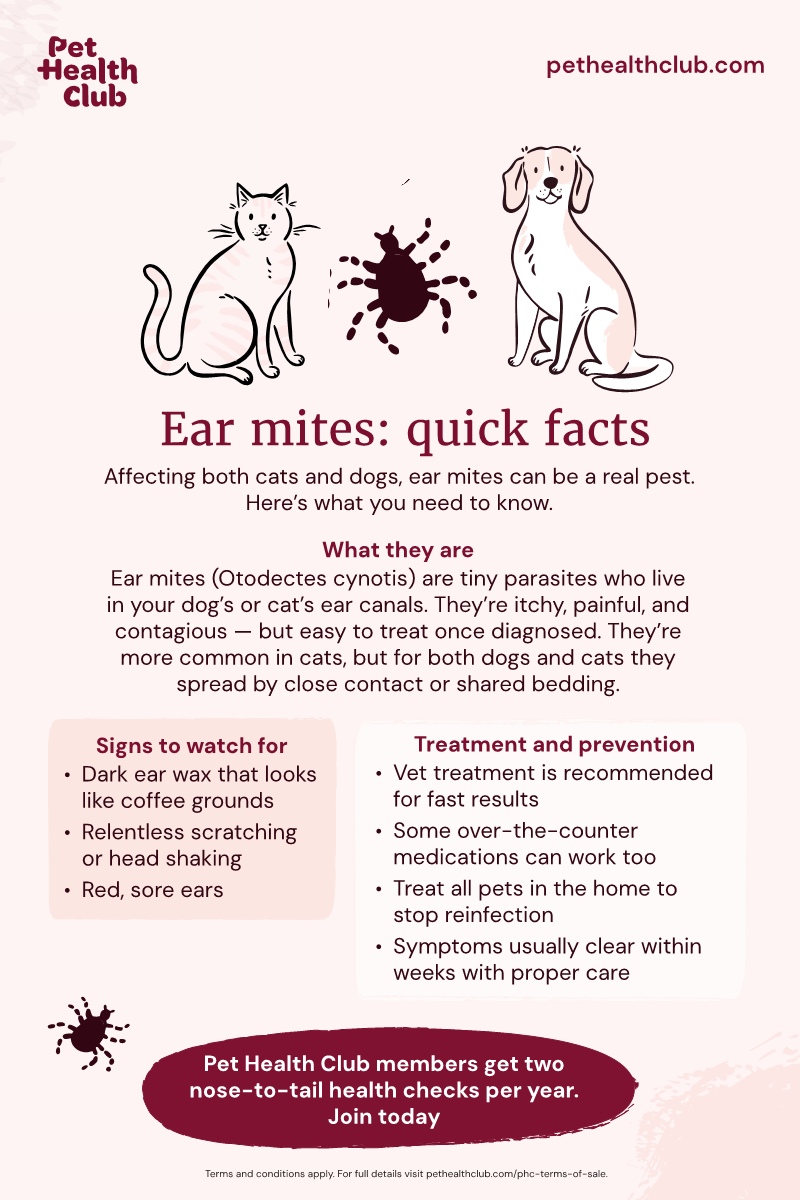
Ear mites are tiny skin parasites that make your dog’s ears itchy, red, and filled with waxy build-up. They are highly contagious and can lead to infections if untreated. Cleaning your dog’s ears helps remove wax and debris which ear mites eat, but to get rid of mites reliably your vet will need to prescribe treatments such as spot-on solutions or medicated ear drops.
Read more: Why is my dog itching and scratching?
How often should I clean my dog’s ears?
How often you need to clean your dog’s ears depends on a few things:
Lifestyle: Dogs that swim or spend lots of time outdoors are more likely to have moisture or dirt build up in their ears.
Breed: Dogs with floppy ears, like Cocker Spaniels, may need more frequent cleaning because their ears get less airflow. Other breeds, like Beagles and Labradors, are more susceptible to ear issues because of their ear shape or because these breeds often spend more time outdoors.
Infection risk: your vet may advise regular ear cleaning if your dog has allergies or other problems making them more prone to ear infections.
Be careful not to over-clean, as this can irritate the ear canal, and in severe cases can cause inflammation, or even infections. Tailor your cleaning routine to your dog’s specific needs, and speak to your vet for personalised advice.
What's a dog's ear anatomy like?
A dog’s ear has an "L"-shaped structure with vertical and horizontal canals. These canals help protect the inner ear, but this shape also makes it harder for dirt and debris to escape naturally. This increases the risk of infections, and that’s why regular ear cleaning is so important.
The eardrum, located at the base of the horizontal canal, is a fragile barrier separating the external ear from the middle and inner ear. Using the wrong equipment or cleaning too vigorously can damage the eardrum. Ear infections can also lead to a ruptured eardrum, so always consult a vet before cleaning if you suspect an infection. Being prepared and gentle is always wise.
How much does do ear cleaning by a vet cost?
If your dog has a severe ear infection, your vet may advise a thorough cleaning at the clinic. This also lets them do a full check of your dog’s ear, making sure there is no damage to the eardrum, or other issues. The cost of professional cleaning depends on whether sedation is needed and how severe the issue is. Your vet will provide a clear estimate upfront.
Need more information on dog ear cleaning?
For more information or advice on cleaning your dog’ ears, contact your local vet.
Find your nearest vet using our Find a Vet page, or speak to a vet online using Pawsquad.
Join the club today
Get regular health checks, vaccinations, and more, all included in your plan.

Medically reviewed by Lizzie Youens, BSc(Hons) BVSc MRCVS
Published on 28/08/2025 • Reviewed on 28/08/2025