

Overview
Similar to humans, pets sometimes need to see a dentist. Their teeth, like ours, constantly accumulate plaque, especially if they’re not brushed regularly. This sticky mix of sugars and bacteria can lead to tartar buildup, gum disease, infection, pain, and even tooth loss if left unchecked. Another reason cats might need the dentist is a disease they commonly get called tooth resorption. Tooth resorption is where a cat’s body gradually breaks down its own teeth, often starting below the gum line. It can be hard to spot but can cause pain — especially when they are eating. Dental pain in pets often goes unnoticed. They can’t tell us what hurts, but the discomfort is just as real. To help them, sometimes dental treatment is needed.
Dental treatments help remove plaque, minimise tartar, and lessen the risk of disease affecting the teeth and gums. Maintaining your pet's oral health isn't just about their teeth, either — poor dental hygiene has been linked to wider issues like heart, liver, and kidney problems due to oral bacteria and their toxins entering the bloodstream.
If your vet has recommended a dental procedure for your pet, such as professional dental cleaning and examination under a general anaesthetic, and possibly dental surgery, you may feel anxious — but there's no need to worry. This guide will walk you through what to expect, from the initial consultation to post-operative care at home. Please note that the dental treatment process may vary depending on the vet practice you visit. Always consult your vet for specific details and recommendations tailored to your pet's needs.
Consultation
The process always begins with a consultation. Your vet or vet nurse will have examined your pet's mouth and found signs of oral disease, such as red, inflamed gums, bleeding, halitosis (bad breath), tartar, ulceration, pus, or tooth lesions. If dental treatment is recommended, now is the time to discuss timings, costs, and whether any x-rays or blood tests might be necessary.
The team will then schedule your pet's procedure for a suitable day. To lower the risks associated with anaesthesia, you’ll also be asked to prevent your dog or cat from eating for a specific period before the procedure.
Admission and preparation
On arrival at your practice, a member of the clinical team will welcome you and your pet, weigh them, and review the consent form (be sure to provide a contact number for the day). They'll then double-check your pet’s vital statistics to ensure they’re fit and healthy for anaesthesia.
Once admitted, your pet will be settled into a kennel and given reassurance to help them feel at ease. If any blood tests are required, these will be performed while your pet is still awake or after their premed, if they are anxious. The premed medications are given to sedate, to relax, and give relief from anxiety and pain.
Please note that the dental treatment process may vary depending on the vet practice you visit. Always consult your clinic for specific details and recommendations tailored to your pet's needs.
Read more: Post-dental care guide for your pet
Under anaesthetic
The next step is administering the anaesthetic, with the vet carefully calculating the dosage based on their size and breed.
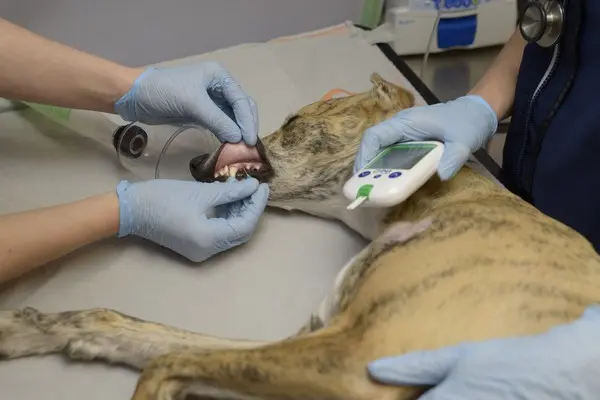
Once your pet is asleep, a soft tube will be placed in their airway to deliver a continuous flow of oxygen and anaesthetic gas, keeping them asleep but breathing normally. A veterinary nurse will constantly monitor your pet while they’re asleep.
Stage one of the dental procedure: comprehensive oral assessment
The clinical team will start the dental procedure once your pet is fully anaesthetised and their vital signs are being monitored. Similar to any trip to the dentist, the first step will be to carefully check your pet’s mouth visually then by using probes and x-rays. All aspects of the mouth are checked, including each individual tooth, the gums, cheeks, and tongue. Notes are charted of any missing, loose or damaged teeth, the amount of tartar buildup and the condition of the gums.
After a thorough dental examination, your pet’s teeth are professionally cleaned using specialist equipment. This process — called dental depuration — involves removing hardened tartar from every surface of the tooth, including under the gum line, followed by polishing. We call the full procedure (including the exam, x-rays, charting, and depuration) a comprehensive oral assessment.
Once your pet wakes up from their comprehensive oral assessment, we’ll talk you through the next steps. If dental surgery is needed, the vet or nurse will explain everything clearly — often using photos or x-rays to help. Surgery is usually booked for another day, but in some cases, the team may call you after the assessment to discuss findings and carry out treatment the same day if needed.
You’ll always be fully informed and in control. We’ll only go ahead with surgery if it’s needed — and only with your permission. The comprehensive oral assessment helps us understand what treatment, if any, is required. Every pet and every clinic is different, so we tailor the approach to suit.
Stage two of the dental procedure: surgery
Dental surgery often involves removing teeth, but can also include treating oral lumps or overgrown gum tissue. Unlike human teeth, pets’ teeth have longer, more delicate roots that can be tricky to extract. To do this safely, your vet may gently lift some gum tissue for better access. It’s a careful, skilled process — especially when several teeth need to come out. Infected areas are cleaned and closed with tiny stitches, which help reduce pain and speed up healing.
Waking up
When the procedure is finished, the veterinary nurse will turn off the anaesthetic gas and your pet will slowly start to wake up whilst breathing in oxygen to support their recovery. The veterinary team will monitor your pet carefully until fully awake, and offer comfort and reassurance.
Once fully conscious and stable, your pet can return to their kennel to recover under supervision until you arrive for pick-up. The nurses will let you know about the procedure, any issues that need to be monitored and arrange a suitable time for your pet to be picked up.
Feeling slightly groggy after anaesthesia is normal. Expect your pet to be slightly drowsy and lacking full appetite until the effects fully wear off over the next 24 hours. Offer small amounts of food often rather than normal amounts, have fresh water always available and allow them plenty of rest. Your pet may dribble some saliva, which may be tinged with blood. This is perfectly normal, with no need for concern unless a lot of blood is seen.
Going home
Most pets recover quickly after a dental procedure — usually within a day or two of rest. You’ll be given clear home-care advice, which might include feeding soft food if any teeth were removed, and using prescribed pain relief. A follow-up visit will be needed to check healing, and your vet or nurse will chat to you about ongoing dental care, including brushing and regular check-ups.
Read more: Do's and don'ts of pet dental care
Need more advice on dental care?
Looking for more expert advice on maintaining your pet's dental health? We have both a dog care hub and a cat care hub for all the essentials. If you need to have a consultation, use our find a vet page to find your nearest vet.
Remember, prevention is always better than cure, so start taking steps today to protect your pet’s teeth. Members of Pet Health Club get six-monthly healthy pet checks (including a dental check), and up to 20% off dental procedures as part of their benefits.
*Please note that the dental treatment process may vary depending on the vet practice you visit. Always consult your vet for specific details and recommendations tailored to your pet's needs.
Join the club today
Get regular health checks, vaccinations, and more, all included in your plan.

Medically reviewed by Rory Colville, BVMS PgC (SADOS) MRCVS, Lizzie Youens, BSc(Hons) BVSc MRCVS
Published on 31/05/2024 • Reviewed on 20/08/2025