
Overview
In the UK, the cost to microchip a dog is usually between £37 and £44, depending on where you go. For this price, dog owners get a lot: microchipping involves placing a tiny chip under the skin, usually between your dog's shoulder blades. This chip contains a unique identification number, meaning if your dog is lost or stolen, scanning it will show this number, allowing the vet to access a database to find your name, address, and contact details, letting them get in touch with you and reunite you with your dog.
You might also need to pay £6 to £20 to update your details on the microchip database if you move house or change phone number, but this update fee often only has to be paid once for unlimited changes to your details, depending on the microchip company. All in all, the dog microchip cost is well worth the benefits.
Why dog microchipping matters
Microchipping is a simple, safe way to make your dog identifiable. It can help you:
Prove you own your dog
Be reunited if they go missing
Meet your legal responsibilities as a dog owner
Each year, thousands of dogs are lost or stolen across the UK, but a microchip makes it much more likely you’ll get your dog back. Unlike a collar or tag, it’s tamper-proof and can’t be easily removed. It’s especially useful in theft cases, where it can help prove your pet belongs to you. While it’s not legally recognised as proof of ownership, it does count as strong evidence — especially when used with other records like vet notes or pet insurance.
Microchipping also links you as your dog’s registered keeper, meaning you’re legally responsible for them. If your dog is found and taken to a vet or shelter, a quick scan can help bring them straight back to you — as long as your contact details are up to date. When you think about the worry and cost of losing a pet, the dog microchip cost is a small one to pay for peace of mind.

Read more: Your puppy's first health check
What happens when your dog is microchipped
A trained vet or nurse will inject the microchip just under your dog’s skin, usually between the shoulder blades. It’s a quick procedure (often over in seconds) and feels much like a routine vaccination. There’s no need for anaesthetic, and the chip is only about the size of a grain of rice.
Once it’s in, they’ll scan it straight away to check it’s working. Most dogs hardly notice, and a treat afterwards helps to keep the experience positive. Occasionally the injection site will bleed just a little, but this resolves quickly with gentle pressure. Your details — along with your dog’s name, breed, and age — are then added to a government-approved national microchip database. Some providers also suggest adding an emergency contact, just in case. Registration is usually included in the cost of microchipping, but it’s always worth double-checking with your provider.
You should get confirmation of your chip registration within 24 to 48 hours — usually by email. If nothing arrives after a few days, it’s a good idea to check in with the person or practice that did the microchipping. Once the chip is in, your details are linked to a government-approved database, so it’s important to make sure everything’s gone through correctly.
What’s inside a dog microchip?
There’s only one piece of data stored on a dog microchip: a unique 15-digit number. It doesn’t store any personal information like your name, address or phone number. That’s all kept securely on a central database, which can only be accessed by authorised staff when the chip is scanned.
The tiny chip itself is made from safe, non-reactive material. It’s usually encased in a special type of glass — known as biocompatible glass — which is designed to stay in your dog’s body for their entire lifetime, without ever causing irritation or discomfort.
The chip doesn’t need charging, maintenance or replacing — another reason why the dog microchip cost offers such good long-term value.
Who can scan a microchip?
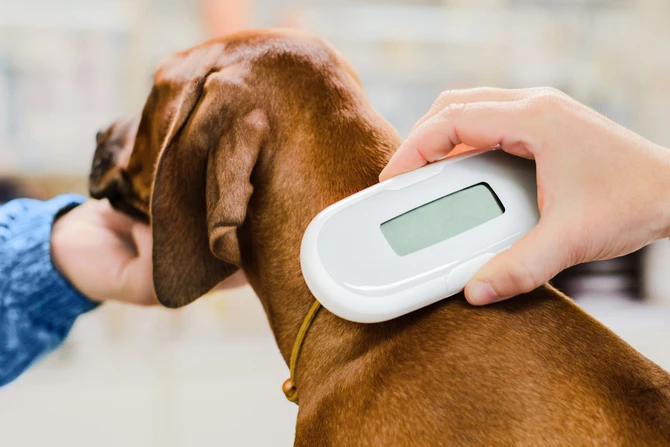
Microchips don’t have batteries or GPS, so they can’t track your dog’s location. Instead, they use RFID — a simple technology that only works when scanned with a handheld device.
These scanners are commonly used by vets, dog wardens, rescue centres, and some local councils. When a lost dog is found, the first thing many vets or rescue teams will do is check for a microchip. Using the handheld scanner, they trigger the chip with a low radio signal to see your contact details in the microchip database. Regular smartphones can’t read the microchip, and the RFID scanners aren’t widely available, meaning bad actors can’t get your personal details by scanning your dog.
Read more: Taking your puppy on their first walk
Dog microchipping and the law
In the UK, all dogs must be microchipped by eight weeks old — it’s a legal requirement. In Northern Ireland, it’s also linked to the dog licensing system.
Breeders are responsible for making sure puppies are microchipped before they’re sold. Their details must be the first ones registered to the chip. It’s against the law for a breeder to register a puppy directly in the buyer’s name. Once a puppy is sold, the new owner must update the microchip database with their own contact details. To follow the law, your dog’s microchip must be registered with one of the UK’s government-approved databases.
Dogs also need to wear a collar and tag with their owner’s name and address when out in public — even if they’re microchipped. The only exception is for dogs a vet has certified as unfit to be chipped for health reasons, but this is very rare.
If your dog isn’t microchipped — or your details aren’t up to date —you could get a notice giving you 21 days to sort it out. If you don’t, you might face a fine of up to £500. That’s a lot more than the dog microchip cost itself, so staying up to date could save you money – and keep you on the right side of the law.
What happens if my dog goes missing?
Immediate steps to take
Start by checking around your home, garden and usual walking routes. If you’ve recently moved, your dog might head back to your old address. Take along their favourite toy or some treats — they might help tempt them out if they’re close by. Ask your neighbours if they’ve seen anything, and keep an eye on local parks or green spaces where your dog feels safe.
Who to notify and why
Get in touch with your microchip database provider straight away so they can mark your dog as missing, and confirm that your contact details are correct. You should also contact your local dog warden — they handle stray dogs and may already have your pet with them. Dogs are usually kept for seven days (or five in Northern Ireland) before any further steps are taken.
It’s also a good idea to let local vets and rescue centres know, in case someone hands your dog in. And don’t forget to report your missing dog to DogLost, a national network of volunteers who help reunite pets with their owners.
Spreading the word
Make posters with a recent photo and your contact details, and put them up around your neighbourhood — in local parks, vet practices, shops, and community centres. Social media can be a big help too. Share your post in local groups, tag nearby shelters, and ask friends to spread the word. Just be careful of scams: if someone says they’ve found your dog and asks for money, make sure to check the details before responding.
Dog microchipping FAQs
Is microchipping free anywhere?
Yes — some vets include it as part of a health plan, like Pet Health Club. Certain charities and local councils may also offer it for free or at a lower cost if you’re eligible.
Can my dog be tracked with a microchip?
No — microchips don’t track your dog’s location. They only store an ID number that links to your contact details. If you want real-time tracking, you’d need a GPS collar.
Do dogs need to be microchipped more than once?
Unlikely – once your dog is microchipped, they shouldn’t need another unless the original chip stops working or moves so far away from the original site between the shoulder-blades that a new one is needed.
How can I check if my dog is microchipped?
Your vet can scan your dog to check for a chip. If you already have the chip number, you can use an online tool to check which database your dog’s chip is registered with. These tools include:
Enter your dog's microchip number on one of the sites above, and it will search databases to tell you which one they are listed on.
What if my contact details change?
It’s your legal responsibility to keep your dog’s microchip details up to date. If anything changes, contact your database provider to update them online, by phone or by post. If you are unsure, you can ask your vet to find out which database your dog is registered with.
Can microchips fail or cause problems?
Microchips are designed to last a dog’s lifetime, and problems are very rare. In some cases, a chip might move slightly or stop working, but this won’t harm your dog. If needed, a vet can implant a new one. Reactions are uncommon, but if you’re ever unsure, your vet can check that everything’s still in place.
How long do microchips last?
Microchips are designed to last your dog’s whole life. They don’t need charging or replacing in normal circumstances, and failures are very rare.
Can you feel the microchip under a dog’s skin?
Sometimes, especially in dogs with thinner coats or less body fat. It might feel like a small, firm bump between their shoulder blades.
What if my dog was already microchipped when I got them?
If your dog came from a breeder, rescue centre or previous owner, you’ll need to update the registration. Contact the database using the chip number and follow their steps to transfer the details into your name.
Need more info?
For expert advice on microchipping your dog, get in touch with your local vet. Microchipping is included as part of Pet Health Club membership, alongside vaccinations, parasite treatments, health checks, and discounts on other preventative health care necessities.
Find your nearest vet using our Find a Vet page.
Join the club today
Get regular health checks, vaccinations, and more, all included in your plan.

Medically reviewed by Lizzie Youens, BSc(Hons) BVSc MRCVS
Published on 26/06/2018 • Reviewed on 06/08/2026