

Overview
Microchipping your cat or kitten is now a legal requirement in England, but don't worry — it's a quick and simple procedure. During microchipping, a small chip, usually no larger than a grain of rice, is placed under the skin, usually between your cat's shoulder blades. This chip contains a unique identification number for your cat.
If your cat is lost or stolen, the microchip can be scanned, and the number will show up. This number can then be entered into a national database, to find your name, address, and contact details. You'll then be contacted and reunited with your cat if the information is correct and up-to-date.
While it can be useful for your cat to have your contact information on their collar, these can easily be lost, so microchipping is a safe and effective way of identifying them if they get lost.
Brief Summary
Microchipping is a safe and effective way to identify cats, providing a permanent and unique form of identification.
The microchip is a small implant that contains a unique identification number, which can be read using a scanner and matched to a database containing the owner's information.
Microchipping is a quick and simple procedure that can be done by a veterinarian or other suitably trained person, and it is typically done while your cat is receiving their vaccinations or being spayed or neutered.
New legislation by the UK government, which came into effect in June 2024, requires all pet cats in England to be microchipped.
What is a microchip for cats?
A microchip is a small device about the size of a grain of rice that uses Radio Frequency Identification (RFID) to transmit information via radio waves. Unlike other devices that require a power source or battery, a microchip only stores information without external power. Instead, it is placed in a small, non-toxic protective case that does not harm your cat and can last their entire life.
How is a microchip implanted in my cat?
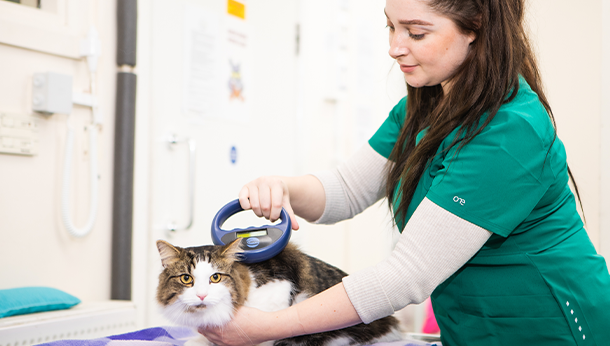
Your cat's microchip will be removed from its sterile packaging and scanned to ensure the ID is the same as on the packaging. This ensures that all the information corresponds so your cat can be identified should they go missing.
Vets and nurses are trained to implant cat microchips in a way which causes the least amount of stress for your cat. Using a syringe and needle, your cat's microchip is inserted beneath the skin, usually between their shoulder blades. The loose skin between the shoulders is pulled up to allow maximum room for the injection, and this can be done while your cat is lying down or standing up.
It's a quick and relatively painless procedure, and your cat won't need any anaesthetic or pain relief during or after. In fact, it's such a simple procedure that you won't notice any difference in your cat, and they are unlikely even to know that the microchip is there. Occasionally, the injection site may bleed a little, but this will resolve quickly with some gentle pressure. After the injection, no recovery time is needed — they will continue to be their wonderful, weird selves.
What information is on my cat's microchip
The microchip only contains one piece of information: your cat's unique identification number. This number is linked to a microchip registry or database, which stores a range of information, including:
Your name (the owner)
Your home address
Contact details (Phone number and email address)
Pet's ID number
Pet's name, gender and date of birth
Their breed
Their fur colour and if they have any identifiable markings
Optionally, some registries and databases can also store information about your cat's medical history. This might come in handy in the event of an emergency. Your cat's microchip helps vets get in touch with you if your cat is brought to them for care by a stranger, and lets them give your cat this care with full knowledge of their background and existing conditions.
It's essential to keep the information in your cat's microchip up-to-date. For example, if you move house or change your phone number or email address, it makes it much harder for you to be reunited with your cat if they become lost.
All of this information is stored within a government-approved database and can be used to identify and reunite you with your cat if they go missing, or even settle ownership disputes when more than one person comes forward to claim ownership.
When should I get my cat microchipped?
There's no minimum age requirement, but microchipping your cat before they go outside is a good idea. Generally, getting your cat microchipped as soon as you get them is a good idea. With kittens, this would be during their initial course of vaccinations. This way, you know it's done and have peace of mind that your cat can be reunited should they wander away.

How much does it cost to microchip a cat?
Microchips must be fitted by a professional. The cost of microchipping your cat will vary from practice to practice, but you can expect to pay between £37 and £44, although prices can vary.
Keeping the microchipping database current is essential if you move house or change your contact number. This is easy to do – call or email the database to notify them of the change. Depending on the database your cat is registered with, there may be a small admin fee.
Those pet owners struggling with the continued cost of living crisis can speak to animal charities who may offer free microchipping. In addition, other preventative healthcare plans, like Pet Health Club™, offer free microchipping when you sign up to their cat plan.
How does microchipping work?
A microchip is a tiny device, about the size of a grain of rice, that is placed under a cat's skin at the back of their neck. It's a quick, simple, and relatively painless procedure, and once the microchip is in place, it won't bother your cat.
Each microchip has a unique number stored in a database corresponding to the owner's details. So, if your cat gets lost or is stolen, scanning their microchip can help reunite you quickly.
Who can scan my cat's microchip?
If your cat has gone missing and is found, the organisation it is taken to should be able to scan their microchip. The most common places a lost cat is taken to are a vet, rescue centre, or police station.
Because your cat's microchip information is stored in a database, it can be accessed by any of these organisations, who can contact you directly.
Do cats need to be microchipped?
If you live in England then yes, your pet cats legally need to be microchipped, or you may face a £500 fine. This has been the case since June 2024, when legislation by the UK government came into effect. At the moment, there is no legal requirement to microchip cats in Scotland, Wales, and Northern Ireland, but it's still something you should do to make it more likely you are reunited with your cat if they go missing.
Why do cats need to be microchipped?
The UK government has brought in legislation to keep the rules on cat microchipping in line with that of dogs. The former Environment Secretary Thérèse Coffey said legislating for compulsory microchipping of cats “will give comfort to families” by increasing the likelihood that lost or stray pets can be reunited with their owners.
Currently, there are more than nine million pet cats in the UK, and in 2024 it was estimated that around 2.8 million of them did not have microchips. Wth an average of 1.5 cats per household in the UK, that means as over 1.8 million families may be at risk of losing and being less easily reunited with their pets.
Why do only cats in England need to be microchipped by law?
Only cats in England have to be microchipped by law because of what is known as devolution. This means that each country: England, Scotland, Wales, and Northern Ireland, is in charge of creating their own legislation or laws, and compulsory cat microchipping falls under this category.

Read more: When can kittens go outside?
My cat is an indoor cat, does it still need to be microchipped?
Under the new law, all cats in England, except those that are classed as ‘free-living’ (farm cats, community cats, feral cats, or other cats living with minimal human interaction), must be microchipped. Cats that would fall into this category are those that have little or no human interaction or dependency, such as farm, feral, or community cats. Indoor cats, as entirely dependent pets, would need to be microchipped.
They should be microchipped anyway, as there's always a possibility an indoor cat will escape. Indoor-only cats don’t know their area as well as an outdoor cat would, so when escapes happen there's a higher chance of them getting lost.
As a general rule, it's best to give your indoor cat the same care you'd give them if they were an outdoor cat. Indoor cats can get fleas and other parasites, and all cats and kittens should be vaccinated in case a disease makes its way inside. While indoor cats may be safer from some of these threats, preventative healthcare is the best way to have total peace of mind. Pet Health Club membership covers these routine needs and more — including your cat's microchip.
Are microchips dangerous to my cat?
The simple answer here is no. Some risks, so small as to be negligible, come with microchipping. The first of these is if the chip ‘travels’ or moves. Thanks to the polymer coating of the microchip, it should bond with the tissue, which will keep it in place.
There have also been claims that microchipping causes cancer. There were two reports of cats suffering from microchip-associated tumours, and one of these had no evidence to link it to the microchip directly.
Even with these concerns, the benefits of microchipping your cat far outweigh the negatives. It should be noted that millions of cats have been microchipped without any adverse effects, making the possibility of related problems extremely low.
The benefits of a microchip cat flap
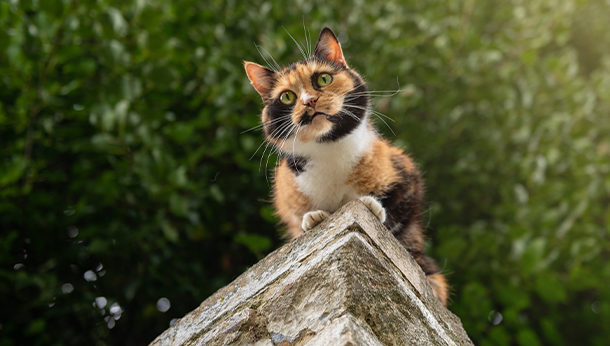
If you’ve had your cat microchipped, you may want to install a microchip cat flap. They prevent stray and unwanted cats from entering your home by recognising the microchip number of your cat(s) and your cat(s) only.
Microchip cat flaps are more efficient than those that require your cat to wear a tag on their collar. Not to mention, wearing a tag on their collar can be uncomfortable, and there's always the chance it will come off.
Cat microchipping FAQs
What do I do if my cat goes missing?
If your cat goes missing, the first thing to do is locate their microchip information. This should be stored somewhere safe and is often included on a tag or card. Then you can contact all local vets, rescue centres and the local police station to see if your cat has been brought in. You can also alert the microchip company that your cat is missing, and they will flag this on their database.
If they haven't been handed in yet, it’s still useful to have local vets alerted so they will be aware of a missing cat in the area. When your cat is handed in and their chip is scanned, you'll be reunited — as long as you've kept the microchip information up-to-date.
Do microchips really work?
Yes. As so many pet cats have access to the outdoors, it is unsurprising that some stray too far or get lost. It is very common for lost cats to be handed into veterinary practices by conscientious members of the public, and thankfully many of these can be quickly and efficiently reunited with their owners thanks to the power of microchipping. There are even many stories about cats reuniting with owners after miles and years apart. One cat, Kiki the Tortoiseshell, was found 10 miles from her family home and was reunited with her owner after seven years.
As it's become more widespread, microchipping has reduced the burden placed on cat shelters and cat charities — this isn't just evidence that microchipping can help your cat, but that it means other cats will get the help they need faster as well.
Can you feel a microchip in a cat?
You may be able to feel your cat's microchip, although this isn't recommended because you don't want their microchip to move around. It feels like a hard grain of rice and is located just between their shoulder blades, where it should be left.
Can my cat's microchip move or break?
Most modern microchips are coated with a polymer (or other material) that forms a connective tissue when it comes into contact with your cat's muscles and tissue. This prevents it from moving.
The rates of microchip failure are around one in a million. Your vet will check your cat's microchip before and after it's implanted to ensure it works.
Do cats need to be microchipped more than once?
No — your cat's microchip is designed to work for the entirety of their life, so they only need to be microchipped once.
Need more info?
For expert advice on microchipping your cat, get in touch with your local vet. Microchipping is included as part of Pet Health Club membership, alongside vaccinations, parasite treatments, health checks, and discounts on other preventative health care necessities.
Find your nearest vet using our Find a Vet page.
Join the club today
Get regular health checks, vaccinations, and more, all included in your plan.

Medically reviewed by Lizzie Youens, BSc(Hons) BVSc MRCVS
Published on 27/06/2018 • Reviewed on 06/08/2026