

Overview
Hip dysplasia in dogs is caused by a deformity in the hip and begins in puppyhood when the hip joint is growing quickly. When your puppy grows, the ball and socket joint must grow at the same speed. If it doesn't, then hip dysplasia can occur. As your dog ages, the cartilage and the bone will wear down, leading to arthritis, weakened muscles and limited mobility.
Brief summary
Hip dysplasia is a condition in dogs caused by a deformity in the hip joint
It is among the most commonly reported health issues for all dogs, affecting 22.3% of breeds
Signs of hip dysplasia can include decreased activity, reluctance to stand up, reduced range of motion, bunny hopping, loss of muscle in thighs, and pain
Hip dysplasia can be corrected with surgery
What is hip dysplasia in dogs?
Hip dysplasia is a painful condition where the hip joints don’t grow properly when your dog is a puppy. Dysplasia means 'abnormality of growth.' The hip joint is known as a ball and socket joint, where the head of the femur (the ball) fits into the hip cavity (the socket). In dogs without joint issues, this ball and socket will grow at the same pace and fit perfectly, giving the dog a full range of motion.
With hip dysplasia, the ball and socket grow at different speeds, and the ligaments that normally keep the joint stable become loose, meaning they don’t fit together well. Over time this will cause the head of the femur to flatten, making the fit even worse.
If your puppy has hip dysplasia they will experience slight pain as they grow. This can turn into arthritis, weakened muscles and limited mobility as they age. It can be corrected if caught early but will require surgery.
With proper care, a good diet and an understanding of their limitations, a dog with hip dysplasia can still lead a full and active life.
How common is hip dysplasia in dogs?
Research from the Royal Veterinary College into health issues for different breeds has found that hip dysplasia is among the most commonly reported health issues for all dogs. It found thathip dysplasia affected 22.3% of breeds, accounting for 1.9% of all reported conditions. Whilst that may seem worrying, it does mean that veterinarians are used to seeing, diagnosing and treating the condition.
What breeds are at the highest risk of hip dysplasia?
Hip dysplasia is a common condition in large and giant dogs and is more common in pedigree breeds, but can affect dogs of any size. Therefore, some breeds must be managed carefully to lower their risk.
German Shepherd
The German Shepard is known as the most at-risk breed for hip dysplasia. This is because they're large, powerful, active dogs which puts them at high risk of dysplasia. Even if your German Shepherd doesn't develop the condition, they will likely have mobility issues as they age.
Labrador

Labradors are large active dogs who just want to move. Unfortunately, their drive to be active can increase their chances of developing hip dysplasia. Combined with their well-documented food drive, the chances of them becoming overweight as they get older can increase the likelihood of potential issues arising.
Saint Bernard
The St Bernard is easily one of the world's largest dog breeds; because of this, there is already a lot of weight and pressure on their joints. You should feed your Saint Bernard a breed-weight-specific diet to keep them at a good weight and help reduce the pressure on their joints. .
Corgi
Although small and compact, hip dysplasia is a common problem in Corgis. Over-exercising, weight gain and rapid growth can all contribute to the condition.
Symptoms of hip dysplasia in dogs
You may see symptoms of hip dysplasia in your dog when they're as young as four months old, or it might not be clear they’re struggling until they get older. However, some symptoms of hip hip dusplasia in dogs can include:
Decreased activity
Reluctance to stand up, jump, run or walk up the stairs
Reduced range of motion
'Bunny hopping' as they walk (bringing one or both legs up and hopping instead of walking)
Loss of muscle in their thighs
Increase in muscle around their shoulders (caused by an overreliance on their front end to walk)
Pain
Limping
Causes of hip dysplasia
Whilst we have discussed the physical cause of hip dysplasia, other factors can contribute.
Genetics
Hip dysplasia is a genetic condition mainly affecting medium and large pedigree dogs, such as German Shepherds and Golden Retrievers. However, it is not a congenital disability, meaning dogs aren’t born with bad hips. In fact, all puppies, regardless of breed, are born with 'normal' hips. It is only as they age that the genetic anomaly may make an appearance. Unfortunately, despite years of research, the genes responsible for the condition are still unknown. What is understood is that hip dysplasia is inherited through multiple genes, which suggests that it can be passed down through either or both parents. It’s also been found that the genes responsible are all breed-specific, so it's unlikely that a genetic solution will be found.
Body weight
Puppies that are heavier at birth and gain weight quicker are at higher risk of hip dysplasia, which is why it's most commonly seen in larger breeds. Unfortunately, canine obesity is on the rise and will contribute to increased diagnosis among all breeds. A study has shown that puppies on a restricted diet have a hugely reduced risk of hip dysplasia. However, you must speak with your vet before lowering or increasing your puppy's food. A well-balanced diet is integral to their physical and mental development.
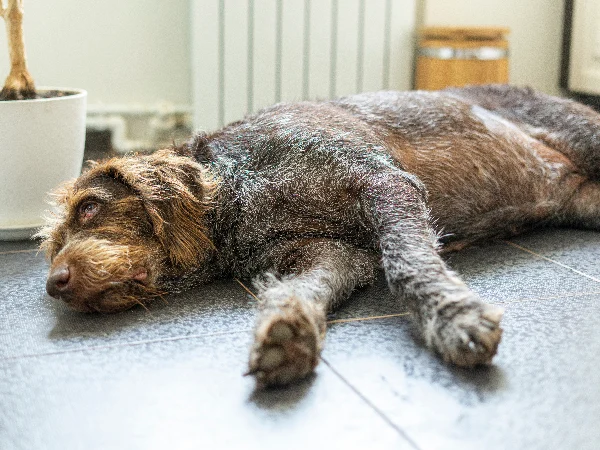
Exercise
All dogs need exercise, but be wary of over-exercising your puppy. Puppies should generally only be exercised for around 10 minutes every month of age. So if your puppy is four months old, they can play for forty minutes before stopping and sleeping so they can recover. This is because they easily over-exercise and damage their fast-growing bones and joints.
You should also try to keep your puppy away from slippery surfaces when they're under three months old, as they aren't as steady on their feet and can easily overextend their joints. The same goes for stairs. For example, suppose you’re toilet training your puppy, and they have to go downstairs to the garden. In that case, you should carry them until they’re at least four months old to give the joints a chance to strengthen and support them.
Diagnosing hip dysplasia in dogs
Your vet or veterinary nurse will conduct a physical exam during regular visits, which is often enough to diagnose possible hip dysplasia. During these check-ups, they will 'manipulate' your dog's hind legs, testing them for a range of movement, looseness in the joint, 'grinding' sounds and inflammation.
Your vet practice will also consider your dog's breed, age, lifestyle and possible injuries or accidents.
If your vet suspects your dog is suffering from hip dysplasia an x-ray may be taken. This allows your vet to determine how severe the condition is and a treatment plan can be put in place.
When should I see my vet?
You should visit your vet regularly if you have an at risk breed. Together you can devise a plan that will help reduce the risk. Pet Health Club™ members can benefit from healthy pet checks every six months, allowing your vet and veterinary nurse to closely monitor how your dog is growing.
If you aren't registered with a vet, find your nearest practice using our Find a Vet page.
Join the club today
Get regular health checks, vaccinations, and more, all included in your plan.

Published on 19/04/2023 • Reviewed on 23/11/2023